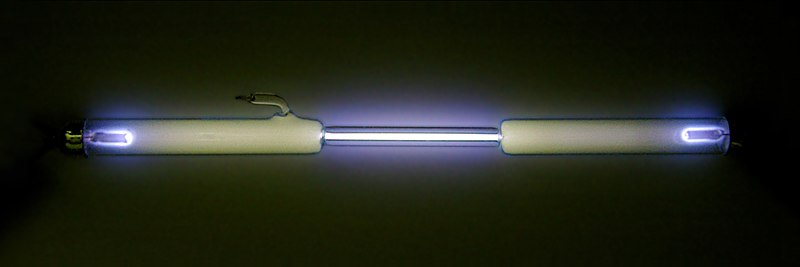
File:Oxygen_discharge_tube.jpg · Wikimedia Commons · See Wikimedia Commons
group 16
Sign in to saveAlso known as oxygen family, group VI A element, group 16 elements, chalcogen
{| class="floatright" ! colspan=2 style="text-align:left;" | ↓ Period |- | 2 | |- ! 3 | |- ! 4 | |- ! 5 | |- ! 6 | |- ! 7 | |- | colspan="2"| ---- Legend {| style="text-align:center; border:0; margin: 0 auto" |- | style="border:; background:;" | primordial element |- | style="border:; background:; padding:0 2px;" | naturally occurring by radioactive decay |- | style="border:; background:;" | synthetic element |} |}
I cannot write an accurate overview of "group 16" based on the provided context, as it contains only a table structure with periods and a legend but no actual information about group 16 itself. To provide an accurate, factual overview, I would need context that describes what group 16 is and its significance.
AI-generated from the Wikipedia summary — may contain errors.
Key facts
- Periodic table group.title
- Chalcogens
- Periodic table group.group number
- 16
- Periodic table group.trivial name
- chalcogens
- Periodic table group.by element
- oxygen group
- Periodic table group.CAS
- VIA
- Periodic table group.old IUPAC
- VIB
- Periodic table group.mark
- O,S,Se,Te,Po,Lv
- Periodic table group.left
- pnictogens
- Periodic table group.right
- halogens
via Wikipedia infobox
Research
727,589 papers- The Prevalence of Social Frailty Among Older Adults: A Systematic Review and Meta-Analysis.Journal of the American Medical Directors Association · 2023
- On freedom.CMAJ : Canadian Medical Association journal = journal de l'Association medicale canadienne · 2011
- Depression in Indigenous Australians: getting it right.The Medical journal of Australia · 2019
- Longitudinal associations between socioeconomic status and cardiovascular disease in a Chinese population: Evidence from CHARLS.PloS one · 2025
- Diverse-Ancestry GWAS of Age-Related Macular Degeneration on 16,108 Examined Cases and 18,038 Controls.Investigative ophthalmology & visual science · 2025
via PubMed
~44 min read
Encyclopedic overview
25 sectionsContents
- Properties
- Atomic and physical
- Isotopes
- Allotropes
- Chemical
- Compounds
- Organic
- With metals
- With pnictogens
- Other
- History
- Early discoveries
- Periodic table placing
- Modern discoveries
- Names and etymology
- Occurrence
- Chalcophile elements
- Production
- Applications
- Biological role
- Toxicity
- Amphid salts
- See also
- References
- External links
{| class="floatright" ! colspan=2 style="text-align:left;" | ↓ Period |- | 2 | |- ! 3 | |- ! 4 | |- ! 5 | |- ! 6 | |- ! 7 | |- | colspan="2"| ---- Legend {| style="text-align:center; border:0; margin: 0 auto" |- | style="border:; background:;" | primordial element |- | style="border:; background:; padding:0 2px;" | naturally occurring by radioactive decay |- | style="border:; background:;" | synthetic element |} |}
The chalcogens (, ) are the chemical elements in group 16 of the periodic table. This group is also known as the oxygen family. Group 16 consists of the elements oxygen (O), sulfur (S), selenium (Se), tellurium (Te), and the radioactive elements polonium (Po) and livermorium (Lv). Often, oxygen is treated separately from the other chalcogens, sometimes even excluded from the scope of the term "chalcogen" altogether, due to its very different chemical behavior from sulfur, selenium, tellurium, and polonium. The word "chalcogen" means "ore-forming"; chalcogens got their name because protoscientists and early scientists could discern that these essences (which science would later reveal to be chemical elements) were involved in ore formation.
Excerpted from Wikipedia’s “group 16” article, available under the CC BY-SA 4.0 licence.
Gallery (34)
Available in 75 languages
- Español
- Français
- Deutsch
- 中文
- 日本語
- Русский
- Português
- Italiano
- العربية
- हिन्दी
- Afrikaans
- Albanian
- Angika
- Aragonese
- Armenian
- Asturian
- Azerbaijani
- Bahasa Indonesia
Show 56 more
- Balinese
- Bangla
- Basque
- be_x_old
- Bosnian
- Bulgarian
- Catalan
- Croatian
- Czech
- Erzya
- Esperanto
- Estonian
- Finnish
- Greek
- Hungarian
- Icelandic
- Interlingua
- Irish
- Kazakh
- Latin
- Latvian
- Lombard
- Low German
- Luxembourgish
- Macedonian
- Malay
- Malayalam
- Mongolian
- Nederlands
- Northern Frisian
- Norwegian
- Norwegian Nynorsk
- Occitan
- Polski
- Punjabi
- Quechua
- Romanian
- Serbian
- Serbian (Latin)
- simple
- Slovak
- Slovenian
- Somali
- Svenska
- Swahili
- Tamil
- Telugu
- Tiếng Việt
- Türkçe
- Ukrainian
- Welsh
- Wu Chinese
- zh_yue
- فارسی
- ไทย
- 한국어
via Wikidata sitelinks · CC0