Encyclopedia of Life · EOL (see source)
Petaurus
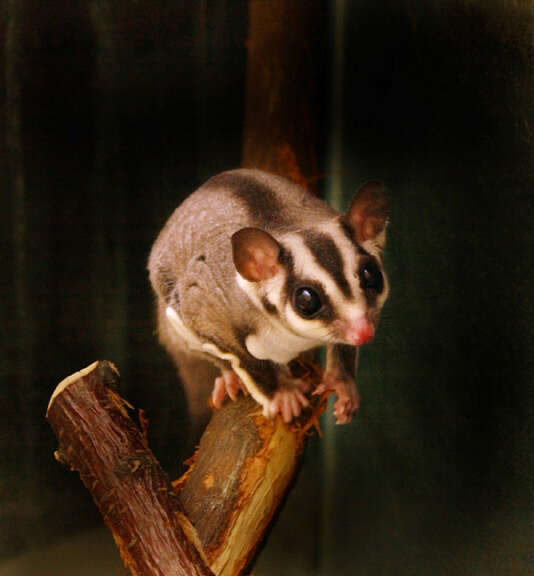
Sign in to saveThe genus Petaurus () contains flying phalangers or wrist-winged gliders, a group of arboreal possums native to Australia, New Guinea, and surrounding islands. There are eight species: the sugar glider, savanna glider, Krefft's glider, squirrel glider, mahogany glider, northern glider, yellow-bellied glider and Biak glider.
Species
GENUS
- KingdomAnimalia
- PhylumChordata
- ClassMammalia
- OrderDiprotodontia
- FamilyPetauridae
Die Gleithörnchenbeutler oder Eigentlichen Gleitbeutler (Petaurus) sind eine Gattung mit acht Arten aus der Familie der Gleitbeutler (Petauridae). Es handelt sich um Beutelsäuger, die ähnlich wie die nicht verwandten Gleithörnchen eine Gleitmembran zwischen den Gliedmaßen entwickelt haben. Der Name Petaurus wurde von Petaurium abgeleitet, welches das lateinische Wort für ein Sprungbrett römischer Athleten war.
via GBIF
Museum specimens
- Specimen records
- 131
- With media
- 1
- Family
- Petauridae
- Collections
- AMNH, NHMUK
- Recorded in
- Papua New Guinea, Indonesia
Wikidata facts
- Instance of
- taxon
- Parent taxon
- Petauridae
- Image
- Sugies03 hp.jpg
Show 8 more facts
- taxon name
- Petaurus
- Commons category
- Petaurus
- taxon rank
- genus
- topic's main category
- Category:Petaurus
- Commons gallery
- Petaurus
- taxon common name
- poletuša vrečarica
- taxon author citation
- Shaw, 1791
- taxonomic type
- Petaurus australis
Sources (2)
via Wikidata · CC0
~3 min read
Encyclopedic overview
4 sectionsContents
- Conservation status
- Species
- References
- External links
The genus Petaurus () contains flying phalangers or wrist-winged gliders, a group of arboreal possums native to Australia, New Guinea, and surrounding islands. There are eight species: the sugar glider, savanna glider, Krefft's glider, squirrel glider, mahogany glider, northern glider, yellow-bellied glider and Biak glider.
Flying phalangers are typically nocturnal, most being small (sometimes around , counting the tail), and have folds of loose skin (patagia) running from the wrists to the ankles. They use the patagia to glide from tree to tree by jumping and holding out their limbs spread-eagle. They are able to glide for distances over . Beside the distinctive skin folds, flying phalangers also have large, forward-facing eyes, short (though pointed) faces, and long flat tails which are used as rudders while gliding.
Excerpted from Wikipedia’s “Petaurus” article, available under the CC BY-SA 4.0 licence.