Category
page 1Afghan cuisine
.jpg)
naan
Naan () is a leavened, oven-baked or tawa-fried flatbread, that can also be baked in a tandoor. It is characterised by a light and fluffy texture and golden-brown spots from the baking process. Naan is used in many cuisines worldwide.

ayran
Ayran ( ) is a cold savory yogurt-based beverage that is consumed across Central Asia, the Balkans, and the Middle East. The principal ingredients are yogurt, water and salt. Herbs such as mint may be optionally added. Some varieties are carbonated. It is a national drink of Turkey.
Jalebi
thumb|Jalebi being prepared by a street vendor in Bangalore, India
Jalebi is a common sweet snack in the Indian subcontinent, West Asia and some parts of Africa. It goes by many names, including jilapi, zelepi, jilebi, jilipi, zulbia, zoolbia, jerry, mushabak, '''''z'labia, or zalabia.'''''

shashlik
Shashlik, or shashlyck ( shashlyk ), is a dish of skewered and grilled cubes of meat, similar to or synonymous with shish kebab. It is known traditionally by various other names in the Caucasus, Eastern Europe and Central Asia, and from the 19th century became popular as shashlik across much of the Russian Empire and nowadays in former Soviet Union republics.

sherbet
sweet drink

manti
dish
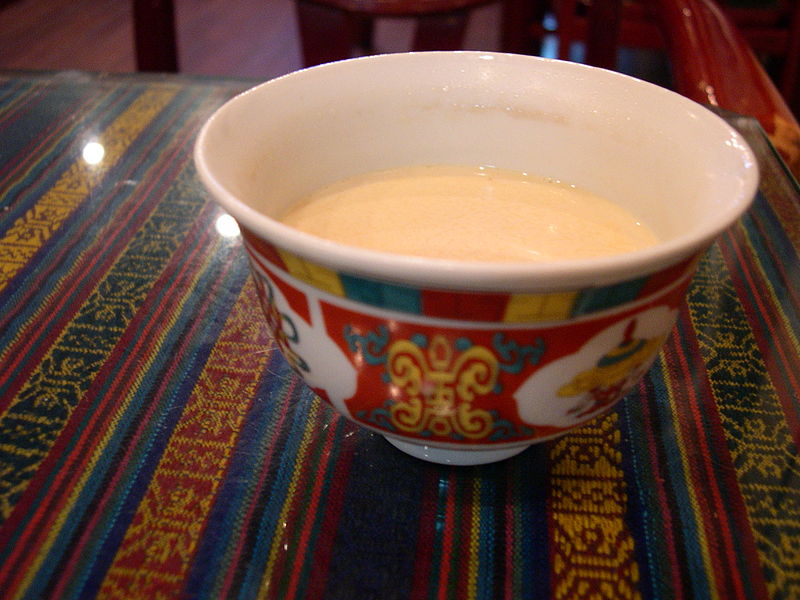
butter tea
South Asian drink mainly consisting of butter churned with tea

korma
Korma, kurma, qorma or qurma (; ; ; ; ) is a curry dish originating in the Indian subcontinent influenced by Mughlai cuisine, versions of which later were modified to Anglo-Indian and then to British tastes. It consists of meat or vegetables braised with yogurt, water or stock, and spices to produce a thick sauce or gravy. The flavours of kormas are less intense than those of meat-containing dishes, and the fragrances more aromatic.
ghormeh sabzi
Iranian herb stew

thali
thumb|North Indian cuisine|North Indian style vegetarian thali served in a restaurant
khash
type of food

torshi
thumb|Turşu in Turkey
Torshi, tursu or turshi () are the pickled vegetables of many Middle Eastern, Caucasian, Slavic and Balkan cuisines.
chorba
Chorba, ( ; ) shorwa, shurba, shurpa, shurbah or shorba ( ) is a broad class of stews or rich soups found in national cuisines across North Africa, The Middle East, Iran, Turkey, Southeast Europe, Central Asia, East Africa and South Asia. It is often prepared with added ingredients but is also served alone as a broth or with bread.
.jpg)
Kurt
Kashk, kishk, ( Kašk, ), () qurut, qurt, kurut, kurt, qqet, jameed, shilanch (Tuvan and , , , , , Tajik: қурут, ), chortan ( chort’an), aaruul or khuruud (Mongolian: ааруул or хурууд) is a range of dairy products popular in Iranian cuisine, Caucasian cuisine, and Central Asian cuisine. Kashk is made from strained yogurt, drained buttermilk (in particular, drained qatiq) or drained sour milk by shaping it and letting it dry. It can be made in a variety of forms: rolled into balls, sliced into strips, and formed into chunks.

samanu
thumb|200px|Cooking samanak in Isfara, Tajikistan
laghman
Central Asian noodle dish
chicken tikka
boneless chicken pieces cooked in a tandoor
Afghan cuisine
culinary traditions of Afghanistan
Fesenjān
Fesenjān (; also called Fesenjoon in Tehrani dialect) is a sweet and sour Iranian stew (a khoresh). The roots of this Persian delicacy trace back to the Sassanid Persia's golden age. It is typically served over rice in the Iranian manner. In Iran, it is made with minced meat (lamb, sheep or beef), meatballs, chicken or duck. Like other khoresh stews served over rice, fesenjan is common also to Iraqi cuisine through Iranian pilgrims visiting Shia sites such as Imam Husayn shrine. As a festive dish for special occasions, it has become part of Jewish Rosh Hashannah celebrations, even though the t
Kabuli pulaw
Afghan dish
sarma
cabbage, vine leaf, or other leaf roll
palak paneer
Indian dish with cheese
Aush
Aush ( ; ), properly romanized as '''''', is a variety of thick soup, usually served hot. It is part of Iranian cuisine and Afghan cuisine, and is also found in Azerbaijani, Turkish, and South Caucasian cuisines.
tandyr nan
type of Central Asian naan
Dastarkhān
A dastarkhān (Persian / Urdu: دسترخوان, , , , , , , , ) or dastarkhwān is the name used across Central Asia and South Asia to refer to the traditional dining space where food is eaten. The term is a word of Persian origin meaning the tablecloth which is spread on the ground, floor, or table as a sanitary surface for food.

Abgoosht
250px|thumbnail|right|Abgoosht served at a traditional-style restaurant in Iran
thumb|right|180px|A dizi dish during consumption
Abgoosht or abgusht ( Âbgušt, ; literally "meat broth") is an Iranian stew. It is also called dizi (, ), which refers to the traditional stoneware crocks it is served in. Some describe it as a "hearty mutton Persian soup thickened with chickpeas."

Khoresht
Khoresh () or khoresht () is a Persian word that refers to Iranian stews, usually slow-cooked and served with rice. Khoresh comes in many varieties, often named after their main ingredients. The word is a substantive of the verb khordan (), "to eat", and literally means "meal".

Kahwah
Kahwah (also transliterated as qehwa, kehwa or kahwa, ) is a traditional Kashmiri green tea (Camellia sinensis) preparation, widely believed to have originated in the Kashmir Valley. It is widely consumed in India, Pakistan, Afghanistan, and some regions of Central Asia.

kesme
thumb|Kesme
Kesme or erişte is a type of egg noodle found in various Central Asian countries. It is also found in Turkish cuisine and is called erişte and “kesme” in modern standard Turkish. The word itself is a nominalisation of the verb to cut or to slice, referring to the slicing of the dough involved in preparing the noodles. The term may refer to the noodles themselves, or the prepared dish made with them. Kesme is traditionally a homemade dish, and not often found at restaurants or cafés. In Turkey, kesme is also known as "erişte", and eaten generally in winter. It is made from flour, eg
Taftan
Asian bread
yahni
Yakhni (, , , , ), yahni (Turkish), or yahniya (, Serbian, ), jahni (Albanian), iahnie (Romanian) is a class of dishes traditionally prepared in a vast area encompassing South Asia, the Middle East and the Balkans. Generally, it is a stew of meat and vegetables.

Borani
thumb|Turkish borani with spinach
Afghan salad
Afghan cuisine
Bolani
Bolani or bulani (Dari: بولانی), also called periki (Pashto: پارکی), is a stuffed flatbread from Afghanistan, fried with a filling. It has a thin crust and can be stuffed with a variety of ingredients, such as potatoes or leeks but also grated pumpkin, chives, red lentils or with minced meat. It can be served with plain yogurt or mint yogurt and is usually served with a doogh drink.
Nisholda
Nisholda, also spelled as nishallo, nishaldo, or nisholda (Persian: نشلا; Bukharian dialect: Нишалло; Tajik: Нишолло ; Uzbek: Nisholda) is a sweet dish that resembles white jam, only thicker. It is popular in Afghan, Iranian, Tajik, and Uzbek cuisines. Nisholda is also a traditional dish among the Bukharan (Central Asian, Samarkand) Jews.
Doogh
Doogh () is a cold and savoury Persian drink. It is made with fermented milk. Unlike its sister beverage of Turkish origin, ayran, Doogh is not diluted yogurt. According to the Iranian Ministry of Food Standards, Doogh "is a drink resulting from lactic fermentation of milk whose dry matter is standardized by diluting yogurt (after fermentation) or buttermilk (before fermentation)."
Bichak
Bichak is a stuffed baked or fried pastry that comes in different forms (round, triangle, quadrangle) appetizer or meal similar to a turnover, served in Central Asia cuisines including Uzbek cuisine, Tajik cuisine, Afghan cuisine, and Middle Eastern cuisine, most notably in Moroccan cuisine. It is often served during tea or coffee hour. Bichak can be stuffed with pumpkin, veggies, and jam for a sweet taste, or meat and cheese for a savory addition to lunch. Bichak is also popular because it can be prepared in large quantities.
They are traditional for Rosh Hashanah and Sukkot. For kosher dairy
Ramadan in Afghanistan
religious observance in Afghanistan
Ashak
Aushak or ashak (Pashto/) is an Afghan dish made of pasta dumplings filled with chives, with a (frequently meaty) tomato sauce, topped with yogurt and dried mint. A time-consuming meal to prepare, it is usually served on holidays or at special gatherings. It is similar to mantu, which is also popular in Afghanistan. In contrast to aushak, mantu have a meat filling.
Afghani burger
Afghan food
Aush Jushpare
type of Aush
Baloch cuisine
food and cuisine of the Baloch people
Kadu bouranee
Afghan and Turkish pumpkin dish
Sabzi khordan
Dish made from raw vegetables and herbs
Pashtun cuisine
cuisine of the Pashtuns
Ishlykly
Ishlykly (sometimes referred to as Ishlekli or Ishlyakdi in certain recipes) is a traditional dish similar to pizza but covered with dough. It consists of a two-layer dough stuffed with a mixture of meat (most commonly mutton) and vegetables, and is often prepared for special guests especially in Turkmenistan, Afghanistan and other places where Turkmens live.
Hazara cuisine
food and cuisine of the Hazara people in central Afghanistan (in the region of Hazarajat) and western Pakistan (Balochistan province)
Black Kashk
Qaraqurut ( or , from Turkic: Qara "black" and Qurut "Kashk") is a highly acidic brittle dairy product, made by dehyrating sour whey. It appears eponymously black and is produced in Iran, Afghanistan, Tajikistan and other Central Asian countries. Lighter variants and variants made from other kinds of whey do exist. It is sometimes merely called qārā (Persian: قارا) compare Azeri: قارا, black.