Category
page 1Commodity chemicals

ethanol
Ethanol (also called ethyl alcohol, grain alcohol, drinking alcohol, or simply alcohol) is an organic compound with the chemical formula . It is an alcohol, with its formula also written as , or EtOH, where Et is the pseudoelement symbol for ethyl. Ethanol is a volatile, flammable, colorless liquid with a pungent taste. As a psychoactive depressant, it is the active ingredient in alcoholic beverages, and the second most consumed drug globally behind caffeine.

acetic acid
chemical compound
2.png)
benzene
Benzene is an organic chemical compound with the molecular formula C6H6. The benzene molecule is composed of six carbon atoms joined in a planar hexagonal ring with one hydrogen atom attached to each. As it contains only carbon and hydrogen atoms, benzene is a hydrocarbon.

phenol
Phenol (also known as carbolic acid, phenolic acid, or benzenol) is an aromatic organic compound with the molecular formula . It is a white crystalline solid that is volatile and can catch fire.

urea
Urea, also called carbamide (because it is a diamide of carbonic acid), is an organic compound with chemical formula . This amide has two amino groups (−) joined by a carbonyl functional group (−C(=O)−). It is thus the simplest amide of carbamic acid.

methanol
Methanol (also called methyl alcohol, wood alcohol, and wood spirit, amongst other names) is an organic chemical compound and the simplest aliphatic alcohol, with the chemical formula (a methyl group linked to a hydroxyl group, often abbreviated as MeOH). It is a light, volatile, colorless and flammable liquid with a distinctive alcoholic odor similar to that of ethanol (potable alcohol), but is more acutely toxic than the latter.
Methanol acquired the name wood alcohol because it was once produced through destructive distillation of wood. Today, methanol is mainly produced industrially by hyd

ethylene
Ethylene (IUPAC name: ethene) is a hydrocarbon which has the formula or . It is a colourless, flammable gas with a faint "sweet and musky" odour when pure. It is the simplest alkene (a hydrocarbon with carbon–carbon double bonds).

glycerol
Glycerol () is a sugar alcohol with chemical formula . It has three carbon atoms and as many hydroxyl groups. It is a colorless, odorless, sweet-tasting, viscous liquid at Standard Ambient Temperature and Pressure (SATP). Because of its three hydroxyl groups, glycerol is miscible with water and is hygroscopic in nature.

acetone
Acetone (2-propanone or dimethyl ketone) is an organic compound with the formula . It is the simplest and smallest ketone (). It is a colorless, highly volatile, and flammable liquid with a characteristic pungent odor.
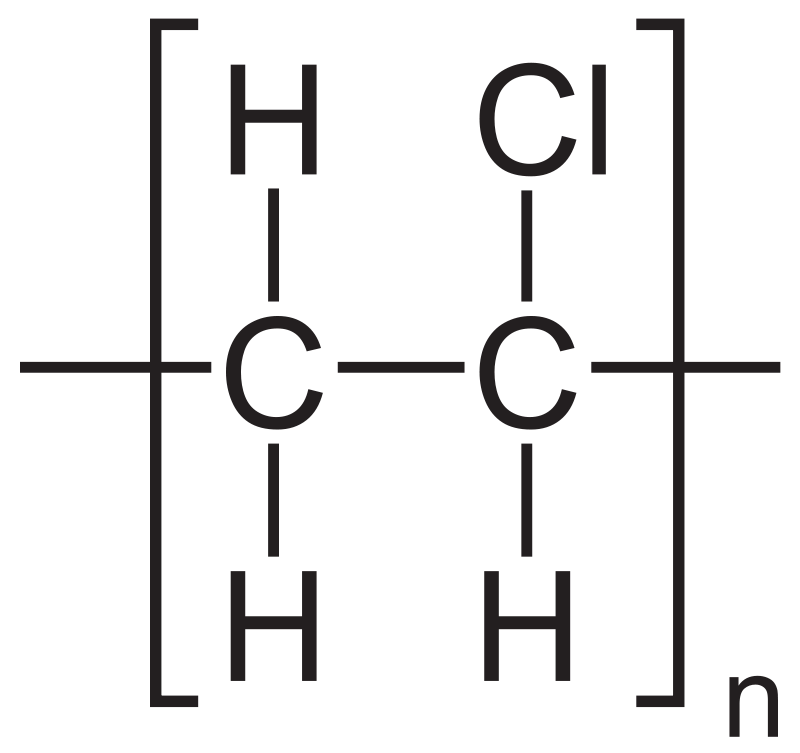
polyvinyl chloride
synthetic plastic polymer - A thermoplastic resin produced by the polymerization of vinyl chloride gas.

fatty acid
carboxylic acid with a long aliphatic chain, either saturated or unsaturated

nylon
{|style="border: 1px solid; float: right; width: 250px;"
!colspan="2" style="text-align: center;"| Nylon 6 class=skin-invert|320px|Nylon Nylon 6,6
|-
|Density
|1.15 g/cm3
|- style="background:#eee;"
|Electrical conductivity (σ)
|10−12 S/m
|-
|Thermal conductivity
|0.25 W/(m·K)
|- style="background:#eee;"
|Melting point
|463–624 K 190–350 °C 374–663 °F
|}

polyethylene
thumb|140px|The repeating unit within polyethylene in the most stable staggered conformation

toluene
Toluene (), also known as toluol (), is a substituted aromatic hydrocarbon with the chemical formula , often abbreviated as , where Ph stands for the phenyl group. It is a colorless, water-insoluble liquid with the odor associated with paint thinners. It is a mono-substituted benzene derivative, consisting of a methyl group (CH3) attached to a phenyl group by a single bond. As such, its systematic IUPAC name is methylbenzene. Toluene is predominantly used as an industrial feedstock and a solvent.
propylene
Propylene, also known as propene, is an unsaturated organic compound with the chemical formula . It has one double bond, and is the second simplest member of the alkene class of hydrocarbons. It is a colorless gas with a faint petroleum-like odor.
.JPG)
biodiesel
thumb|Experimental French Régiolis Class train using biodiesel
thumb|Space-filling model of ethyl stearate, or stearic acid ethyl ester, an ethyl ester produced from soybean or canola oil and ethanol
thumb|Two general pathways for biodiesels from a fat. The process starts with hydrogenation of backbone double bonds. [[Fatty acid methyl esters can then be produced by transesterification. C16 and C18 diesel fuels arise by hydrogenolysis of the saturated fat.]]

polystyrene
thumb|Expanded polystyrene packaging
thumb|A polystyrene yogurt container
thumb|Bottom of a vacuum forming|vacuum-formed cup; fine details such as the glass and fork [[food contact materials symbol and the resin identification code symbol are easily molded]]

hexane
Hexane () or '''n-hexane''' is an organic compound, a straight-chain alkane with six carbon atoms and the molecular formula C6H14.

polypropylene
Polypropylene (PP), also known as polypropene, is a thermoplastic polymer used in a wide variety of applications. It is produced via chain-growth polymerization from the monomer propylene.

ethylene glycol
organic compound used in the making of polyester fibers and in antifreeze formulations

styrene
Styrene is an organic compound with the chemical formula C6H5CH=CH2. Its structure consists of a vinyl group as substituent on benzene. Styrene is a colorless, oily liquid, although aged samples can appear yellowish. The compound evaporates easily and has a sweet smell, although high concentrations have a less pleasant odor. Styrene is the precursor to polystyrene and several copolymers, and is typically made from benzene for this purpose. Approximately 25 million tonnes of styrene were produced in 2010, increasing to around 35 million tonnes by 2018.

ethyl acetate
chemical compound

cyclohexane
Cyclohexane is a cycloalkane with the molecular formula . Cyclohexane is non-polar. Cyclohexane is a colourless, flammable liquid with a distinctive detergent-like odor, reminiscent of cleaning products (in which it is sometimes used). Cyclohexane is mainly used for the industrial production of adipic acid and caprolactam, which are precursors to nylon.

D-sorbitol
Sorbitol (), less commonly known as glucitol (), is a sugar alcohol with a sweet taste which the human body metabolizes slowly. It can be obtained by reduction of glucose, which changes the converted aldehyde group (−CHO) to a primary alcohol group (−CH2OH). Most sorbitol is made from potato starch, but it is also found in nature, for example in apples, pears, peaches, and prunes. It is converted to fructose by sorbitol-6-phosphate 2-dehydrogenase. Sorbitol is an isomer of mannitol, another sugar alcohol; the two differ only in the orientation of the hydroxyl group on carbon2. While similar, t

adipic acid
chemical compound

vinyl chloride
chemical compound

melamine
thumb|Marking of product made of Melamine
Melamine is an organic compound with the formula C3H6N6. This white solid is a trimer of cyanamide, with a 1,3,5-triazine skeleton. Like cyanamide, it contains 66% nitrogen by mass, and its derivatives have fire-retardant properties due to its release of nitrogen gas when burned or charred. Melamine can be combined with formaldehyde and other agents to produce melamine resins. Such resins are characteristically durable thermosetting plastic used in high-pressure decorative laminates such as Formica, melamine dinnerware including cooking utensils, plat

polyethylene terephthalate
type of polyester commonly used for bottles and clothing

acrylic acid
chemical compound

bisphenol A
chemical compound

1,3-butadiene
1,3-Butadiene () is an organic compound with the formula CH2=CH-CH=CH2. It is a colorless gas that is easily condensed to a liquid. It is important industrially as a precursor to synthetic rubber. The molecule can be viewed as the union of two vinyl groups. It is the simplest conjugated diene.

xylene
class=skin-invert-image|thumb|400px|The three xylene isomers: o-Xylene|o-xylene, m-xylene, and p-xylene

ethylene oxide
chemical compound

poly(methyl methacrylate)
transparent thermoplastic, commonly called acrylic
ethylbenzene
Ethylbenzene is an organic compound with the formula . It is a highly flammable, colorless liquid with an odor similar to that of gasoline. This monocyclic aromatic hydrocarbon is important in the petrochemical industry as a reaction intermediate in the production of styrene, the precursor to polystyrene, a common plastic material. In 2012, more than 99% of ethylbenzene produced was consumed in the production of styrene.

naphtha
Naphtha (, recorded as less common or nonstandard in all dictionaries: ) is a flammable liquid hydrocarbon mixture. Generally, it is a fraction of crude oil, but it can also be produced from natural-gas condensates, petroleum distillates, and the fractional distillation of coal tar and peat. In some industries and regions, the name naphtha refers to crude oil or refined petroleum products such as kerosene or diesel fuel.
acrylonitrile
Acrylonitrile is an organic compound with the formula and the structure . It is a colorless, volatile liquid. It has a pungent odor reminiscent of garlic or onions. Its molecular structure consists of a vinyl group () linked to a nitrile (). It is an important monomer for the manufacture of useful plastics such as polyacrylonitrile. It is toxic at low doses.

butanone
Butanone, also known as methyl ethyl ketone (MEK) or ethyl methyl ketone, is an organic compound with the formula CH3C(O)CH2CH3. This colorless liquid ketone has a sharp, sweet odor reminiscent of acetone. It is produced industrially on a large scale, but occurs in nature only in trace amounts. It is partially soluble in water, and is commonly used as an industrial solvent. It is an isomer of another solvent, tetrahydrofuran.

polycarbonate
vinyl acetate
chemical compound
(RS)-propylene glycol
pair of enantiomers

isocyanate
thumb|The isocyanate functional group
terephthalic acid
chemical compound
methyl methacrylate
chemical compound
.svg)
cumene
Cumene (isopropylbenzene) is an organic compound that contains a benzene ring with an isopropyl substituent. It is a constituent of crude oil and refined fuels. It is a flammable colorless liquid that has a boiling point of 152 °C. Nearly all the cumene that is produced as a pure compound on an industrial scale is converted to cumene hydroperoxide, which is an intermediate in the synthesis of other industrially important chemicals, primarily phenol and acetone (known as the cumene process).

monoethanolamine
Ethanolamine (2-aminoethanol, monoethanolamine, ETA, or MEA) is a naturally occurring organic chemical compound with the formula or . The molecule is bifunctional, containing both a primary amine and a primary alcohol. Ethanolamine is a colorless, viscous liquid with an odor reminiscent of ammonia.
butyl acetate
chemical compound
phthalic anhydride
chemical compound

tetrachloroethylene
Tetrachloroethylene, also known as perchloroethylene or under the systematic name tetrachloroethene, and abbreviations such as perc, and PCE, is a chlorocarbon with the formula . It is a volatile, non-flammable, stable, colorless and dense liquid widely used for dry cleaning of fabrics and as a metal degreasing solvent, formerly as an oral anthelmintic. It has a mild, sweet, sharp odor, detectable by most people at a concentration of 50 ppm.
.png)
caprolactam
Caprolactam (CPL) is an organic compound with the formula (CH2)5C(O)NH. This colourless solid is a lactam (a cyclic amide) of caproic acid. Global demand for this compound is approximately five million tons per year, and the vast majority is used to make nylon 6 filament, fiber, and plastics.

polyol
In organic chemistry, a polyol is an organic compound containing multiple hydroxyl groups (). The term "polyol" can have slightly different meanings depending on whether it is used in food science or polymer chemistry. Polyols containing two, three and four hydroxyl groups are diols, triols, and tetrols, respectively.

epichlorohydrin
Epichlorohydrin (abbreviated ECH) is an organochlorine compound and an epoxide. Despite its name, it is not a halohydrin. It is a colorless liquid with a pungent, garlic-like odor, moderately soluble in water, but miscible with most polar organic solvents. It is a chiral molecule generally existing as a racemic mixture of right-handed and left-handed enantiomers. Epichlorohydrin is a highly reactive electrophilic compound and is used in the production of glycerol, plastics, epoxy glues and resins, epoxy diluents and elastomers.

ethylenediamine
Ethylenediamine (abbreviated as en when a ligand) is the organic compound with the formula C2H4(NH2)2. This colorless liquid with an ammonia-like odor is a basic amine. It is a widely used building block in chemical synthesis, with approximately 500,000 tonnes produced in 1998. Ethylenediamine is the first member of the so-called polyethylene amines.
ethylene-vinyl acetate
copolymer
white spirit
petroleum-derived clear, transparent liquid
propylene oxide
chemical compound
methyl isobutyl ketone
chemical compound
ethyl tert-butyl ether
chemical compound
dimethyl terephthalate
chemical compound
fatty alcohol
class of chemical compounds