Category
page 1Livestock

horse
thumb|External anatomy of a horse|upright=1.5|alt=Diagram of a horse with some parts labeled.

sheep
Sheep (: sheep) or domestic sheep (Ovis aries) are a domesticated, ruminant mammal typically kept as livestock. Although the term sheep can apply to other species in the genus Ovis, in everyday usage it almost always refers to domesticated sheep. Like all ruminants, sheep are members of the order Artiodactyla, the even-toed ungulates. There are around 1.2 billion domestic sheep as of 2019, making them easily the most common species of sheep. An adult female is referred to as a ewe ( ); an intact male as a ram, occasionally a tup; a castrated male as a wether; and a young sheep as a lamb.

pig
The pig (Sus domesticus), also called swine (: swine) or hog, is an omnivorous, domesticated, even-toed, hoofed mammal. It is named the domestic pig when distinguishing it from other members of the genus Sus. Some authorities consider it a subspecies of Sus scrofa (the wild boar or Eurasian boar); other authorities consider it a distinct species. Pigs were domesticated independently twice during the Neolithic, in the Near East around the Tigris Basin, and in China. When domesticated pigs arrived in Europe from the Near East, they extensively interbred with wild boar in Europe but retained thei
.JPG)
goat
The goat or domestic goat (Capra hircus) is a species of goat-antelope that is mostly kept as livestock. It was domesticated from the wild goat (C. aegagrus) of Southwest Asia and Eastern Europe. The goat is a member of the family Bovidae, meaning it is closely related to the sheep. It was one of the first animals to be domesticated, in Iran around 10,000 years ago.

Camelus
A camel (from and () from Ancient Semitic: gāmāl) is an even-toed ungulate in the genus Camelus that bears distinctive fatty deposits known as "humps" on its back. Camels have long been domesticated and, as livestock, they provide food (camel milk and meat) and textiles (fiber and felt from camel hair). Camels are working animals especially suited to their desert habitat and are a vital means of transport for passengers and cargo. There are three surviving species of camel. The one-humped dromedary makes up 94% of the world's camel population, and the two-humped Bactrian camel makes up 6%. The
.jpg)
Cervidae
A deer (: deer) or true deer is a hoofed ruminant ungulate of the family Cervidae (informally the deer family). Cervidae is divided into subfamilies Cervinae (which includes muntjac, elk, red deer, and fallow deer) and Capreolinae (which includes reindeer, white-tailed deer, roe deer, and moose). Male deer of almost all species (except the water deer), as well as female reindeer, grow and shed new antlers each year. These antlers are bony extensions of the skull and are often used for combat between males.

Common Ostrich
species of large flightless bird

water buffalo
species of large bovid originating in South Asia

Rangifer tarandus
The reindeer or caribou (Rangifer tarandus) is a species of deer with circumpolar distribution, native to Arctic, subarctic, tundra, boreal, and mountainous regions of Northern Europe, Siberia, and North America. It is the only representative of the genus Rangifer. More recent studies suggest the splitting of reindeer and caribou (North American terminology). "All caribou and reindeer throughout the world are considered to be the same species, but there are 7 subspecies."

mule
The mule is a domestic equine hybrid between a donkey and a horse. It is the offspring of a male donkey (a jack) and a female horse (a mare). The horse and the donkey are different species, with different numbers of chromosomes; of the two possible first-generation hybrids between them, the mule is easier to obtain and more common than the hinny, which is the offspring of a male horse (a stallion) and a female donkey (a jenny).

animal husbandry
branch of agriculture concerned with animals that are raised for meat, fiber, milk, or other products

livestock
thumb|Cattle|Cows on a pasture in [[Austria]]
thumb|Sheep in Écrins National Park (France)
Livestock are the domesticated animals that are raised in an agricultural setting mainly to provide labor and produce diversified animal products for human consumption such as meat, eggs, milk, fur, leather, and wool. The term is sometimes used to refer solely to animals which are raised for consumption, and sometimes used to refer solely to farmed ruminants, such as cattle, sheep, and goats.

Lama glama
The llama (; or ) (Lama glama) is a domesticated South American camelid, widely used as a meat and pack animal by Andean cultures since the pre-Columbian era.

Camelus dromedarius
The dromedary (Camelus dromedarius), also known as the dromedary camel, Arabian camel and one-humped camel, is a large camel of the genus Camelus with one hump on its back. It is the tallest of the three camel species; adult males stand at the shoulder, while females are tall. Males typically weigh between , and females weigh between .
The dromedary's distinctive features include its long, curved neck, narrow chest, a single hump, and long hairs on the throat, shoulders, and hump. The coat is generally a shade of brown. The hump, tall or more, is made of fat bound together by fibrous tissue.

Camelus bactrianus
species of mammal

American bison
North American species of even-toed ungulates

pasture
thumb|Mountain pasture in Switzerland
thumb|Lush lowland pasture

poultry
thumb|upright=1.35|Poultry of the world ()

bull
thumb|A Holstein Friesian bull
thumb|A Charolais cattle|Charolais bull
A bull is an intact (i.e., not castrated) adult male of the species Bos taurus (cattle). More muscular and aggressive than the females of the same species (i.e. cows proper), bulls have long been an important symbol in many religions, including for sacrifices. These animals play a significant role in beef ranching, dairy farming, and a variety of sporting and cultural activities, including bullfighting and bull riding.

stable
thumb|Small stable for 4 horses
thumb|Large stable for dozens of horses

Bos grunniens
The yak (Bos grunniens), also known as the Tartary ox, grunting ox, hairy cattle, sarlak or sarlyk, or domestic yak, is a species of long-haired domesticated cattle found throughout the Himalayan region, the Tibetan Plateau, Tajikistan, the Pamir Mountains, and as far north as Mongolia and Siberia. It is descended from the wild yak (Bos mutus).

Bos javanicus
The banteng (Bos javanicus; ), also known as the tembadau, is a species of wild bovine found in Southeast Asia and parts of Northern Australia.
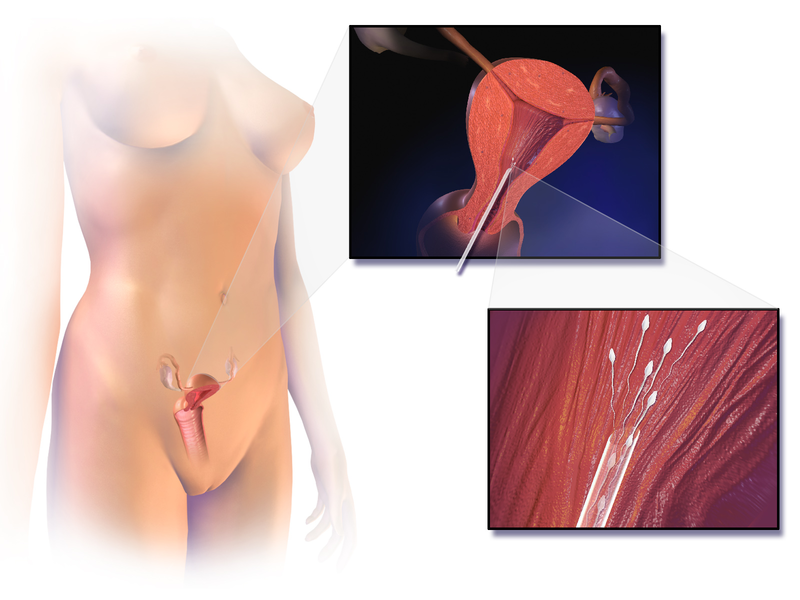
artificial insemination
pregnancy through in vivo fertilization

poultry farming
part of animal husbandry

slaughterhouse
thumb|Workers and cattle in a slaughterhouse in 1942

hinny
A hinny is a domestic equine hybrid, the offspring of a male horse (a stallion) and a female donkey (a jenny). It is the reciprocal cross to the more common mule, which is the product of a male donkey (a jack) and a female horse (a mare). The hinny is distinct from the mule both in physiology and temperament as a consequence of genomic imprinting; it is also less common.

Merino
Merino sheep|thumb
Full wool Merino sheep|thumb
Merino sheep and red goats, Madrid, Spain|thumb

ranch
thumb|350px|View of the Grant-Kohrs Ranch National Historic Site|Grant-Kohrs Ranch near [[Deer Lodge, Montana, U.S.]]

pen
outdoors enclosure for holding animals such as livestock or pets

domestic rabbit
domesticated form of the European rabbit

manger
__NOTOC__
thumb|Modern livestock trough near Empire Ranch, [[Arizona.]]
A manger or trough is a rack for fodder, or a structure or feeder used to hold food for animals. The word comes from the Old French mangier (meaning "to eat"), from Latin mandere (meaning "to chew").

lasso
thumb|upright=1.35|A loose bull is lassoed by a pickup rider during a rodeo in [[Salinas, California, July 2006]]
intensive animal farming
type of intensive agriculture, specifically an approach to animal husbandry designed to maximize production, while minimizing costs

grazing
thumb|Dairy cows grazing in Germany
In agriculture, grazing is a method of animal husbandry whereby domestic livestock are allowed outdoors to free range (roam around) and consume wild vegetations in order to convert the otherwise indigestible (by human gut) cellulose within grass and other forages into meat, milk, wool and other animal products. Grazing is often done on lands that are unsuitable for arable farming, although there are occasions where arable lands and even prior farmlands are intentionally kept or converted to pastures to raise commercially valuable grazing animals.
.JPG)
pigsty
right|thumb|Pigsty – Museum of Country Life in Wallonia in :w:Saint-Hubert, Belgium|Saint-Hubert (Belgium)
thumb|Pigsty in Vampula, [[Finland]]
thumb|Model of toilet with pigsty (see pig toilet), China, Eastern Han dynasty, 25–220 CE

haystack
right|thumb|View of a haystack
right|thumb|Haystack in Romania
The haystack is a type of construction which is a feature typical of the calid European countries. It consists of a central wooden pole with stacked hay layers around it, forming a heap for later transfer to the barn.

leash
thumb|A clip-on leash attached to a Jack Russell Terrier's collar
A leash, also known as a lead, lead line, or tether is a rope or similar material used to control an animal by attaching it to a collar, harness, or halter. In British English, a leash is typically used for larger animals that may be dangerous or aggressive, while a lead is more commonly used when walking a dog.
%2C%20f.117v%20-%20BL%20Add.%2027255.jpg)
mahout
thumb|An image of the elephant keeper in India riding his elephant from Tashrih al-aqvam (1825).
working animal
domesticated animals for assisting people

pelletizing
Pelletizing is the process of compressing or molding a material into the shape of a pellet. A wide range of different materials are pelletized including chemicals, iron ore, animal compound feed, plastics (nurdles), waste materials, and more. The process is considered an excellent option for the storage and transport of said materials. The technology is widely used in the powder metallurgy engineering and medicine industries.

overgrazing
thumb|300px|Overgrazed area in western New South Wales ([[Australia), by loss of native flora, in the upper right corner]]
thumb|Satellite image of the border between Israel and [[Egypt. The Egyptian side, to the left, is overgrazed.]]
thumb|Penned goats in an overgrazed landscape (Norte Chico, Chile)
thumb|Huge herd of migratory wildebeest in Masai Mara during their annual migration shows landscape not overgrazed
animal breeding
procreation and rearing of animals under controlled conditions
livestock bell
thumb|A Brown Swiss cow grazing with a cowbell
thumb|Bells on a herd of cows grazing on Monte Baldo, Italy
thumbnail|Goat with cowbell
thumb|Various types of cowbells from Karnataka, India
thumb|Various types of cowbells from the Swiss Alps
thumb|250px|right|The cowbells are different depending on the species, sex and age of animals. These are used in the Pyrenees area.
livestock branding
technique for marking livestock so as to identify the owner, traditionally with a hot iron

forage
thumb|300px|Sorghum grown as forage crop.
Forage is a plant material (mainly plant leaves and stems) eaten by grazing livestock. Historically, the term forage has meant only plants eaten by the animals directly as pasture, crop residue, or immature cereal crops, but it is also used more loosely to include similar plants cut for fodder and carried to the animals, especially as hay or silage.

goad
The goad is a traditional farming implement, used to spur or guide livestock, usually oxen, which are pulling a plow or a cart; used also to round up cattle. It is a type of long stick with a pointed end, also known as the cattle prod.
.jpg)
cuniculture
thumb|right|Maciej, King of Kings by Antoni Kozakiewicz (1841–1929) from Book VI of Pan Tadeusz
Cuniculture is the agricultural practice of breeding and raising domestic rabbits as livestock for their meat, fur, or wool. Cuniculture is also employed by rabbit fanciers and hobbyists in the development and betterment of rabbit breeds and the exhibition of those efforts. Scientists practice cuniculture in the use and management of rabbits as model organisms in research. Cuniculture has been practiced all over the world since at least the 5th century.
elephant goad
instrument in training elephants
.png)
howdah
thumb|right|Elephant with howdah
ractopamine
Ractopamine () is an animal feed additive used to promote leanness and increase food conversion efficiency in farmed animals in few countries, banned in most. Pharmacologically, it is a phenol-based TAAR1 agonist and β adrenoreceptor agonist that stimulates β1 and β2 adrenergic receptors.
It is most commonly administered to animals for meat production as ractopamine hydrochloride. It is the active ingredient in products marketed in the US as Paylean for swine, Optaflexx for cattle, and Topmax for turkeys. It was developed by Elanco Animal Health, a former division of Eli Lilly and Company.
tail docking
practice of removing a portion of an animal's tail
nomadic pastoralism
form of pastoralism where livestock are herded in order to find fresh pastures on which to graze

purebred
Purebreds are cultivars of an animal species achieved through the process of selective breeding. When the lineage of a purebred animal is recorded, that animal is said to be pedigreed. Purebreds breed true-to-type, which means the progeny of like-to-like purebred parents will carry the same phenotype, or observable characteristics of the parents. A group of like purebreds is called a pure-breeding line or strain.
livestock guardian dog
working dog

silvopasture
thumb|Silvopasture integrates livestock, forage, and trees. (photo: USDA NAC)Silvopasture (silva is forest in Latin) or wood pasture is the practice of integrating trees, forage, and the grazing of domesticated animals in a mutually beneficial way. It utilizes the principles of managed grazing, and it is one of several distinct forms of agroforestry. If done correctly, silvopastures can count as nature-based solutions to climate change.
animal stall
animal husbandry
free range
method of farming where animals can roam freely outdoors
Breed standard
written description of what a breed should look like
cattle grid
ground object that impedes animals but allows humans and vehicles to pass
livestock dehorning
process of removing the horns of livestock