Category
page 1Protein families
ion channel complex
pore-forming membrane protein that allows the passage of ions through a membrane

myosin
thumb|Part of the myosin II structure. Atoms in the heavy chain are colored pink (on the left-hand side); atoms in the light chains are colored faded-orange and faded-yellow (also on the left-hand side).
Myosins () are a family of motor proteins (though most often protein complexes) best known for their roles in muscle contraction and in a wide range of other motility processes in eukaryotes. They are ATP-dependent and responsible for actin-based motility.

G protein-coupled recepteishon
large protein family of receptors that detect molecules outside the cell and activate internal signal transduction pathways and cellular responses
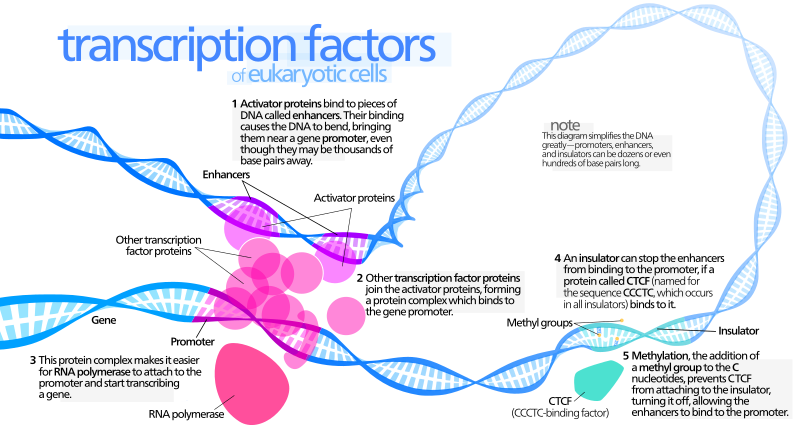
transcription factor
protein that binds to DNA and regulates gene expression by promoting or suppressing transcription
intermediate filament
cytoskeletal structure
hepatitis D
Human disease
protein domain
conserved part of a protein
alcohol dehydrogenase (NAD)
class of enzymes
ligand-gated ion channel
type of ion channel transmembrane protein
enterotoxin
An enterotoxin is a protein exotoxin released by a microorganism that targets the intestines. They can be chromosomally or plasmid encoded. They are heat labile (> 60 °C), of low molecular weight and water-soluble. Enterotoxins are frequently cytotoxic and kill cells by altering the apical membrane permeability of the mucosal (epithelial) cells of the intestinal wall. They are mostly pore-forming toxins (mostly chloride pores), secreted by bacteria, that assemble to form pores in cell membranes. This causes the cells to die.
ATP-binding cassette transporter
group of transmembrane transport proteins
cyclin-dependent kinase
class of enzymes
olfactory receptor
InterPro Family
protein family
group of proteins that share a common evolutionary origin, reflected by similarity in their sequence

serpin
Serpins are a superfamily of proteins with similar structures that were first identified for their protease inhibition activity and are found in all kingdoms of life. The acronym serpin was originally coined because the first serpins to be identified act on chymotrypsin-like serine proteases (serine protease inhibitors). They are notable for their unusual mechanism of action, in which they irreversibly inhibit their target protease by undergoing a large conformational change to disrupt the target's active site. This contrasts with the more common competitive mechanism for protease inhibitors t
flavoprotein
Flavoproteins are proteins that contain a nucleic acid derivative of riboflavin. These proteins are involved in a wide array of biological processes, including removal of radicals contributing to oxidative stress, photosynthesis, and DNA repair. The flavoproteins are some of the most-studied families of enzymes.

glucokinase
Glucokinase () is an enzyme that facilitates phosphorylation of glucose to glucose-6-phosphate. Glucokinase is expressed in cells of the liver and pancreas of humans and most other vertebrates. In each of these organs it plays an important role in the regulation of carbohydrate metabolism by acting as a glucose sensor, triggering shifts in metabolism or cell function in response to rising or falling levels of glucose, such as occur after a meal or when fasting. Mutations of the gene for this enzyme can cause unusual forms of diabetes or hypoglycemia.

BRCA2 DNA repair associated
anaphylatoxins
Anaphylatoxins, or complement peptides, are fragments (C3a, C4a and C5a) that are produced as part of the activation of the complement system. Complement components C3, C4 and C5 are large glycoproteins that have important functions in the immune response and host defense. They have a wide variety of biological activities and are proteolytically activated by cleavage at a specific site, forming a- and b-fragments. A-fragments form distinct structural domains of approximately 76 amino acids, coded for by a single exon within the complement protein gene. The C3a, C4a and C5a components are refer
bacterial outer membrane
plasma membrane found in gram-negative bacteria

connexins
Connexins (Cx) (TC# 1.A.24), or gap junction proteins, are structurally related transmembrane proteins that assemble to form vertebrate gap junctions. An entirely different family of proteins, the innexins, forms gap junctions in invertebrates. Each gap junction is composed of two hemichannels, or connexons, which consist of homo- or heterohexameric arrays of connexins, and the connexon in one plasma membrane docks end-to-end with a connexon in the membrane of a closely opposed cell. The hemichannel is made of six connexin subunits, each of which consist of four transmembrane segments. Gap jun
pancreatic lipase
mammalian protein found in Homo sapiens
metalloproteinase
A metalloproteinase, or metalloprotease, is any protease enzyme whose catalytic mechanism involves a metal. An example is ADAM12 which plays a significant role in the fusion of muscle cells during embryo development, in a process known as myogenesis.
nitrate reductase
class of enzymes
Fructose 1,6-bisphosphatase
class of enzymes
opioid peptide
class of peptides that bind to opioid receptors

amidases
In enzymology, an amidase (, acylamidase, acylase (misleading), amidohydrolase (ambiguous), deaminase (ambiguous), fatty acylamidase, N-acetylaminohydrolase (ambiguous)) is an enzyme that catalyzes the hydrolysis of an amide. In this way, the two substrates of this enzyme are an amide and H2O, whereas its two products are monocarboxylate and NH3.
collagenase
Collagenases are enzymes that break the peptide bonds in collagen. They assist in destroying extracellular structures in the pathogenesis of bacteria such as Clostridium. They are considered a virulence factor, facilitating the spread of gas gangrene. They normally target the connective tissue in muscle cells and other body organs.

catenin
thumb|350px|Interactions of structural proteins at a cadherin-based adherens junction. The exact means by which [[cadherins are linked to actin filaments is still under investigation.]]
Solute carrier family 40 member 1
Ferroportin-1, also known as solute carrier family 40 member 1 (SLC40A1) or iron-regulated transporter 1 (IREG1), is a protein that in humans is encoded by the SLC40A1 gene. Ferroportin is a transmembrane protein that transports iron from the inside of a cell to the outside of the cell. Ferroportin is the only known iron exporter.
cathepsins
Cathepsins (Ancient Greek kata- 'down' and hepsein 'boil'; abbreviated CTS) are proteases (enzymes that degrade proteins) found in all animals as well as other organisms. There are approximately a dozen members of this family, which are distinguished by their structure, catalytic mechanism, and which proteins they cleave. Most of the members become activated at the low pH found in lysosomes. Thus, the activity of this family lies almost entirely within those organelles. There are, however, exceptions such as cathepsin K, which works extracellularly after secretion by osteoclasts in bone resorp
cytochrome b
group of mitochondrial proteins involved in the respiratory chain
protease inhibitor
compound which inhibits or antagonizes the biosynthesis or actions of proteases (endopeptidases).
aspartate protease
class of enzymes
ADF/Cofilin
InterPro Family
GPCR, family 3, metabotropic glutamate receptor
type of glutamate receptor
Pertussis toxin
group of toxins
Carbon monoxide dehydrogenase
class of enzymes
solute carrier family
family of membrane transport proteins

transcription factor STAT
InterPro Family
Colipase
Colipase, abbreviated CLPS, is a protein co-enzyme that counteracts the inhibitory effect of intestinal bile acid on the enzymatic activity of pancreatic lipase. It is secreted by the pancreas in an inactive form, procolipase, which is activated in the intestinal lumen by trypsin.
single-stranded DNA-binding protein
family of proteins
hydroxymethylglutaryl-CoA synthase
class of enzymes
calpain
A calpain (; , ) is a protein belonging to the family of calcium-dependent, non-lysosomal cysteine proteases (proteolytic enzymes) expressed ubiquitously in mammals and many other organisms. Calpains constitute the C2 family of protease clan CA in the MEROPS database. The calpain proteolytic system includes the calpain proteases, the small regulatory subunit CAPNS1, also known as CAPN4, and the endogenous calpain-specific inhibitor, calpastatin.

myelin basic protein
mammalian protein found in Homo sapiens
.png)
Birnaviridae
Birnaviridae is a family of double-stranded RNA viruses. Salmonid fish, birds and insects serve as natural hosts. There are currently 11 species in this family, divided among seven genera. Diseases associated with this family include infectious pancreatic necrosis in salmonid fish, which causes significant losses to the aquaculture industry, with chronic infection in adult salmonid fish and acute viral disease in young salmonid fish.
coproporphyrinogen oxidase
mammalian protein found in Homo sapiens
annexin
Annexin is a common name for a group of cellular proteins. They are mostly found in eukaryotic organisms (animals, plants and fungi).
origin recognition complex
multisubunit complex that is located at the replication origins of a chromosome
S-100 protein
family of vertebrate proteins involved in cell division and inflammation
vitellogenins

importin
Importin is a type of karyopherin involved in the nuclear transport of moving protein molecules from a cell's cytoplasm to the nucleus. It does so by binding to specific recognition sequences, called nuclear localization sequences (NLS).
nucleoporin
Nucleoporins are a family of proteins which are the constituent building blocks of the nuclear pore complex (NPC). The nuclear pore complex is a massive structure embedded in the nuclear envelope at sites where the inner and outer nuclear membranes fuse, forming a gateway that regulates the flow of macromolecules between the cell nucleus and the cytoplasm. Nuclear pores enable the passive and facilitated transport of molecules across the nuclear envelope. Nucleoporins, a family of around 30 proteins, are the main components of the nuclear pore complex in eukaryotic cells. Nucleoporin 62 is the
protein superfamily
group of proteins that share a common evolutionary origin, reflected by similarity in their structure
lipocalin
The lipocalins are a family of proteins which transport small hydrophobic molecules such as steroids, bilins, retinoids, and lipids, and most lipocalins are also able to bind to complexed iron (via siderophores or flavonoids) as well as heme. They share limited regions of sequence homology and a common tertiary structure architecture. This is an eight stranded antiparallel beta barrel with a repeated + 1 topology enclosing an internal ligand binding site.
major urinary protein
InterPro Family
zein
Zein ( ) is a class of prolamine protein found in maize. It is usually manufactured as a powder from corn gluten meal. Zein is one of the best understood plant proteins. Pure zein is clear, odorless, tasteless, hard, water-insoluble, and edible, and it has a variety of industrial and food uses.
calbindin
Calbindins are three different calcium-binding proteins: calbindin, calretinin and S100G. They were originally described as vitamin D-dependent calcium-binding proteins in the intestine and kidney of chicks and mammals. They are now classified in different subfamilies as they differ in the number of Ca2+ binding EF hands.
SMAD protein
intracellular proteins
Inorganic pyrophosphatase
group of proteins having inorganic pyrophosphatase activity