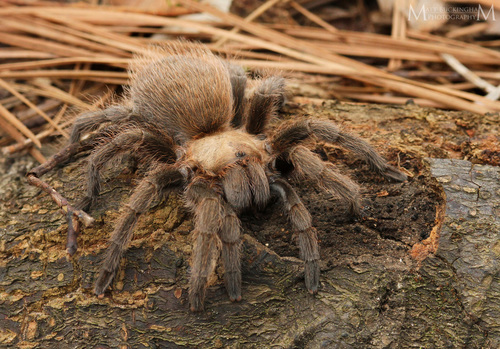
(c) mattbuckingham, all rights reserved, uploaded by mattbuckingham
Aphonopelma
Sign in to saveAphonopelma is a genus of tarantulas native to the Americas. It includes nearly all the North American tarantula species north of Mexico and a considerable percentage of the tarantula species that range into Central America. Most are fairly large tarantulas with leg spans of 6 in (16 cm) or more. Like most New World tarantulas, all species of Aphonopelma have urticating hairs. Despite their fearsome appearance, these tarantulas are not harmful to humans and some species are popular in the pet trade. With about 90 species described so far, Aphonopelma comprises about 10% of the total numbe
Species
Texas Brown Tarantula
GENUS
- KingdomAnimalia
- PhylumArthropoda
- ClassArachnida
- OrderAraneae
- FamilyTheraphosidae
Aphonopelma chalcodes Aphonopelma johnnycashi Aphonopelma saguaro Aphonopelma seemanni Aphonopelma xwalxwal Aphonopelma (лат.) — род пауков-птицеедов из подсемейства Theraphosinae[1]. Содержание 1 Ареал 2 Описание 3 Систематика 4 Примечания 5 Ссылки Ареал Северная, Центральная и Южная Америка. Описание Крупные мохнатые пауки коричневато-чёрного цвета (достигают в длину тела в среднем до пяти сантиметров, рамах лап до 15 см). К этому роду являются крупнейшие пауки в США. Североамериканский Aphonopelma helluo, Aphonopelma crinitum и Aphonopelma iodius (син:. А. chamberlini) достигают длины тела до 7 сантиметров. Самые маленькие члены рода Aphonopelma marxi, чьи самцы имеют длину только до 20 миллиметров[2][3]. Наружная боковая поверхность базальных сегментов ног имеет шиповидные волоски. Стридуляционные щетинки пролатеральной поверхности вертлуга отсутствуют.[1]. Виды этого рода относятся к числу почвообитающих тарантулов. Они роют норки в земле; как правило, в защищенных от затопления склонах холмов. Иногда они также могут быть расположены в заброшенных норах грызунов. Ходы оплетают шёлковой паутиной и живут там в период размножения, линьки и в холодные месяцы (до пяти месяцев в год
via GBIF
Museum specimens
- Specimen records
- 517
- With media
- 53
- Family
- Theraphosidae
- Collections
- INDRE-SSA, MADUG-UG, UMNH, DMNS
- Recorded in
- Mexico, United States
Wikidata facts
- Instance of
- taxon
- Parent taxon
- Theraphosinae
- Image
- Aphonopelma chalcodes.jpg
Show 4 more facts
- taxon rank
- genus
- taxon name
- Aphonopelma
- Commons category
- Aphonopelma
- topic's main category
- Category:Aphonopelma
Sources (1)
via Wikidata · CC0
~9 min read
Encyclopedic overview
9 sectionsContents
- Taxonomy
- Phylogeny
- Species
- In synonymy
- [[Nomen dubium|Nomina dubia]]
- Species transferred to other genera
- Species names rejected in the 2016 monograph include
- References
- External links
Aphonopelma is a genus of tarantulas native to the Americas. It includes nearly all the North American tarantula species north of Mexico and a considerable percentage of the tarantula species that range into Central America. Most are fairly large tarantulas with leg spans of 6 in (16 cm) or more. Like most New World tarantulas, all species of Aphonopelma have urticating hairs. Despite their fearsome appearance, these tarantulas are not harmful to humans and some species are popular in the pet trade. With about 90 species described so far, Aphonopelma comprises about 10% of the total number of described tarantula species. However, their taxonomy is poorly understood and species are difficult to tell apart, especially those that are brown or black without other pattern. Therefore, the actual number of species is unknown, with more species likely to be identified in the near future. In captivity, they are usually fed crickets; in the wild, they eat most insects, including crickets, grasshoppers, cockroaches, mantises, and beetles.
==Taxonomy== The genus has a complicated taxonomic history. It was erected in 1901 by Reginald I. Pocock, when he split up Eurypelma (now Avicularia), with the type species Eurypelma seemanni. Pocock also separated off the genus Dugesiella. Two more new genera were later distinguished from Aphonopelma: Delopelma by Alexander Petrunkevitch in 1939 and Chaunopelma by Joseph C. Chamberlin in 1940. In 1985, Robert J. Raven reviewed mygalomorph genera and considered the differences among all these genera to be insignificant. He synonymized them under the name Rhechostica, which had been published by Eugène Simon in 1892, so had priority. Since the name Aphonopelma was much better known than Rechostica, the International Commission on Zoological Nomenclature in 1991 agreed to give Aphonopelma precedence over Rhechostica. In 1995, Smith erected the genus Apachepelma for the species A. paloma; in 1997, Prentice transferred it back to Aphonopelma. thumb|California ebony tarantula (Aphonopelma eutylenum) wandering near Exeter, CA
Excerpted from Wikipedia’s “Aphonopelma” article, available under the CC BY-SA 4.0 licence.