
Căluşari
Sign in to saveThe Călușari (, ; ; singular: Călușar) are the participants to an old traditional Romanian dance known as the ''''''. "Căluș" translates to horse, but in an endearing form. Originally Romanian, the practice later spread to North Bulgaria. From three weeks after Easter until Pentecost, called in Romanian, for around two weeks they have traditionally travelled to all their local communities where they would dance, accompanied by a few fiddlers.
Key facts
- Dance.name
- Călușari
- Dance.image
- Căluşari Cristian, Sibiu.jpg
- Dance.genre
- Tradicional
- Dance.caption
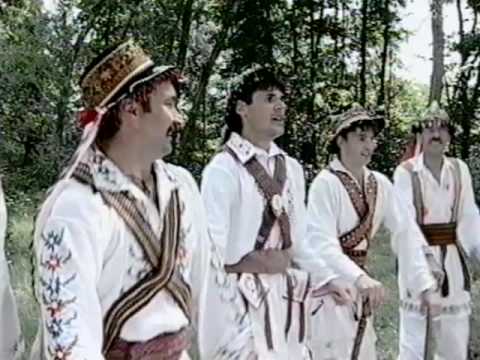
- Dancers dressed in the călușari style
- Dance.origin
- Romania
- Intangible heritage.ICH
- Căluş ritual
- Intangible heritage.Country
- Romania
- Intangible heritage.ID
- 00090
- Intangible heritage.Region
- ENA
- Intangible heritage.Year
- 2008
- Intangible heritage.Session
- 3rd
- Intangible heritage.List
- Representative
via Wikipedia infobox
Described at
Căluş ritual - UNESCO Intangible Cultural Heritage
ich.unesco.org →Performed in the Olt region of southern Romania, the Căluş ritual dance also formed part of the cultural heritage of the Vlachs of Bulgaria and Serbia. Although the oldest documented music used in this dance dates from the seventeenth century, the ritual probably derived from ancient purification and fertility rites using the symbol of the horse, which was worshipped as an embodiment of the sun. The ritual’s name derives from the Căluş, the wooden part of the horse’s bridle. The Căluş ritual features a series of games, skits, songs and dances, and was enacted by all-male Căluşari dancers to the accompaniment of two violins and an accordion. Young men used to be initiated into the ritual by a vataf (master) who had inherited the knowledge of descântece (magic charms) and the dance steps from his predecessor. Groups of Căluşari dancers, sporting colourful hats, embroidered shirts and trousers adorned with small jingling bells, perform complex dances, which combine stamping, clicking of the heels, leaping and swinging of the legs. According to tradition, groups of dancing and chanting Căluşari, who were thought to be endowed with magical healing powers, went from house to house, promising good health and prosperity to villagers. Until today, Căluşari meet to celebrate their dancing and musical prowess on Whit Sunday. Testifying the rich cultural diversity of Romania, the Căluş ritual is also widely promoted at folklore festivals, such as the Caracal festival in the region of Olt, turning it into a veritable national symbol. 1. SDG 3: Good Health and Well-being (139) 2. SDG 16: Peace, Justice and Strong Institutions (665) 1. Performing arts (411) 2. Social practices, rituals and festive events (584)
Excerpt from a page describing this subject · 7,352 chars · not written by Vinony
Wikidata facts
- Instance of
- ritual
- Subclass of
- fraternal organization
- Country
- North Macedonia
- Country of origin
- Romania
- Image
- Căluşari Cristian, Sibiu.jpg
Show 3 more facts
- Commons category
- Călușari
- described at URL
- ich.unesco.org/es/RL/00090
- intangible cultural heritage status
- Masterpieces of the Oral and Intangible Heritage of Humanity
Sources (1)
via Wikidata · CC0
~7 min read
Encyclopedic overview
12 sectionsContents
- History
- Etymology
- Description
- ''Căluș'' dance
- Association with fairies
- Military elements
- Similar dances
- See also
- References
- Bibliography
- Further reading
- External links
The Călușari (, ; ; singular: Călușar) are the participants to an old traditional Romanian dance known as the ''''. "Căluș" translates to horse, but in an endearing form. Originally Romanian, the practice later spread to North Bulgaria. From three weeks after Easter until Pentecost, called in Romanian, for around two weeks they have traditionally travelled to all their local communities where they would dance, accompanied by a few fiddlers.
== History == The origins of the Călușari are unknown, although the first written attestations are from the 17th-century musical notations of Ioan Căianu.
Excerpted from Wikipedia’s “Căluşari” article, available under the CC BY-SA 4.0 licence.