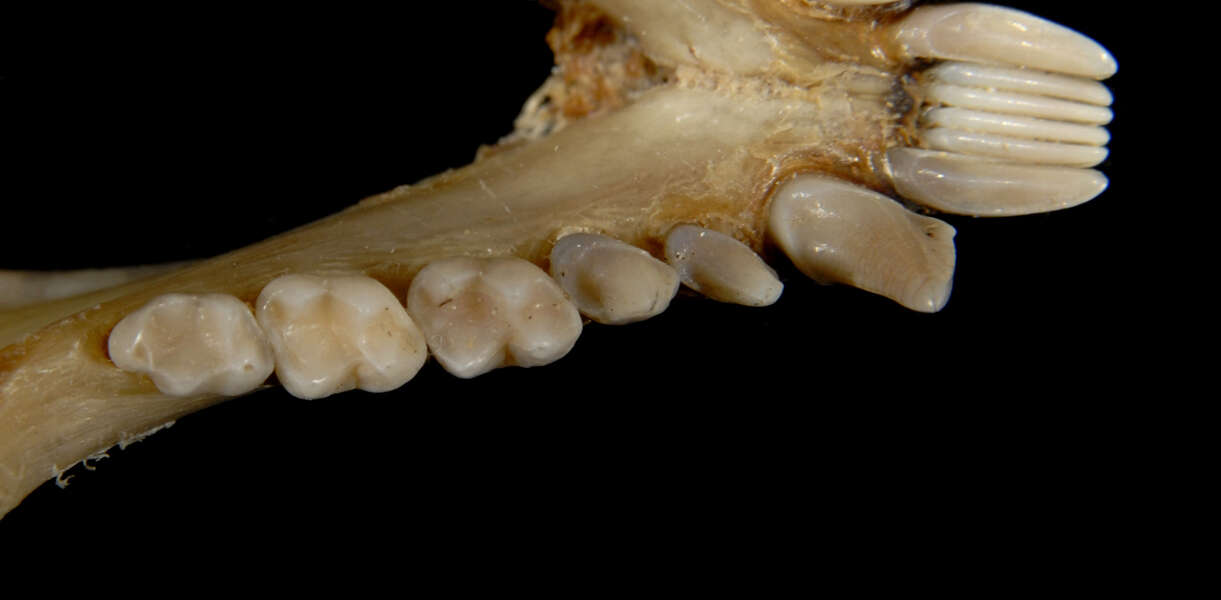
Species
EndangeredMaximum longevity: 25.8 years (captivity) Observations: One captive specimen lived 25.8 years (Richard Weigl 2005). There is also one report of a 26.5 year old animal (Hakeem et al. 1996), which has not been confirmed.
via IUCN
Wikidata facts
- Image
- Outloň váhavý - autor Lucie Čižmářová.jpg
Sources (1)
via Wikidata · CC0
Article
The Sunda slow loris (Nycticebus coucang), or greater slow loris, is a strepsirrhine primate and a species of slow loris native to Indonesia, West Malaysia, southern Thailand and Singapore. It measures 27 to 38 cm (11 to 15 in) from head to tail and weighs between 599 and 685 g (21.1 and 24.2 oz). Like other slow lorises, it has a wet nose (rhinarium), a round head, small ears hidden in thick fur, a flat face, large eyes and a vestigial tail.
The Sunda slow loris is nocturnal and arboreal, typically occurring in evergreen forests. It prefers rainforests with continuous dense canopies and has an extremely low metabolic rate compared to other mammals of its size. Its diet consists of sap, floral nectar, fruit and arthropods, and will feed on exudates such as gum and sap by licking wounds in trees. Individuals are generally solitary, with one study showing only 8% of its active time was spent near other individuals. It has a monogamous mating system with the offspring living with the parents. It sleeps during the day, rolled up in a ball in hidden parts of trees above the ground, often on branches, twigs, palm fronds, or lianas. The species is polyoestrous, usually giving birth to a single offspring after a gestation period of 192 days. The young disperses between 16 and 27 months, generally when it is sexually mature.