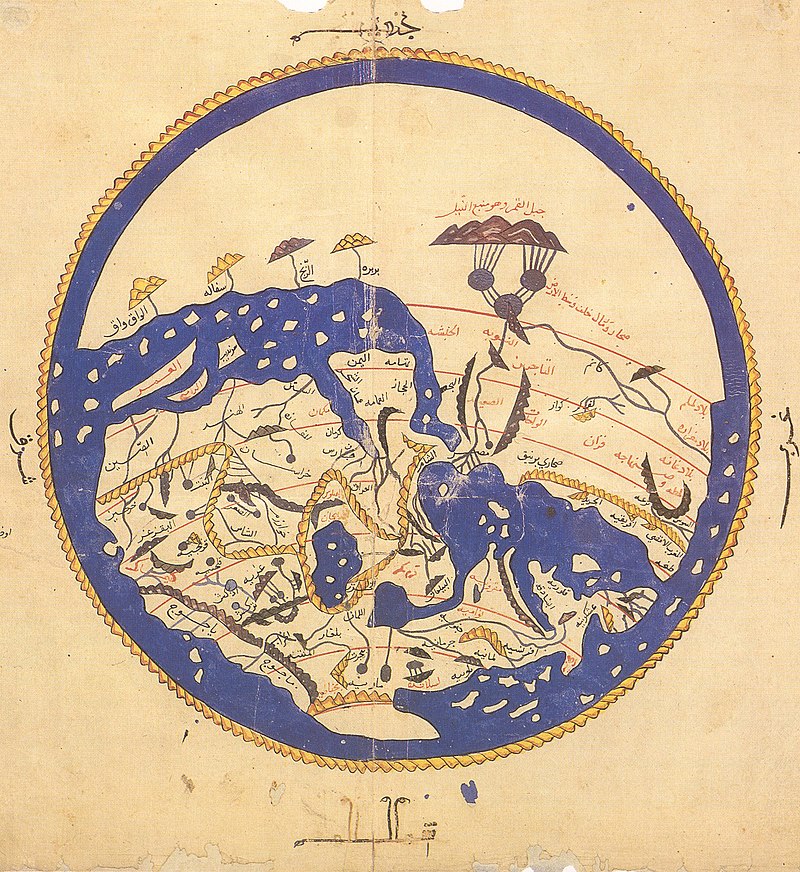
File:Al-Idrisi's_world_map.JPG · Wikimedia Commons · See Wikimedia Commons
Islamitische gouden tijdperk
Also known as medieval Islam, Golden Age of Islam, history of the Islamic Golden Age (750-1258)
period of cultural flourishing in the 8th to 13th centuries
AI overview
The Islamic Golden Age was a period from the 8th to 13th centuries when Islamic civilization experienced remarkable cultural and intellectual flourishing. This era matters because it produced significant advances in mathematics, astronomy, medicine, philosophy, and literature that influenced the development of knowledge across the world.
AI-generated from the Wikipedia summary — may contain errors.
Wikidata facts
Show 3 more facts
- Commons category
- Islamic Golden Age
- start time
- 0800-00-00
- end time
- 1258-00-00
Sources (2)
via Wikidata · CC0
Article · Nederlands
Het islamitische gouden tijdperk ook islamitische gouden periode of islamitische gouden eeuw (Arabisch: العصر الذهبي للإسلام, Perzisch: دوران طلایی اسلام) is een historische periode die duurde van circa 750 tot 1257, het tijdperk der Abbasiden, die zich kenmerkt door de grote invloed die filosofen en wetenschappers uit de islamitische wereld in deze tijd hadden op het gebied van kunst, wetenschap, beschaving, geneeskunde en architectuur. Er wordt ook gesproken van een tweede gouden tijdperk dat begon in 1453 toen Mehmet II, ook wel de veroveraar genoemd, Constantinopel veroverde waarmee het Byzantijnse Rijk verviel en een nieuw islamitisch tijdperk begon.
Abstract from DBpedia / Wikipedia · CC BY-SA