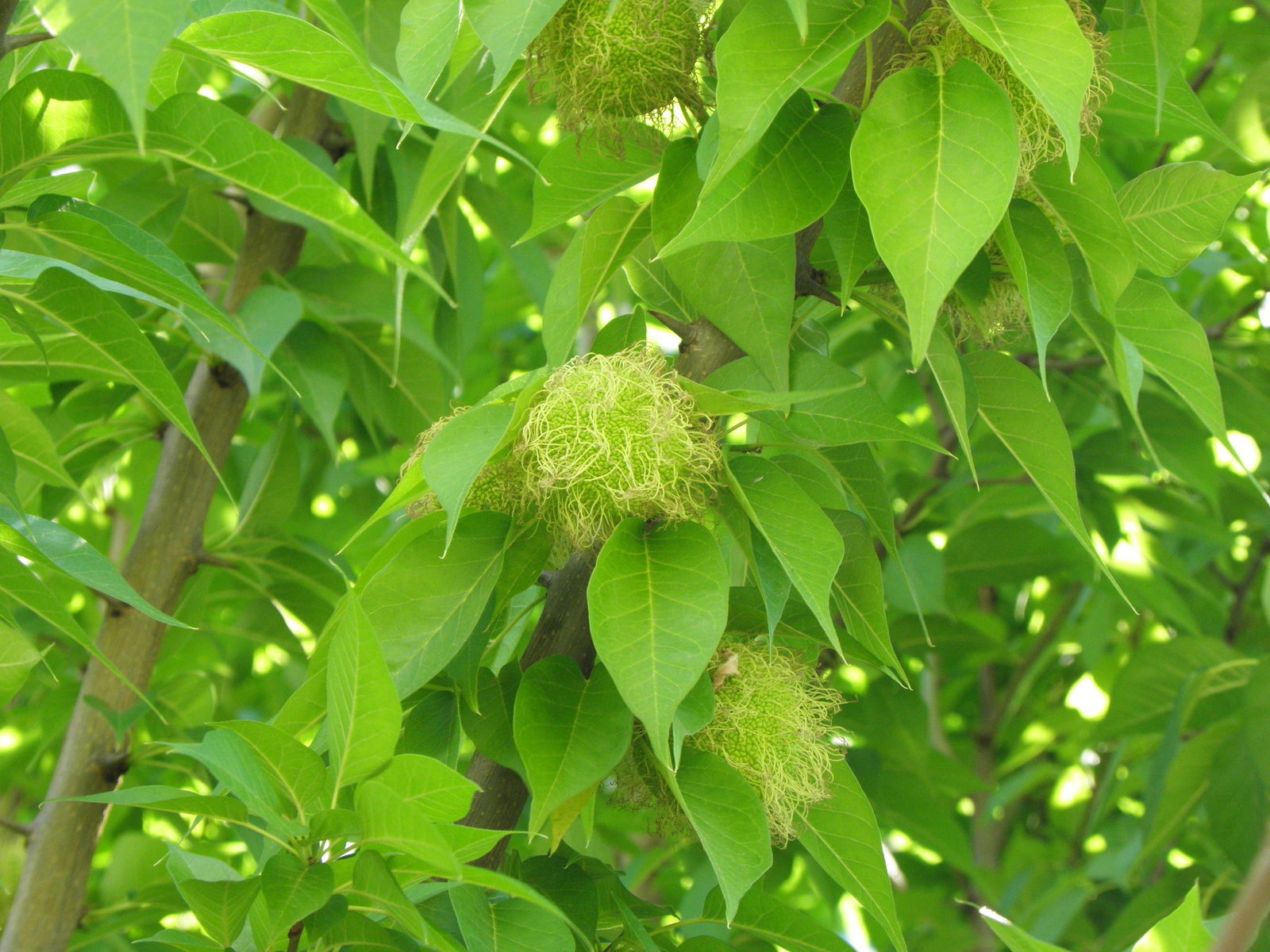
Maclura pomifera
Also known as bodark, bow-wood, yellowwood, osage orange, horse-apple, bois d'arc
species of plant
Species
Least ConcernSPECIES
- KingdomPlantae
- PhylumTracheophyta
- ClassMagnoliopsida
- OrderRosales
- FamilyMoraceae
Native toArkansas, Oklahoma, Texas
二名法 Maclura pomifera 桑橙(学名:Maclura pomifera)又名橙桑、柘橙、柘果(河北)、馬蘋果、弓木、奧塞奇橙(Osage orange),是桑科橙桑属的植物。因為果實的外觀像腦的形狀,俗稱為猴腦果。 目录 1 分布 2 外形 3 食用 4 其他用途 5 参考文献 分布 桑橙原產於美國中部,包括阿肯色州西南部、奧克拉荷馬州東南部、德克薩斯州東部的一個狹長地帶及路易斯安那州西北角。 中國的辽宁大连及河北秦皇岛等地有引种栽培。 外形 植株為落葉小喬木或大灌木,通常可以生長到8~15公尺高。花為雌雄異株,雌花和雄花生長在不同的植株上,同一棵植物只會開一種性別的花。果實為聚合瘦果,球形,果皮粗糙凹凸不平,果徑7~15公分,果肉內有白色黏稠狀汁液。果實未成熟時呈綠色,在秋天時會轉變為亮黃綠色,並帶有淡淡的橙香味。 食用 桑橙肉質的果實會散發一股柔和的香味,類似西瓜的味道。果實味苦,雖然沒有很強的毒性,如不慎食用時會導致嘔吐,並不適合人類食用。 桑橙可以做為野生動物的食物,松鼠會咬開桑橙的果實以取得裡面的種子食用,不過只有少數當地原產的動物會以桑橙做為食物。 桑橙的果實有驅蟲的效果,通常被用來驅除蜘蛛、蟑螂、梣葉槭蝽(boxelder bugs)、蟋蟀、跳蚤及其他昆蟲。當果實變乾變黑後就沒有驅蟲的效果。 其他用途 桑橙植株上生有尖銳的刺,在還沒有發明有刺鐵絲網的年代,桑橙常被種植成樹籬,做為隔離牲畜的圍牆使用。桑橙木材的材質細緻不容易腐爛,是做為柵欄柱子的上好材料。當木材完全乾燥時,也是一種很好的薪柴,拿來生火時燃燒的時間長且火力大。木材呈黃橙色,可以做工具的木柄、木釘、電絕緣體及其他需要高尺寸穩定性的應用木料。 桑橙的果實 桑橙也是做弓的好材料,因此才有弓木這個別名。弓木這個名稱是由美國早期的法國移民所取的,他們觀察到美國的原住民奧塞奇族(Osage Nation),會拿桑橙的木材來做弓,有時為了取得這種木材,常會跋涉數百英里尋找桑橙樹木。 参考文献 昆明植物研究所. 橙桑. 《中国高等植物数据库全库》. 中国科学院微生物研究所. [2009-02-24]. (原始内容存档于2016-03-05). 取自“https://zh.wikipedia.org/w/index.php?title=桑橙&oldid=48673442” 分类: 橙桑属 雌雄異株植物 隐藏分类: TaxoboxLatinName 本地相关图片与维基数据相同 含有拉丁語的條目
via GBIF · IUCN · Kew POWO
Article
Maclura pomifera, commonly known as the Osage orange (/ˈoʊseɪdʒ/ OH-sayj), is a small deciduous tree or large shrub, native to the south-central United States. It is a member of the mulberry family, Moraceae. It typically grows about 8 to 15 m (30–50 ft) tall. The distinctive multiple fruit resembles an immature orange, is roughly spherical, bumpy, 8 to 15 cm (3–6 in) in diameter, and turns bright yellow-green in the fall. The fruit excretes a sticky white latex when cut or damaged. Despite the name "Osage orange", it is not related to the orange.
Due to its latex secretions and woody pulp, the fruit is not usually eaten by humans and rarely by foraging animals. Ecologists Daniel H. Janzen and Paul S. Martin proposed in 1982 that the fruit of this species might be an example of what has come to be called an evolutionary anachronism—that is, a fruit coevolved with a large animal seed dispersal partner that is now extinct. This hypothesis is controversial.