磁矩
Also known as magnetic area moment
product of the electric current through a loop, the area enclosed by the loop and the unit vector perpendicular to the loop
AI overview
A magnetic moment is a measurement of how strong a magnetic force is created by an electric current flowing through a loop, determined by multiplying the strength of that current by the area of the loop. This concept matters because it helps scientists and engineers understand and predict how magnetic objects and currents interact with magnetic fields, which is essential for everything from designing electric motors to studying the magnetic properties of atoms.
AI-generated from the Wikipedia summary — may contain errors.
Article · 中文
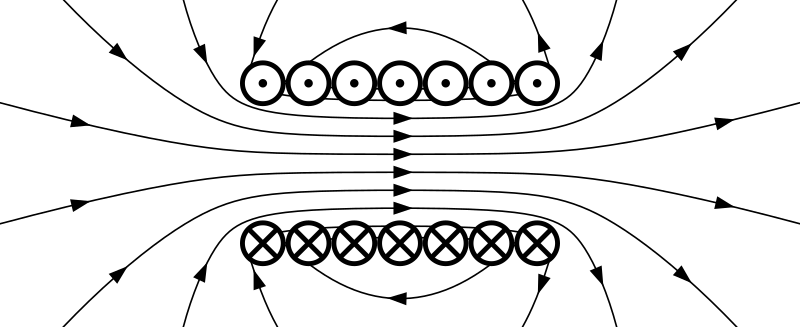
磁矩是磁鐵的一種物理性質。處於外磁場的磁鐵,會感受到力矩,促使其磁矩沿外磁場的磁場線方向排列。磁矩可以用向量表示。磁鐵的磁矩方向是從磁鐵的指南極指向指北極,磁矩的大小取決於磁鐵的磁性與量值。不只是磁鐵具有磁矩,載流迴路、電子、分子或行星等等,都具有磁矩。 科學家至今尚未發現宇宙中存在有磁單極子。一般磁性物質的磁場,其泰勒展開的多極展開式,由於磁單極子項目恆等於零,第一個項目是磁偶極子項、第二個項目是磁四極子(quadrupole)項,以此类推。磁矩也分為磁偶極矩、磁四極矩等等部分。從磁矩的磁偶極矩、磁四極矩等等,可以分別計算出磁場的磁偶極子項目、磁四極子項目等等。隨著距離的增遠,磁偶極矩部分會變得越加重要,成為主要項目,因此,磁矩這術語時常用來指稱磁偶極矩。有些教科書內,磁矩的定義與磁偶極矩的定義相同。
Abstract from DBpedia / Wikipedia · CC BY-SA