Octodontidae
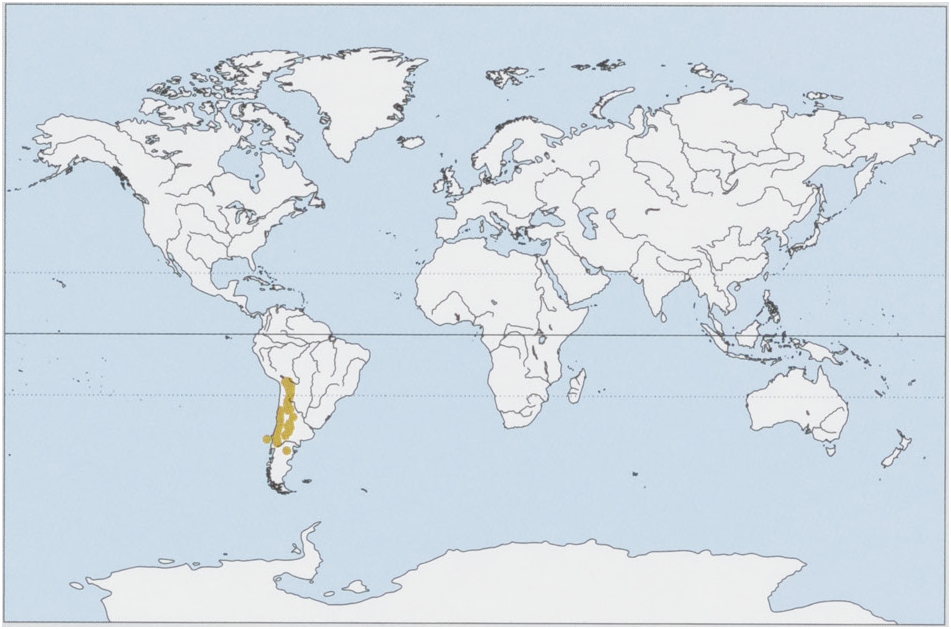
Octodontidae, from Ancient Greek ὀκτώ (oktṓ), meaning "eight", and ὀδούς (odoús), meaning "tooth", is a family of rodents, restricted to southwestern South America. Fourteen species of octodontid are recognised, arranged in seven genera. The best known species is the common degu, Octodon degus.
Species
FAMILY
- KingdomAnimalia
- PhylumChordata
- ClassMammalia
- OrderRodentia
- FamilyOctodontidae
Les Octodontidés (Octodontidae) forment une famille de rongeurs d'Amérique du Sud. On trouve ces petits animaux aux allures de petits rats en Amérique du Sud, dans les zones rocheuses situées entre le niveau de la mer et 3 500 m d'altitude, au Pérou, Bolivie, Chili et Argentine[2]. Sommaire 1 Liste des genres 2 Caractères communs 3 Notes et références 4 Liens externes Liste des genres Selon Mammal Species of the World (version 3, 2005) (8 avril 2013)[3] et ITIS (8 avril 2013)[1] : genre Aconaemys Ameghino, 1891 - des « rats des rochers » genre Octodon Bennett, 1832 - les dègues ou octodons genre Octodontomys Palmer, 1903 - le chozchoz genre Octomys Thomas, 1920 - une seule espèce genre Pipanacoctomys Mares, Braun, Barquez & Diaz, 2000 - une seule espèce genre Salinoctomys Mares, Braun, Barquez & Diaz, 2000 - une seule espèce genre Spalacopus Wagler, 1832 - le coruro genre Tympanoctomys Yepes, 1941 - le Rat-viscache roux d'Argentine Selon Paleobiology Database (8 avril 2013)[4] : genre Chasicomys genre Dactylomys genre Eoctodon genre Eucoelophorus genre Isothrix genre Mesomys genre Migraveramus genre Neophanomys sous-famille Octodontinae genre Palaeoctodon genre Phthoramys g
via GBIF
Wikidata facts
Article
3 sectionsContents
- List of species
- References
- External links
Octodontidae, from Ancient Greek ὀκτώ (oktṓ), meaning "eight", and ὀδούς (odoús), meaning "tooth", is a family of rodents, restricted to southwestern South America. Fourteen species of octodontid are recognised, arranged in seven genera. The best known species is the common degu, Octodon degus.
Octodontids are medium-sized rodents, ranging from in body length. They have long, silky fur, which is typically brownish in color and often paler on the underside. The name 'octodont' derives from the wear pattern of their teeth, which resembles a figure 8. Most are nocturnal, social, burrowing animals, though the degu is largely diurnal. They are herbivorous, eating tubers, bulbs, and cactuses.