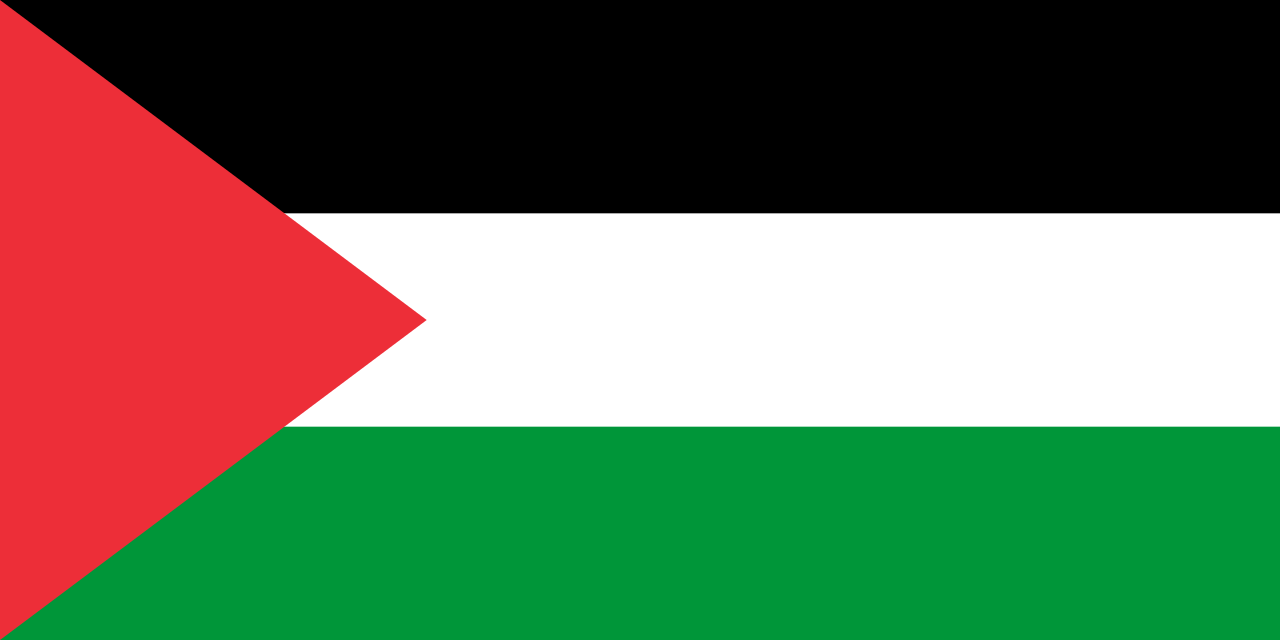
Estado da Palestina
Also known as PSE, State of Palestine, Palestinian Authority, Palestinian National Authority
país na Ásia Ocidental
AI overview
Palestine, officially the State of Palestine, is a country in West Asia comprising the West Bank (including East Jerusalem) and the Gaza Strip, with a population exceeding five million and borders primarily with Israel, Jordan, and Egypt. It matters because it is a significant geopolitical entity whose status, governance, and relationship with Israel are central to Middle Eastern politics and international relations.
AI-generated from the Wikipedia summary — may contain errors.
Weather now
cached 2h ago23°broken clouds
76% 4.5 m/s OpenWeatherMap
7-day forecast
via Open-Meteo
Country

- Capital
- Ramallah, Jerusalem
- Population
- 5,483,450
- Region
Travel guide
Get in
Get into the West Bank Get into Gaza
Get around
thumb|Getting around [[Jericho]]
See
thumb|Church of Nativity in [[Bethlehem]] thumb|Market in [[Hebron]] Palestine is home to some of the most important religious places in history and a number of fabulous, humbling sights. Here, you follow the footsteps of millions of pilgrims, you stand on grounds that saw some of the most influential fights of all time and visit some of the most important biblical and historic sites in the world.
Famous as the birth place of Jesus, the small town of Bethlehem is a must-see for most visitors of the Palestinian territories. The Church of Nativity, built over the cave where – according to tradition – Jesus of Nazareth was born, is a sacred destination for Christians and Muslims alike. From here, it's a short walk to the Shepherd's Field, where the birth of the holy child is believed to be announced to a group of shepherds when they saw the Star of Nativity. Or head to Solomon's Pools, just a few kilometres out of town. Bethlehem is also famous for its Banksy Art, four graffiti can be found here. Around the city visit the stunning Monastery of Mar Saba.
Where Bethlehem is known as a place of birth, Hebron is famous as the burial place for the great patriarchs and matriarchs. A holy destination for both the Islamic and Jewish people, this city is home to the Tomb of the Patriarchs and Matriarchs and was once the capital of the Kingdom of Israel. Hebron has a delightful old town, full of winding alleys and bustling bazaars and is locally known for its pottery worksho…
Eat
thumb|Knafeh
Shawarma and falafel sandwiches are really popular foods for Palestinians, as well as olives and hummus. It is traditional to eat with bread and not a spoon or fork. It is unusual to eat a meal without bread.
Palestinian cuisine is generally similar to that of neighbouring Jordan. As in Jordan, mansaf is a popular dish of rice with meat, usually lamb. Knafeh is a popular dessert made of cheese, soaked in a sweet sugar-based syrup and topped with shredded filo pastry. Nablus is famous for their variety of knafeh Nabulsiyeh.
Drink
In cities such as Ramallah, alcohol is often available at restaurants. Be aware that most residents of the West Bank are Muslims who do not drink alcohol. As such, public intoxication can be seen as rude.
Article · Português
Palestina (em árabe: فلسطين, Filasṭīn), oficialmente Estado da Palestina (em árabe: دولة فلسطين, Dawlat Filasṭīn), é um Estado de jure que reivindica soberania sobre os territórios da Cisjordânia e da Faixa de Gaza e que designa Jerusalém Oriental como sua capital, apesar de seu centro administrativo estar localizado na cidade de Ramallah. A sua independência foi declarada em 15 de novembro de 1988 pela Organização para a Libertação da Palestina (OLP) e por seu governo no exílio em Argel, na Argélia. No entanto, a maioria das áreas reivindicadas pelos palestinos estão ocupadas por Israel desde a Guerra dos Seis Dias, em 1967. Após a Segunda Guerra Mundial, em 1947, as Nações Unidas adotaram um Plano para Partilha da Palestina, recomendando a criação de dois estados árabe e judeu independentes, com uma Jerusalém internacionalizada. Em 1993, os Acordos de Oslo estabeleceram a Autoridade Nacional Palestina, que realiza a administração sócio-política de áreas delimitadas dos territórios, enquanto o Hamas controla a Faixa de Gaza. Em outubro de 1974, a cúpula da Liga Árabe designou a OLP como o "único representante legítimo do povo palestino" e reafirmou "o seu direito de estabelecer um Estado independente com urgência". Em novembro de 1974, a OLP foi reconhecida como competente em todos os aspectos referentes à questão Palestina e os palestinianos ganharam reconhecimento implícito de soberania pela Assembleia Geral da ONU, que concedeu-lhe o estatuto de observador como uma "entidade não estatal" dentro da organização. Depois da declaração de independência de 1988, a Assembleia Geral oficialmente "reconheceu" a proclamação e decidiu usar a designação "Palestina", ao invés de "Organização para a Libertação da Palestina". Apesar desta decisão, a OLP não participa da ONU na qualidade de governo da Palestina. Em 1993, com os Acordos de Oslo, o governo israelense reconheceu a equipe negociadora da OLP como "representante do povo palestino", com a condição de que a OLP reconhecesse o direito do Estado de Israel de existir em paz, aceitasse as resoluções 242 e 338 do Conselho de Segurança da ONU e rejeitasse "a violência e o terrorismo". Como resultado, em 1994 a OLP estabeleceu a administração territorial da Autoridade Nacional Palestina (ANP), que exerce algumas funções governamentais em partes da Cisjordânia e da Faixa de Gaza. Em 2007, o Hamas assumiu o governo da Faixa de Gaza, o que dividiu os palestinos politicamente e territorialmente. O Fatah, de Mahmoud Abbas, ficou com o governo de grande parte da Cisjordânia, enquanto o Hamas obteve o controle da Faixa de Gaza. Em abril de 2011, os partidos palestinos assinaram um acordo de reconciliação, mas sua implementação foi suspensa, até que um governo de unidade foi formado no dia 2 de junho de 2014. Em 29 de novembro de 2012, a Assembleia Geral da ONU aprovou em uma votação a Resolução 67/19, que atualiza o estatuto da Palestina de uma "entidade observadora" para um "Estado observador não membro" dentro do sistema das Nações Unidas, o que foi descrito como o reconhecimento de facto da soberania da OLP sobre os territórios palestinos. Em 17 de dezembro de 2012, a ONU declarou que "a designação de 'Estado da Palestina' será utilizada pelo secretariado em todos os documentos oficiais das Nações Unidas". Em 27 de setembro de 2013, 137 dos 193 países-membros das Nações Unidas reconheceram a existência do Estado da Palestina. Muitos dos países que não reconheceram o Estado palestino, no entanto, reconhecem a OLP como "representante do povo palestino".
Gallery (59)
On the map
3 mapped locations
Connections
Categories
1988 establishments in AsiaCitation overkillCountries and territories where Arabic is an official languageCountries in AsiaCountries in West AsiaEastern MediterraneanLevantMember states of the Organisation of Islamic CooperationPalestineRepublicsStates and territories established in 1988States with limited recognition