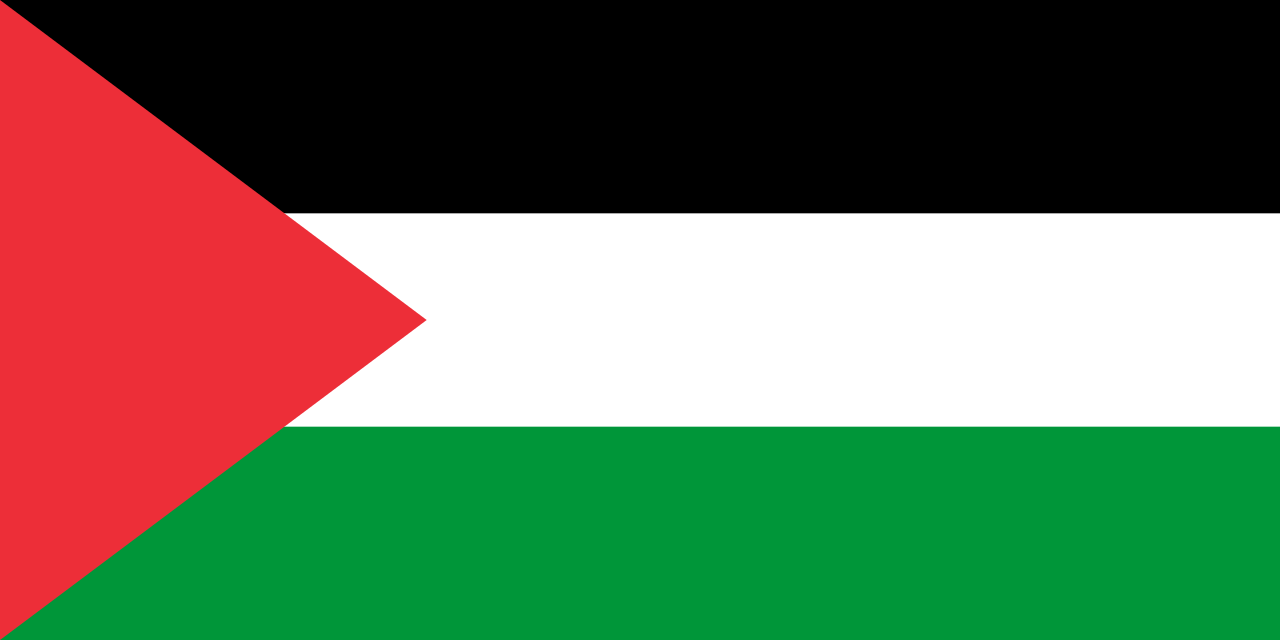
Государство Палестина
Also known as PSE, State of Palestine, Palestinian Authority, Palestinian National Authority
частично признанное государство на Ближнем Востоке
AI overview
Palestine, officially the State of Palestine, is a country in West Asia comprising the West Bank (including East Jerusalem) and the Gaza Strip, with a population exceeding five million and borders primarily with Israel, Jordan, and Egypt. It matters because it is a significant geopolitical entity whose status, governance, and relationship with Israel are central to Middle Eastern politics and international relations.
AI-generated from the Wikipedia summary — may contain errors.
Weather now
cached 2h ago23°broken clouds
76% 4.5 m/s OpenWeatherMap
7-day forecast
via Open-Meteo
Country

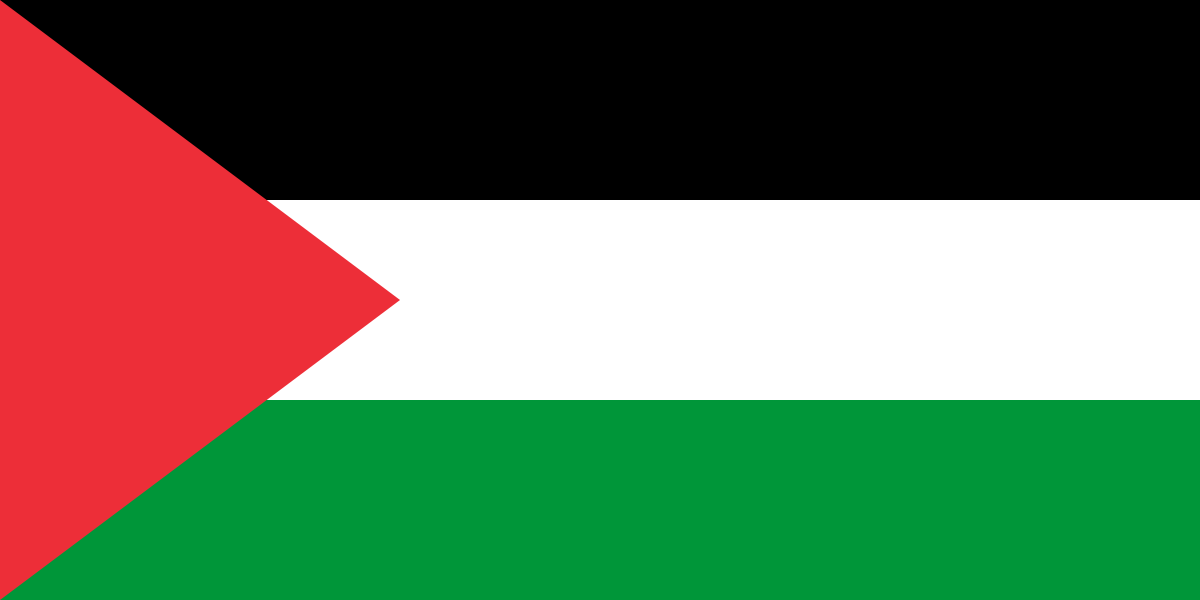
- Capital
- Ramallah, Jerusalem
- Population
- 5,483,450
- Region
Travel guide
Get in
Get into the West Bank Get into Gaza
Get around
thumb|Getting around [[Jericho]]
See
thumb|Church of Nativity in [[Bethlehem]] thumb|Market in [[Hebron]] Palestine is home to some of the most important religious places in history and a number of fabulous, humbling sights. Here, you follow the footsteps of millions of pilgrims, you stand on grounds that saw some of the most influential fights of all time and visit some of the most important biblical and historic sites in the world.
Famous as the birth place of Jesus, the small town of Bethlehem is a must-see for most visitors of the Palestinian territories. The Church of Nativity, built over the cave where – according to tradition – Jesus of Nazareth was born, is a sacred destination for Christians and Muslims alike. From here, it's a short walk to the Shepherd's Field, where the birth of the holy child is believed to be announced to a group of shepherds when they saw the Star of Nativity. Or head to Solomon's Pools, just a few kilometres out of town. Bethlehem is also famous for its Banksy Art, four graffiti can be found here. Around the city visit the stunning Monastery of Mar Saba.
Where Bethlehem is known as a place of birth, Hebron is famous as the burial place for the great patriarchs and matriarchs. A holy destination for both the Islamic and Jewish people, this city is home to the Tomb of the Patriarchs and Matriarchs and was once the capital of the Kingdom of Israel. Hebron has a delightful old town, full of winding alleys and bustling bazaars and is locally known for its pottery worksho…
Eat
thumb|Knafeh
Shawarma and falafel sandwiches are really popular foods for Palestinians, as well as olives and hummus. It is traditional to eat with bread and not a spoon or fork. It is unusual to eat a meal without bread.
Palestinian cuisine is generally similar to that of neighbouring Jordan. As in Jordan, mansaf is a popular dish of rice with meat, usually lamb. Knafeh is a popular dessert made of cheese, soaked in a sweet sugar-based syrup and topped with shredded filo pastry. Nablus is famous for their variety of knafeh Nabulsiyeh.
Drink
In cities such as Ramallah, alcohol is often available at restaurants. Be aware that most residents of the West Bank are Muslims who do not drink alcohol. As such, public intoxication can be seen as rude.
Article · Русский
Госуда́рство Палести́на (араб. دولة فلسطين — «Да́улят Филасты́н») — де-юре независимое частично признанное государство на Ближнем Востоке, находящееся в процессе создания. Независимость Государства Палестина по состоянию на конец июля 2019 года признали 138 из 193 государств — членов ООН. Государство получило название по имени Сирии Палестинской, провинции Римской империи, ранее называвшейся Иудеей и переименованной римским императором Адрианом в 135 году н. э. с целью стереть память об Иудейском царстве после подавления восстания евреев против Рима. «Palaestina» (латинский вариант греческого названия Палестины) происходит от «Филистия» (ивр. ארץ פלשת, [Э́рец-Пеле́шет]) — названия заселённой в древности филистимлянами части средиземноморского побережья нынешнего Израиля. Филистимляне, участвовавшие в движении «народов моря», в самом начале XIII века до н. э. осели на плодородной прибрежной полосе Ханаана — . Их этническая принадлежность и язык неизвестны, но, возможно, они были родственны древнейшему доиндоевропейскому населению Балкан и Малой Азии. Формирование палестинского государства предусматривается в соответствии с решениями ООН на территории Западного берега реки Иордан (или его части, в том числе на территории Восточного Иерусалима) и сектора Газа. Существуют различные предложения по его созданию в зависимости от мнения о палестинской государственности, а также различные его определения как территории. Провозглашение Государства Палестина состоялось 15 ноября 1988 года в Алжире на сессии Палестинского национального совета — высшего совещательного органа Организации освобождения Палестины (ООП) — 253 голоса «за», 46 — «против» и 10 человек воздержались от голосования. При этом ООП не контролировала какую-либо территорию, на которую претендовала. В 1994 году в результате Соглашений в Осло между Израилем и ООП от 13 сентября 1993 была создана Палестинская национальная администрация (ПНА). Вопрос создания будущего государства Соглашениями не предусматривался; при этом «обе стороны взяли на себя конкретное обязательство не принимать никаких односторонних действий по изменению статуса Западного берега реки Иордан и сектора Газа». Де-факто Государство Палестина по сегодняшний день не создано и не обладает реальным суверенитетом. Государственные структуры сформированы только частично. Во временной столице Рамалле функционируют президент, правительство и парламент. Однако в государстве нет армии, хотя есть полиция и при этом активно действуют полувоенные организации. Нет своей валюты, в качестве денежной единицы используются израильский шекель и доллар США. В Палестине нет действующего международного аэропорта, поэтому для полётов в другие страны палестинские государственные лидеры используют аэропорт столицы Иордании Амман. Значительная часть территории Западного берега реки Иордан контролируется израильской армией, восточный Иерусалим (и город в целом) также находится под контролем Израиля. Израиль контролирует также практически все границы Палестинских территорий, за исключением границы сектора Газа с Египтом, но при этом препятствует морскому сообщению сектора Газа с внешним миром. Палестинские территории, несмотря на существование частичного палестинского управления на них, всё равно рассматриваются ООН как оккупированные Израилем. Представители ООП называют Палестину «страной под израильской оккупацией».Сектор Газа и Западный берег реки Иордан представляют собой два эксклава, разделённые территорией Израиля, первый контролируется сторонниками ХАМАС, признанного в ряде стран террористической организацией, а второй — сторонниками ФАТХ, организации, которая формирует основу ООП. После длительного конфликта и попыток урегулирования 2 июля 2014 года ХАМАС и ФАТХ при участии пяти министров-христиан сформировали правительство национального единства, которое было приведено к присяге президентом Аббасом. Это правительство просуществовало до начала 2019 года и ушло в отставку в связи с так и не урегулированными противоречиями между ФАТХ и ХАМАС, вследствие чего правительство не имело контроля над сектором Газа. 29 ноября 2012 года по итогам голосования в Генеральной Ассамблее ООН (138 голосов «за», 9 — «против», 41 страна воздержалась) «предоставила Палестине статус государства-наблюдателя при Организации Объединённых Наций, не являющегося её членом, без ущерба для приобретённых прав, привилегий и роли Организации Освобождения Палестины в Организации Объединённых Наций как представителя палестинского народа согласно соответствующим резолюциям и практике». 5 января 2013 года был издан указ председателя ПНА Махмуда Аббаса, предписывающий впредь вместо названия «Палестинская национальная администрация» использовать в официальных целях исключительно название «Государство Палестина». На январь 2019 года ряд стран, в частности: Израиль, Испания, Норвегия, США, Швеция и некоторые другие — это решение не признали. В странах, уже признавших Государство Палестина, дипломатические представительства ООП действуют под вывеской посольств Государства Палестина.
Gallery (59)
On the map
3 mapped locations
Connections
Categories
1988 establishments in AsiaCitation overkillCountries and territories where Arabic is an official languageCountries in AsiaCountries in West AsiaEastern MediterraneanLevantMember states of the Organisation of Islamic CooperationPalestineRepublicsStates and territories established in 1988States with limited recognition