Category
page 1Cite IUCN without doi

Oceania
Oceania ( , ) is a geographical region including Australasia, Melanesia, Micronesia, and Polynesia. Oceania is generally considered a continent, while mainland Australia is regarded as its continental landmass. Spanning the Eastern and Western hemispheres, at the centre of the water hemisphere, Oceania is estimated to have a land area of about and a population of around 46.3 million as of 2024. Oceania is the smallest continent in land area and the second-least populated after Antarctica. It is home to Earth’s third-largest remaining area of tropical rainforest, which covers much of the island

lion
The lion (Panthera leo) is a large cat of the genus Panthera, currently ranging only in Sub-Saharan Africa and India. It has a muscular, broad-chested body; a short, rounded head; round ears; and a dark, hairy tuft at the tip of its tail. It is sexually dimorphic; adult male lions are larger than females and have a prominent mane that which extends from the head to the shoulders and chest.

Black Sea
sea between Europe and Asia

Panthera pardus
The leopard (Panthera pardus) is one of the five extant cat species in the genus Panthera. It has a pale yellowish to dark golden fur with dark spots grouped in rosettes. Its body is slender and muscular, reaching a length of with a long tail and a shoulder height of . Males typically weigh , and females .

Anura
A frog is any member of a diverse and largely semiaquatic group of short-bodied, tailless amphibian vertebrates composing the order Anura (coming from the Ancient Greek , literally 'without tail'). Frog species with rough skin texture due to wart-like parotoid glands tend to be called toads, but the distinction between frogs and toads is informal and purely cosmetic, and does not reflect taxonomy or evolutionary history.

Carica papaya
The papaya (, ), papaw, () or pawpaw () is the plant species Carica papaya, one of the 21 accepted species in the genus Carica of the family Caricaceae. Papaya is also the name of its fruit. It was first domesticated in Mesoamerica, within modern-day southern Mexico and Central America. It is grown in several countries in regions with a tropical climate. In 2024, India was the leading producer, accounting for 36% of the world total.
%20(white%20background).jpg)
zebra
Zebras (, ) (subgenus Hippotigris) are African equines with distinctive black-and-white striped coats. There are three living species: Grévy's zebra (Equus grevyi), the plains zebra (E. quagga), and the mountain zebra (E. zebra). Zebras share the genus Equus with horses and asses, the three groups being the only living members of the family Equidae. Zebra stripes come in different patterns, unique to each individual. Several theories have been proposed for the function of these patterns, with most evidence supporting them as a deterrent for biting flies. Zebras inhabit eastern and southern Afr

Pitcairn Islands
British overseas territory in the South Pacific

scorpion
Scorpions (order Scorpiones) are predatory arachnids with eight legs, a pair of grasping pincers and a narrow, segmented tail, often carried in a characteristic forward curve over the back and always ending with a stinger. The evolutionary history of scorpions goes back 435 million years. They mainly live in deserts but have adapted to a wide range of environmental conditions, and can be found on all continents except Antarctica. There are over 2,500 described species, with 22 extant (living) families recognized to date. Their taxonomy is being revised to account for 21st-century genomic studi

Olea europaea
The olive (botanical name Olea europaea, "European olive") is a species of subtropical evergreen tree in the family Oleaceae. Originating in Asia Minor, it is abundant throughout the Mediterranean Basin, with wild subspecies in Africa and western Asia; modern cultivars are traced primarily to the Near East, Aegean Sea, and Strait of Gibraltar. The olive is the type species for its genus, Olea, and lends its name to the Oleaceae plant family, which includes lilac, jasmine, forsythia, and ash. The olive fruit is classed botanically as a drupe, similar in structure and function to the cherry or p

Southern Africa
southernmost region of Africa

pomegranate
The pomegranate (Punica granatum) is a fruit-bearing, deciduous shrub in the family Lythraceae, subfamily Punicoideae, that grows to between tall. Rich in symbolic and mythological associations in many cultures, it originated in the region spanning the Caucasus and Iranian plateau — including modern-day Iran,Turkmenistan, Afghanistan and Pakistan. Pomegranate was first domesticated by ancient Iranians in the Persian plateau and nearby regions about 5,000 years ago. It is extensively cultivated for its fruit.

Sea of Azov
Inland sea of the Atlantic Ocean basin

Alces alces
The moose (: moose; used in North America) or elk (: elk or elks; used in Eurasia) (Alces alces) is the world's tallest, largest and heaviest extant species of deer and the only extant species in the genus Alces. It is also the tallest, and the second-largest, land animal in North America, falling short only to the American bison in body mass. Most adult male moose have broad, palmate ("open-hand shaped") antlers; other members of the deer family have pointed antlers with a dendritic ("twig-like") configuration. Moose inhabit the circumpolar boreal forests or temperate broadleaf and mixed fore

orangutan
Orangutans are great apes native to the rainforests of Indonesia and Malaysia. They are now found only in parts of Borneo and Sumatra, but during the Pleistocene they ranged throughout Southeast Asia and South China. Classified in the genus Pongo, orangutans were originally considered to be one species. In 1996, they were divided into two species: the Bornean orangutan (P. pygmaeus, with three subspecies) and the Sumatran orangutan (P. abelii); a third species, the Tapanuli orangutan (P. tapanuliensis), was identified definitively in 2017. The orangutans are the only surviving members of the s

Lynx
A lynx ( ; : lynx or lynxes) is any of the four extant species (the Canada lynx, Iberian lynx, Eurasian lynx and the bobcat) within the medium-sized wild cat genus Lynx. The name originated in Middle English via Latin from the Greek word (), derived from the Indo-European root (, ), in reference to the luminescence of its reflective eyes.

Eurasian lynx
species of mammal

Red Panda
species of small mammal from the Ailuridae family, native to Eastern Himalayas and Southwest China

Herpestidae
A mongoose is a small terrestrial carnivorous mammal belonging to the family Herpestidae. This family has two subfamilies, the Herpestinae and the Mungotinae. The Herpestinae comprises 23 living species that are native to southern Europe, Africa and Asia, whereas the Mungotinae comprises 11 species native to Africa. The Herpestidae originated about in the Early Miocene and genetically diverged into two main lineages between 19.1 and . There is a large introduced population on the islands of Hawaii. Mongoose diets are varied but consist of mainly insects, hatchlings, reptiles and birds.

great white shark
species of large lamniform shark

wolverine
The wolverine ( , ; Gulo gulo), also called the carcajou or quickhatch (from East Cree, kwiihkwahaacheew), is the largest land-dwelling member of the family Mustelidae. It is a muscular carnivore and a solitary animal. The wolverine has a reputation for ferocity and strength out of proportion to its size, with the documented ability to kill prey many times larger than itself.

Origanum vulgare
Oregano (, ; Origanum vulgare) is a species of flowering plant in the mint family, Lamiaceae. It was native to the Mediterranean region, but widely naturalised elsewhere in the temperate Northern Hemisphere.
%20(cropped).jpg)
Panthera
Panthera is a genus within the family Felidae, and one of two extant genera in the subfamily Pantherinae. It contains the largest living members of the cat family. There are five living species: the jaguar, leopard, lion, snow leopard and tiger. Numerous extinct species are also named, including the cave lion and American lion.

Hooded Crow
species of bird
.jpg)
Giraffa
Giraffes (genus Giraffa) are large African hoofed mammals. They are the tallest living terrestrial animals and the largest ruminants on Earth. They are classified under the family Giraffidae, along with their closest extant relative, the okapi. Traditionally, giraffes have been thought of as one species, Giraffa camelopardalis, with nine subspecies. Most recently, researchers proposed dividing them into four extant species, with seven subspecies, which can be distinguished morphologically by their fur coat patterns. Six valid extinct species of Giraffa are known from the fossil record.

Convallaria majalis
species of plant

Pholidota
Pangolins, also called scaly anteaters, are mammals of the order Pholidota (). The one extant family, the Manidae, has three genera: Manis, Phataginus, and Smutsia. Manis comprises five species found in Asia, while Phataginus and Smutsia include two species each, all found in sub-Saharan Africa. These species range in size from . Several extinct pangolin species are also known. In September 2023, a ninth species was reported, although it is only known from confiscated scales and has never been observed in the wild.

Trichechus
Manatees (, family Trichechidae, genus Trichechus) are large, fully aquatic, mostly herbivorous marine mammals sometimes known as sea cows. There are three accepted living species of Trichechidae, representing three of the four living species in the order Sirenia: the Amazonian manatee (Trichechus inunguis), the West Indian manatee (Trichechus manatus), and the West African manatee (Trichechus senegalensis). They measure up to long, weigh as much as , and have paddle-like tails.

Great Egret
species of bird

dingo
thumb|Dingo on the beach at Fraser Island|K'gari, Queensland

Vitis vinifera
species of flowering plant in the grape vine family Vitaceae

Red Junglefowl
species of bird; wild ancestor of the domesticated chicken

Iberian lynx
specie of felid native to the Iberian Peninsula

Armoracia rusticana
thumb|right|Sections of roots of the horseradish plant
thumb|upright|Foliage of the horseradish plant

Helarctos malayanus
bear found in tropical forest habitats of Southeast Asia
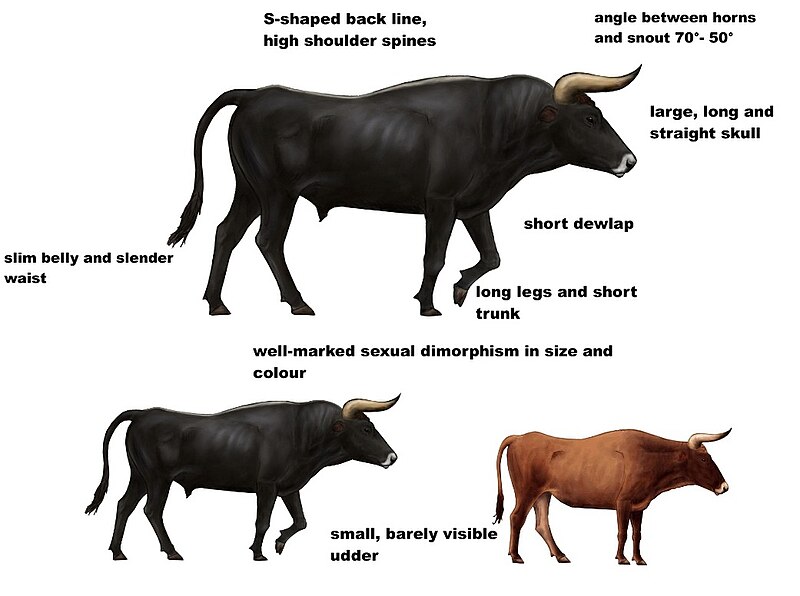
aurochs
The aurochs (Bos primigenius; or ; pl.: aurochs or aurochsen; also ure or urus) is an extinct species of bovine, considered to be the wild ancestor of modern domestic cattle. With a shoulder height of up to in bulls and in cows, it was one of the largest herbivores in the Holocene; it had massive elongated and broad horns that reached in length.

Melissa officinalis
lemon balm, a species of plant, herb

palm oil
edible and biocombustible vegetable oil from fruit of oil palms

Gharial
The gharial (Gavialis gangeticus), also known as gavial or fish-eating crocodile, is a crocodilian in the family Gavialidae and among the longest of all living crocodilians. Mature females are long, and males . Adult males have a distinct boss at the end of the snout, which resembles an earthenware pot known as a ghara, hence the name "gharial". The gharial is well adapted to catching fish because of its long, narrow snout and 110 sharp, interlocking teeth.

Nasturtium officinale
Watercress or yellowcress (Nasturtium officinale) is a species of aquatic flowering plant in the cabbage family, Brassicaceae.

Myocastor coypus
The nutria () or coypu () (Myocastor coypus) is an herbivorous, semiaquatic rodent from South America.
Classified for a long time as the only member of the family Myocastoridae, Myocastor has since been included within Echimyidae, the family of the spiny rats.
The nutria lives in burrows alongside stretches of water and feeds on river plant stems.

Hedera helix
species of plant

Gadus morhua
benthopelagic fish of the family Gadidae

Aesculus hippocastanum
species of plant

Larus fuscus
species of bird

Morinda citrifolia
species of plant

Procellariiformes
Procellariiformes is an order of seabirds that comprises four families; the albatrosses, the petrels and shearwaters, and two families of storm petrels. Formerly called Tubinares and still called tubenoses in English, Procellariiformes are often referred to collectively as the petrels, a term that has been applied to all members of the order, or more commonly all the families except the albatrosses. They are almost exclusively pelagic (feeding in the open ocean), and have a cosmopolitan distribution across the world's oceans, with the highest diversity being the seas around New Zealand.

Primula
Primula () is a genus of herbaceous flowering plants in the family Primulaceae. They include the primrose (P. vulgaris), a familiar wildflower of banks and verges. Other common species are P. auricula (auricula), P. veris (cowslip), and P. elatior (oxlip). These species and many others are valued for their ornamental flowers. They have been extensively cultivated and hybridised (in the case of the primrose, for many hundreds of years). Primula are native to the temperate Northern Hemisphere, south into tropical mountains in Ethiopia, Indonesia, and New Guinea, and in temperate southern South A

Sequoiadendron giganteum
species of large tree

Pallid Harrier
species of bird

Plantago lanceolata
species of plant

ocean sunfish
species of fish

Python
genus of reptiles

hammerhead sharks
family of fishes

Dimocarpus longan
Dimocarpus longan, commonly known as the longan () and '''dragon's eye''', is a tropical tree species that produces edible fruit. It is one of the better-known tropical members of the soapberry family Sapindaceae, to which the lychee and rambutan also belong. The fruit of the longan is similar to that of the lychee, but is less aromatic in taste.

Naja
Naja is a genus of venomous elapid snakes commonly known as cobras (or "true cobras"). Various species occur throughout Africa, Southwest Asia, South Asia, and Southeast Asia. Several other elapid species are often called "cobras", such as the king cobra and the rinkhals, but they are not "true cobras", in that they do not belong to the genus Naja.

Willow Warbler
species of bird
.jpg)
oncilla
The oncilla (Leopardus tigrinus), also known as the northern tiger cat, little spotted cat, and tigrillo, is a small spotted cat ranging from Central America to central Brazil. It is listed as Vulnerable on the IUCN Red List, and the population is threatened by deforestation and conversion of habitat to agricultural land.

Sumatran tiger
subspecies of mammal

Danaus plexippus
milkweed butterfly in the family Nymphalidae