Category
page 1Indian cuisine

tea
Tea is an aromatic beverage prepared by pouring hot or boiling water over cured or fresh leaves of Camellia sinensis, an evergreen shrub native to East Asia which originated in the borderlands of south-western China, north-east India and northern Myanmar. Tea is also made, but rarely, from the leaves of Camellia taliensis. After plain water, tea is the most widely consumed drink in the world. There are many types of tea; some have a cooling, slightly bitter, and astringent flavour, while others have profiles that include sweet, nutty, floral, or grassy notes. Tea has a stimulating effect in hu

ghee
Ghee (Hindi: घी) is a type of clarified butter, originating from India. It is commonly used for cooking, as a traditional medicine, and for Hindu religious rituals.
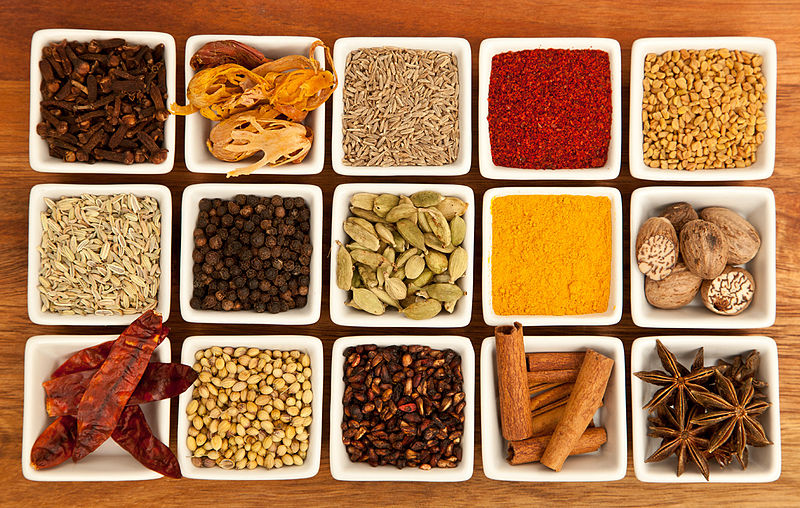
Indian cuisine
culinary traditions of India

French toast
bread soaked in beaten eggs and then fried
.jpg)
naan
Naan () is a leavened, oven-baked or tawa-fried flatbread, that can also be baked in a tandoor. It is characterised by a light and fluffy texture and golden-brown spots from the baking process. Naan is used in many cuisines worldwide.

fish and chips
hot dish of fried fish and fried potato

mashed potato
potato dish

tandoor
upright=1.2|thumb|Modern ceramic wood-fired tandoors

lassi
Lassi () is a yogurt–based beverage with a smoothie-like consistency. The word 'lassi' means yogurt mixed with water in Punjabi and Hindi-Urdu.

pakora
Pakora () is a fritter originating from the Indian subcontinent. They are sold by street vendors and served in restaurants across South Asia. They often consist of vegetables such as potatoes and onions, which are coated in seasoned gram flour batter and deep-fried.

rose water
flavoured water made by distilling rose petals with water

Borassus flabellifer
species of plant
%20in%20New%20Guinea.jpg)
sago
thumb|right|Sago palms (Metroxylon sagu) in New Guinea
thumb|Peeling and pounding a segment of sago palm stem to produce an edible starch. Sepik River, Papua New Guinea
Sago () is a starch extracted from the pith, or spongy core tissue, of various tropical palm stems, especially those of Metroxylon sagu. It is a major staple food for the lowland peoples of New Guinea and the Maluku Islands, where it is called saksak, rabia and sagu. The largest supply of sago comes from Melanesia region, particularly Eastern Indonesia. Large quantities of sago are sent to Europe and North America for cooking p

garam masala
Indian blend of ground spices

paneer
Paneer () is a fresh acid-set cheese, common in South Asian cuisine, made from cow milk or buffalo milk. It is a non-aged, non-melting soft cheese made by curdling milk with an acid, such as lemon juice or citric acid. Paneer was predominantly used in north Indian dishes and is commonly used throughout India due to its versatility as an ingredient in diverse dishes.

bulgur
thumb|Coarse bulgur

glutinous rice
type of rice grown mainly in Southeast and East Asia, with opaque grains, very low amylose content; especially sticky when cooked; does not contain gluten
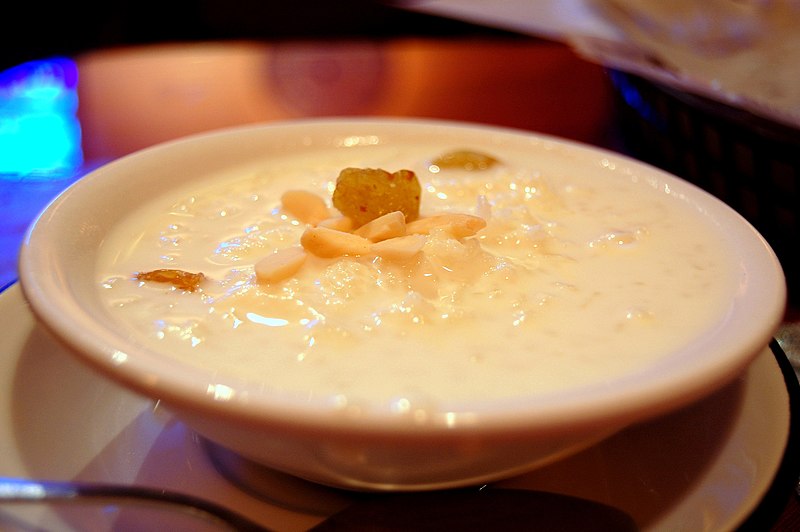
kheer
Kheer, khir, payesh, fenni or payasam is a pudding or porridge (specifically rice pudding) popular in the Indian subcontinent, usually made by boiling milk, sugar or jaggery, and rice. It can be additionally flavoured with dried fruits, nuts, cardamom and saffron. Instead of rice, it may contain cracked wheat, vermicelli (sevai), sago or tapioca (sabudana).

roti
Roti is a round flatbread originating from the Indian subcontinent. It is commonly consumed in many South Asian, Southeast Asian, Caribbean, East African, and Southeast African countries.
.jpg)
dal
In Indian cuisine, dal (also spelled daal or dhal pronunciation: ) are dried, split pulses (e.g., lentils, peas, and beans) that do not require soaking before cooking. India is the largest producer of pulses in the world. The term is also used for various soups prepared from these pulses. These pulses are among the leading staple foods in South Asian countries, and form an important part of the cuisines of the Indian subcontinent.

dosa
thin pancakes originating from South India

Basella alba
species of plant

masala chai
flavoured tea beverage made from milk, aromatic spices and herbs

rice flour
form of flour made from finely milled rice
momo
dumpling from Nepal

kaymak
Kaymak, sarshir, or qashta/ashta ( ; or ; ) is a creamy dairy food similar to clotted cream, made from the milk of water buffalo, cows, sheep, or goats in Central Asia, Turkic regions, some Balkan countries, some Caucasus countries, and the Levant.
jaggery
Jaggery is a traditional non-centrifugal cane sugar consumed in the Indian subcontinent, Southeast Asia, North America, Central America, Brazil and Africa. It is a concentrated product of cane juice and often date or palm sap without separation of the molasses and crystals, and can vary from golden brown to dark brown in colour. It contains up to 50% sucrose, up to 20% invert sugars, and up to 20% moisture, with the remainder made up of other insoluble matter, such as wood ash, proteins, and bagasse fibres. Jaggery is very similar to muscovado, an important sweetener in Portuguese, British and

Kabsa
Kabsa (), also known as Makboos () or Machboos ( ), is an Arab mixed rice dish that originates from Saudi Arabia or Yemen. It is commonly regarded as a national dish in all the countries of the Gulf Cooperation Council. It can also be found in regions such as southern Iran and Gaza in Palestine.
appam
An appam or aappam is a type of thin pancake in South Indian cuisine. It is made with fermented rice batter and coconut milk, traditionally cooked in an appachatti, a deep pan similar in shape to a wok. It is a popular dish in the Indian states of Tamil Nadu and Kerala and in Sri Lanka. In Sri Lanka, they are typically known as hoppers. Appams are most frequently served for breakfast or dinner, often with a side dish such as a vegetable or egg curry.

tandoori chicken
Indian subcontinent chicken dish
sambar
Indian food

thali
thumb|North Indian cuisine|North Indian style vegetarian thali served in a restaurant
chorba
Chorba, ( ; ) shorwa, shurba, shurpa, shurbah or shorba ( ) is a broad class of stews or rich soups found in national cuisines across North Africa, The Middle East, Iran, Turkey, Southeast Europe, Central Asia, East Africa and South Asia. It is often prepared with added ingredients but is also served alone as a broth or with bread.
rosogolla
Rasgulla (literally "syrup-filled ball") is a syrupy dessert popular in the eastern part of South Asia. It is made from ball-shaped dumplings of chhena dough cooked in light sugar syrup until the syrup permeates the dumplings.
chicken tikka
boneless chicken pieces cooked in a tandoor

Cinnamomum tamala
species of plant

Prasad
right|thumb|200px|Naivedya offered to Radha Krishna in Sri Maya Chandrodaya Mandir in [[Mayapur, India]]

tsampa
Tsampa or tsamba (; ) is a Tibetan and Himalayan staple foodstuff; it is also prominent in parts of northern Nepal. It is a glutinous meal made from roasted flour, usually barley flour and sometimes also wheat flour and flour prepared from tree peony seeds. It is usually mixed with Tibetan butter tea. It is also eaten in Turkestan and Mongolia, where it is known as zamba.

macaroon
alt=A plate of coconut and chocolate coconut macaroons served on Passover|thumb|A plate of coconut and [[chocolate coconut macaroons served on Passover]]
A macaroon ( ) is a small cake or cookie, originally made from ground almonds, egg whites, and sugar, but now often with coconut or other nuts. They may also include jam, chocolate, or other flavorings.
Pav bhaji
a vegetable curry and bread dish originating from Mumbai, India
mung bean sprout
sprout of the mung bean

Dabbawala
A dabbawala (also spelled dabbawalla or dabbawallah, called tiffin wallah in older sources) is a worker who delivers hot lunches from homes and restaurants to people at work in India and Pakistan, especially in Mumbai and Karachi. The dabbawalas constitute a lunchbox delivery and return system for workers in Mumbai and Karachi. The lunchboxes are picked up in the late morning, delivered predominantly using bicycles and railway trains, and returned empty in the afternoon.

Puttu
Puttu (; ; ; ) is a dish native to the Southern Indian states of Kerala, Tamil Nadu, and parts of Karnataka, as well as Sri Lanka. It is made of steamed cylinders of ground rice layered with coconut shavings, sometimes with a sweet or savory filling on the inside. Puttu is usually a breakfast dish served hot with either sweet side dishes such as palm sugar or banana, or savoury with chana masala, chutney, rasam, or meat curries.

chaat
Chaat, or chāt (IAST: cāṭ) () is a family of fried dough snacks that originated in India, typically served as an hors d'oeuvre or at roadside tracks from stalls or food carts across South Asia. With its origins in Uttar Pradesh, chaat has become popular in the rest of South Asia.
Hyderabadi biryani
form of biryani, from Hyderabad, India
Dahi vada
Indian snack
Dastarkhān
A dastarkhān (Persian / Urdu: دسترخوان, , , , , , , , ) or dastarkhwān is the name used across Central Asia and South Asia to refer to the traditional dining space where food is eaten. The term is a word of Persian origin meaning the tablecloth which is spread on the ground, floor, or table as a sanitary surface for food.
Punjabi cuisine
food from the Punjab region of India and Pakistan
Dal bhat
Lentil and rice dish
Chaat masala
spice mix, used in Pakistani and Indian Cuisine
dahi
traditional yogurt or fermented milk product, originating from the Indian subcontinent

Thukpa
Thukpa (Tibetan: ཐུག་པ; IPA: /tʰu(k̚)ˀ˥˥.pə˥˥/ ) is a Tibetan noodle soup, which originated in the eastern part of Tibet. Amdo thukpa, especially thenthuk, is a variant among the Indians, especially Ladakhis and the Sikkimese. Thukpa can be prepared in both vegetarian and non-vegetarian variations; the most popular non-vegetarian variation includes chicken.
Kulcha
Kulcha is a type of flatbread made from refined wheat flour, and fermented in earthen pots and baked in a tandoor. The term kulcha derives from a Persian term for a disc-shaped loaf of leavened bread. In India, this term is commonly used for regular English disc-shaped bread.

nihari
Nihari (Hindi: , Urdu: ) is a stew of the Indian subcontinent, which consists of slow-cooked meat, mainly a shank cut of beef, lamb and mutton, or goat meat, as well as chicken and bone marrow. The two most common theories of origin postulate that nihari originated either in the Indian cities of Lucknow or Delhi. It is flavoured with long pepper (pippali), a relative of black pepper and is often served with naan, roti or rice.
Rajma
Rājmā, is a vegetarian dish, originating from the Indian subcontinent, consisting of red kidney beans in a thick gravy with many Indian whole spices, and is usually served over rice, in a meal called Rajma Chawal. It is a part of the regular diet in Northern India, Nepal and Punjab province of Pakistan. The dish developed after the red kidney bean was brought to the Indian subcontinent from Mexico.
preserved lemon
condiment in South Asian and North African cuisine
Batata vada
Indian vegetarian fast food in Maharashtra, India
sarson da saag
vegetarian dish from the Indian subcontinent
yak butter
butter made from the milk of the domesticated yak
yahni
Yakhni (, , , , ), yahni (Turkish), or yahniya (, Serbian, ), jahni (Albanian), iahnie (Romanian) is a class of dishes traditionally prepared in a vast area encompassing South Asia, the Middle East and the Balkans. Generally, it is a stew of meat and vegetables.