Category
page 1Indian desserts

gulab jamun
milk-solid-based sweet from the Indian subcontinent
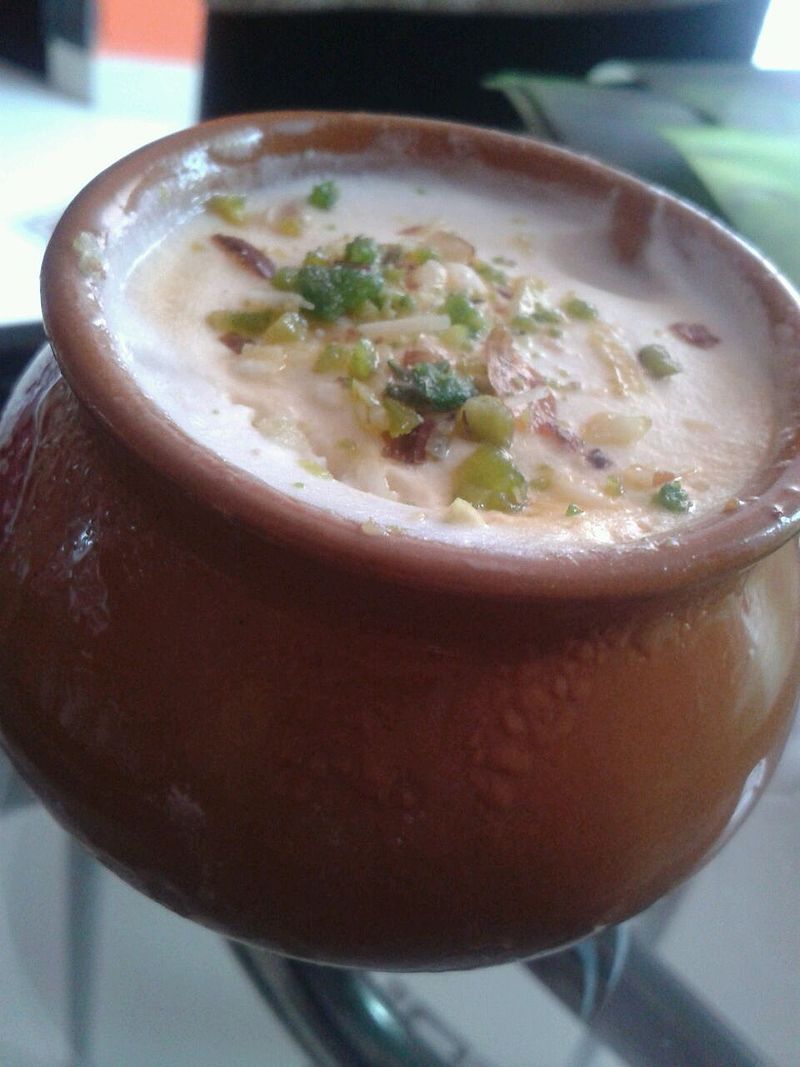
Kulfi
Kulfi () is a frozen dairy dessert from the Indian subcontinent. It is often described as "traditional Indian ice cream". Kulfi originated in 16th-century Delhi during the Mughal era.
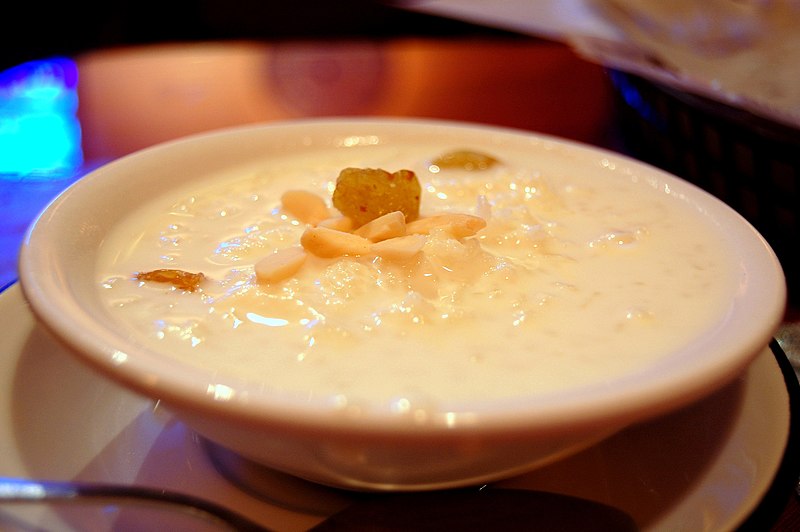
kheer
Kheer, khir, payesh, fenni or payasam is a pudding or porridge (specifically rice pudding) popular in the Indian subcontinent, usually made by boiling milk, sugar or jaggery, and rice. It can be additionally flavoured with dried fruits, nuts, cardamom and saffron. Instead of rice, it may contain cracked wheat, vermicelli (sevai), sago or tapioca (sabudana).

crème caramel
custard dessert with soft caramel on top
falooda
A falooda or faluda () is a Mughlai cold dessert made with vermicelli. It has origins in the Persian dish faloodeh, variants of which are found across West, Central, South and Southeast Asia. Traditionally, it is prepared by mixing rose syrup, vermicelli, and sweet basil seeds with milk, often served with kulfi. The vermicelli used for preparing falooda is made from wheat, arrowroot, cornstarch, or sago.
rosogolla
Rasgulla (literally "syrup-filled ball") is a syrupy dessert popular in the eastern part of South Asia. It is made from ball-shaped dumplings of chhena dough cooked in light sugar syrup until the syrup permeates the dumplings.
barfi
Barfi or burfi is a milk-based sweet from the Indian subcontinent with a fudge-like consistency. It is consumed throughout India and Pakistan and is especially popular in North India. Barfi is often served at celebrations and religious festivals such as Diwali and Holi.
Ras malai
Bengali sweet made with Indian cheese
modak
Modak (), modakam (), kolukattai or modaka (), also referred to as jilledukayalu in Telugu () is an Indian sweet dish popular in many Indian states and cultures. According to Hindu and Buddhist beliefs, it is one of the favourite dishes of Ganesha and the Buddha and is therefore used in prayers. The sweet filling inside a modak consists of freshly grated coconut and jaggery, while the outer soft shell is made from rice flour or wheat flour mixed with khowa or maida flour.
mango sticky rice
South and Southeast Asian dessert

bebinca
thumb|right|Goan bebinca in Lisbon, [[Portugal]]
Bebinca or bebinka, (Konkani; bibik) is a layer cake of Indo-Portuguese cuisine in former Estado da Índia Portuguesa, Goa. It’s also referred as Queen of Goan Desserts .In traditional baking, a bebinca has between 7 and 16 layers, but bakeries can modify the cake recipe as per convenience and taste. It is especially popular during the Christmas season, but is available all year round due to tourism in Goa. It is also easily available to carry and preserve for a long time or eaten fresh.
Soan papdi
Indian dessert
gajar ka halwa
South Asian sweet
mithai
confectionery and desserts of the Indian subcontinent
.jpg)
peda
Peda, pedha () or pera is an Indian sweet that originated in the city of Mathura, Uttar Pradesh, India. Traditionally prepared as thick, semi-soft round balls, its main ingredients are khoa, sugar and traditional flavourings including cardamom seeds. It is brown in colour. Variant spellings and names for the dessert include pedha, penda (in Gujarati) and pera and it is found in several varities in north India.
Puran Poli
sweet dish of South India
Khaja
Khaja or khajuri () or pheni is an Indian deep-fried pastry, commonly filled with fruit or soaked with sugar syrup.
Mysore pak
sweet dish originated in the state of Karnataka, India
gujia
Gujhia, also known as gujiya, gujia, gughara, pedakiya, purukiya, karanji, kajjikayalu, somas, or karjikayi, is a sweet, deep-fried pastry that is a popular dessert in the Indian subcontinent.

chomchom
thumb|Cherry Cham cham
Cham cham, Chomchom or chum chum () is a traditional Bengali sweet, common throughout the Indian subcontinent. The sweet comes in a variety of colours, mainly light pink, light yellow, and white. It is made from chhena and coated with coconut or mawa flakes as a garnish.

rabri
Rabri, rabdi or rabidi (IAST: Rabaḍī) is a sweet, condensed-milk-based dish, originating from the Indian subcontinent, made by boiling milk on low heat for a long time until it becomes dense and changes its colour to off-white or pale yellow. Jaggery, spices, and nuts are added to it to give it flavor. It is chilled and served as dessert. Rabri is the main ingredient in several desserts, such as rasabali, chhena kheeri, and khira sagara.

Kozhakkattai
Kozhukkattai (, Kozhukatta (), kudumu (Telugu: కుడుము), Modaka () is a popular South Indian dumpling made from rice flour, with a filling of grated coconut, jaggery, or chakkavaratti. Kozhukatta, although usually sweet, can sometimes be stuffed with a savory filling. Modak is a similar dish made in other parts of India.
nankhatai
Nankhatai (; Burmese: နံကထိုင်; Hindustani: नानख़ताई (Hindi) ਨਾਨ ਖਟਾਈ (Punjabi) / (Urdu); ; Tamil: நானஹத்தா) are shortbread biscuits originating in the Indian subcontinent, common in Northern India, Pakistan, Bangladesh, Sri Lanka, and Myanmar (formerly Burma).

Pitha
Pitha (; also called pithe) are a variety of food similar to pancakes, dumplings or fritters, originating from India and Bangladesh. Pitha can be sweet or savoury, and usually made from a dough or batter, which is then steamed, fried or griddled. Very few varieties are oven-baked or boiled, and most are unleavened and cooked on a stovetop (or equivalent). Some versions may have a filling, garnish, or sauce. Few may be set or shaped after cooking. They are typically eaten as a snack with chai, or as treats during special occasions (similar to mithai).
Mango pudding
Dessert originating from India which is common in Hong Kong, Malaysia, Macau, Singapore and Thailand
Sheer khurma
afghani,Persian Dessert
kaju katli
Indian dessert similar to a barfi
Shrikhand
Shrikhand is a traditional sweet of the Indian subcontinent made from strained yogurt. It is often served as part of a thali (platter) or with puris (puffed deep-fried whole wheat bread). It is a traditional dessert in Gujarati and Marathi cuisine.
Kalakand
Kalakand is a sweet cheese confection from India. It has been described as "akin to Italian cheesecake, firmer in texture than milk cake, but softer than burfis."

basundi
Basundi (, , , , ) is an Indian sweet mostly in Maharashtra, Gujarat, Andhra Pradesh, Telangana, Tamil Nadu and Karnataka. It is a sweetened condensed milk made by boiling milk on low heat until the milk is reduced by half. In North India, a similar dish goes by the name rabri.
Thekua
Thekua, thokwa or thekariis, also known as khajuria, tikari and thokni, is an Indo-Nepalese sweet dish popular in Southern Nepal and the Indian states of Bihar, Jharkhand and eastern Uttar Pradesh. Thekua is a revered prasada, offering to god, during Chhath puja. It has been used as a sweet snack for centuries in these places.
sandesh
Bengali confectionery

Bakarkhani
Bakarkhani, baqarkhani or bakorkhoni, also known as bakarkhani roti, is a thick, spiced flatbread that is part of the Mughlai cuisine. Bakarkhani is prepared on certain Muslim religious festivals in South Asia and is now popular as a sweet bread.
balushahi
South Asian donuts

Panjiri
Panjiri is a sweet dish from India which is specially prepared for Krishna Janmashtami festival. The sweet panjiri evolved from an Ayurvedic preparation called Panchajīraka.
Peda
Indian sweet, often a round ball of dairy solids
zarda
traditional South Asian sweet dish
Rasabali
Rasabali (, IAST: rasābaḷi) is a sweet dish from Odisha, India. It consists of deep fried flattened reddish brown patties of chhena (farmer cheese) that are soaked in thickened, sweetened milk (rabri). Flattening the chhena into palm-sized patties is done in order to allow them to absorb the milk more readily. The thickened milk is also usually lightly seasoned with crushed cardamom pods.
Anarsa
Anarsa or hilsa is a rice-based biscuit in Nepal and the Indian states of Bihar and Maharastra, especially in Gaya located in Bihar. It is commonly associated with the Hindu festival of Diwali (Tihar) in Nepal, Maharashtra and Bihar, along with other special occasions. Its ingredients include jaggery (unrefined cane sugar), rice, poppy seed and ghee (clarified butter).
Suji ka halwa
Indian type of halvah made by toasting semolina (called suji, sooji, or rawa) in a fat like ghee or oil
Sohan halwa
Indian Dessert

Shemai
Shemai () is a traditional dessert in Bangladesh and Indian state of Odisha and West Bengal. Shemai is popular during Eid, but consumed throughout the year. It is a dessert form of vermicelli, soaked in sweet milk and often garnished with nuts.
Double ka meetha
Indian bread pudding
Kesari bhath
sweet Indian food
vark
Vark (also varak, Waraq, or warq) is a fine filigree foil sheet of pure metal, typically silver but sometimes gold, used to decorate Indian sweets and food. The silver and gold are edible, though flavorless. Vark is made by pounding silver into sheets less than one micrometre (μm) thick, typically 0.2–0.8 μm. The silver sheets are typically packed between layers of paper for support; this paper is peeled away before use. It is fragile and breaks into smaller pieces if handled with direct skin contact. Leaf that is 0.2 μm thick tends to stick to skin if handled directly.
gajak
Gajak, also known as Tilsakri, Tilpatti or Tilpapdi) is a confection originating in north-central India. It is a dry sweet made of sesame seeds (til), jaggery, and sometimes peanuts. The sesame seeds (til) are cooked in the raw sugar syrup and set in thin layers, which can be stored for months.
Adhirasam
Adhirasam, attarasalu, (), or in Kannada (), in Telugu (), in Marathi, in Chhattisgarhi or in Odia is a type of Indian sweet made out of
rice, jaggery, ghee and sometimes coconut and with spices like cardamom, sesame, pepper and ginger powder from Tamil cuisine, Karnataka cuisine, Telugu cuisine, Marathi cuisine and Odia cuisine. The doughnut-like fried dough has a long history of popularity in Kannada, Telugu, Maharashtra, Chhattisgarh, Odisha, and Tamil civilization. They are similar in shape to vada, but are not savoury and are eaten as a sweet.
Kalathappam
Kalathappam (കലത്തപ്പം) is a dish from the North Malabar and South Malabar regions of India, especially found in Kannur, Malappuram and Kasaragod. It is known as kalthappa by the Beary Muslims of Mangalore.
Churma
Churma is a popular Rajasthani, Bihari, Uttar Pradeshi, Haryanvi, and Awadhi delicacy from India. In Punjab, the dish is called churi. It is coarsely ground wheat, crushed and cooked with ghee and sugar.
list of Indian sweets and desserts
Wikimedia list article
Bhapa pitha
a type of rice cake
Chandrakala
Indian sweet named after Moon
Bakarwadi
Bhakarwadi is a traditional crispy, deep-fried, disc-shaped, sweet and spicy snack popular in the western cities of Pune, Maharashtra and Vadodara, Gujarat in India. It was already popular before 1960 when these were not Gujarat or Maharashtra states; they were both a part of Bombay State, and both cultures added their own flavors to each other's recipes.
Neyyappam
Neyyappam () or Yeriyappa is a sweet rice-based fritter fried in ghee. Neyyappam has its origins in the southern Indian state of Kerala and coastal Karnataka. The name is derived from the words neyy () meaning "ghee" (clarified butter) and appam () meaning "pancake".
Mathura Peda
Indian Sweet dish
chhena gaja
Indian Food
Chhenapoda
cheese dessert of Odisha
Mihidana
Mihidana () is an Indian sweet from Burdwan, West Bengal, India. Mihidana, described as the micro cousin of the traditional Boondi, is derived from two words, Mihi meaning fine, and Dana, meaning grain.
Langcha
Lyangcha, Langcha (), or Lemcha, is an Indian sweet dish prepared in West Bengal, Jharkhand, Odisha, Bihar, Assam, Tripura and also throughout Bangladesh. It is made from flour and milk powder by frying it and dipping it into sugar syrup for a long time. The origin of the sweet is in Bardhaman, West Bengal, India. The Government of West Bengal has begun the process of registering Geographical indication (GI) for Lyangcha.
Pinni
thumb|right|Pinni made with atta flour|atta (wheat flour), khoya (thickened milk) and dry fruits
Pinni is a type of Punjabi and North Indian cuisine dish that is eaten mostly in winters. It is served as a dessert and is made from desi ghee, wheat flour, jaggery and almonds. Raisins may also be used. Urad dal pinni is a variety of pinni."Alsi pinni, from Punjab contains flaxseed.