Category
page 1Japanese cuisine

tea
Tea is an aromatic beverage prepared by pouring hot or boiling water over cured or fresh leaves of Camellia sinensis, an evergreen shrub native to East Asia which originated in the borderlands of south-western China, north-east India and northern Myanmar. Tea is also made, but rarely, from the leaves of Camellia taliensis. After plain water, tea is the most widely consumed drink in the world. There are many types of tea; some have a cooling, slightly bitter, and astringent flavour, while others have profiles that include sweet, nutty, floral, or grassy notes. Tea has a stimulating effect in hu
soybean
The soybean, soy bean, or soya bean (Glycine max) is a species of legume native to East Asia, widely grown for its edible bean. Soy is a staple crop, the world's most grown legume, and an important animal feed.

sushi
is a traditional Japanese dish made with , typically seasoned with sugar and salt, and combined with a variety of , such as seafood, vegetables, or meat; raw seafood is the most common, although some may be cooked. While sushi has numerous styles and presentations, the current defining component is the vinegared rice, also known as , or .

tofu
or bean curd is a food prepared by pressing the curds of coagulated soy milk into solid white blocks of varying softness: silken, soft, firm, and extra (or super) firm.
.jpg)
Lagenaria siceraria
Calabash (; Lagenaria siceraria), also known as bottle gourd, white-flowered gourd, long melon, birdhouse gourd, New Guinea bean, New Guinea butter bean, Tasmania bean, zucca melon and opo squash, is a vine which is grown for its fruit. It belongs to the family Cucurbitaceae, is native to tropical Africa, and cultivated across the tropics. It can be either harvested young to be consumed as a vegetable, or harvested mature to be dried and used as a kitchen utensil (typically as a ladle or bowl), beverage container or a musical instrument. When it is fresh, the fruit has a light green smooth ski

curry
thumb|upright=1.2|Lamb Madras curry, Anglo-Indian, c. 1850
Curry is a dish with a spicy sauce, initially in Indian cuisine, then modified by interchange with the Portuguese, followed by the British, and eventually thoroughly internationalised. Many curries are found in the cuisines of countries in Southeast Asia and East Asia.

Japanese cuisine
culinary traditions of Japan

Arctium lappa
species of plant

French toast
bread soaked in beaten eggs and then fried

blood sausage
sausage filled with blood that are cooked or dried and mixed with a filler until they are thick enough to congeal when cooled

sashimi
thumb|Sashimi on a Shigaraki ware plate
thumb|Sashimi combo of slices of assorted fish, served on a wooden plate
is a Japanese delicacy consisting of fresh raw fish or meat sliced into thin pieces and often eaten with soy sauce.

stew
A stew is a combination of solid food ingredients that have been cooked in liquid and served in the resultant gravy. Ingredients can include any combination of vegetables and may include meat, especially tougher meats suitable for slow-cooking, such as beef, pork, venison, rabbit, lamb, poultry, sausages, and seafood. While water can be used as the stew-cooking liquid, stock is also common. A small amount of red wine or other alcohol is sometimes added for flavour. Seasonings and flavourings may also be added. Stews are typically cooked at a relatively low temperature (simmered, not boiled), a

udon
Udon ( or ) is a thick noodle made from wheat flour, used in Japanese cuisine. There are a variety of ways it is prepared and served. Its simplest form is in a soup as with a mild broth called made from dashi, soy sauce, and mirin. It is usually topped with thinly chopped scallions. Other common toppings include prawn tempura, (mixed tempura fritter), (sweet, deep-fried tofu pouches), (sliced fish cake), and spice added to taste.
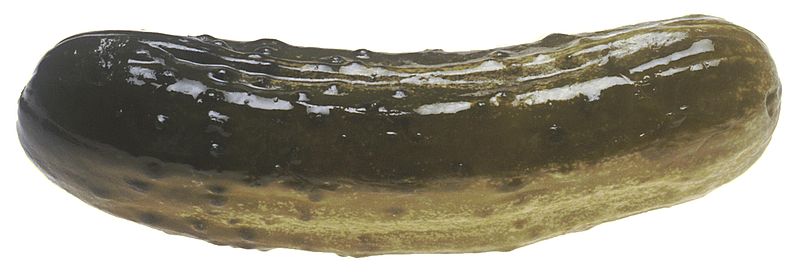
pickled cucumber
cucumber preserved in vinegar

cabbage roll
dish of cabbage leaves with a filling

glutinous rice
type of rice grown mainly in Southeast and East Asia, with opaque grains, very low amylose content; especially sticky when cooked; does not contain gluten

teriyaki
Teriyaki () is a cooking technique in which foods are broiled or grilled with a glaze of soy sauce, mirin, and sugar. Although commonly associated with Japanese cuisine, the technique was adapted for use in fast food meals in Seattle.

okonomiyaki
is a Japanese teppanyaki savory pancake dish consisting of wheat flour batter and other ingredients (mixed, or as toppings) cooked on a teppan (flat griddle). Common additions include cabbage, meat, and seafood, and toppings include okonomiyaki sauce (made with Worcestershire sauce), aonori (dried seaweed flakes), katsuobushi (bonito flakes), Japanese mayonnaise, and pickled ginger.

cooked rice
rice that has been cooked either by steaming or boiling

Vigna angularis
species of plant

rice flour
form of flour made from finely milled rice

Prunus mume
species of plant

soba
Soba ( or , "buckwheat") are Japanese noodles made from buckwheat flour, with varying amounts of wheat flour mixed in.
It has an ashen brown color, and a slightly grainy texture. The noodles are served either chilled with a dipping sauce, or hot in a noodle soup. They are used in a wide variety of dishes.
.jpg)
nori
Nori is a dried edible seaweed used in Japanese cuisine, usually made from species of the red algae genus Pyropia, including P. yezoensis and P. tenera. It has a strong and distinctive flavor, and is generally made into flat sheets and used to wrap rolls of sushi or onigiri (rice balls).

nattō
is a traditional Japanese food made from whole soybeans that have been fermented with Bacillus subtilis var. natto. It is often served as a breakfast food with rice. It is served with karashi mustard, soy or tare sauce, and sometimes Japanese bunching onion. Within Japan, nattō is most popular in the eastern regions, including Kantō, Tōhoku, and Hokkaido.

Wagyu
thumb|Japanese Black cattle of the Tajima strain on a farm in northern Hyōgo Prefecture
thumbnail|High-grade sliced Matsusaka beef|Matsusaka wagyu beef
Wagyu (, Hepburn: wagyū, ) is the collective name for the four principal Japanese breeds of beef cattle. All wagyū cattle originate from early twentieth-century cross-breeding between native Japanese cattle and imported stock, mostly from Europe.
zongzi
Zongzi (), simply zong () or translated as rice dumplings, is a traditional Chinese rice dish made of glutinous rice stuffed with a range of fillings and wrapped in bamboo leaves. Fillings can be either sweet, such as red bean paste, or savory, such as pork belly or Chinese sausage. The bamboo for wrapping the zongzi is generally of the species Indocalamus tessellatus, although sometimes reed or other large flat leaves may be used. Zongzi are cooked by steaming or boiling.

seitan
thumb|Commercially packaged seitan
.jpg)
pirozhki
Pirozhki (, ; ; see also other names) is the Russian name for baked or fried yeast-leavened boat-shaped buns with a variety of fillings in Russian and Eastern European cuisine in general. Pirozhki are a popular street food and comfort food. They are especially popular in countries with large ethnic Russian communities, and may also be found in other parts of the world.
Bassia scoparia
species of annual plant

sencha
thumb|200px|Steamed teas such as sencha produce a cloudy, richly coloured liquid.

Prunus salicina
species of plant

osechi
thumb|right|300px|Another example of in three-tiered box
thumb|250px|right|Another example of , casual type
'''' (御節料理, お節料理 or おせち) are traditional Japanese New Year foods. are easily recognizable by their special boxes called jūbako (重箱), which resemble bentō boxes. Like bentō boxes, jūbako are often kept stacked before and after use. Not all parts of Japan, such as Suzu in Ishikawa, practice the custom of eating osechi''.

teppanyaki
thumb|200px|Misono in Kobe—the first restaurant to offer
thumb|A chef cooking at a gas-powered in a Japanese steakhouse
thumb|Chef preparing a flaming onion volcano

kamaboko
thumb|
Kobe beef
Japanese beef
crab stick
form of kamaboko, a processed seafood made of finely pulverized white fish flesh (surimi)
mung bean sprout
sprout of the mung bean

Aspergillus oryzae
species of fungus
kinako
Kinako ( or "yellow flour") is roasted soybean flour, used in Japanese cuisine. In English, it is usually called "roasted soy flour". Kinako is mostly used as a topping to flavor rice cakes like mochi.
char siu
popular style of Cantonese barbecued pork
narutomaki
or is a type of kamaboko, or cured fish surimi produced in Japan. Each cloud-shaped slice of naruto has a pink or red spiral pattern, which is meant to resemble the Naruto whirlpools in the Naruto Strait between Awaji Island and Naruto, Tokushima Prefecture on Shikoku Island in Japan.

Caulerpa lentillifera
species of alga
%20Roscoe%2C%201804.jpg)
Zingiber mioga
thumb|Ginger leaves, illustration from the Japanese agricultural encyclopedia Seikei Zusetsu (1804)
or Japanese ginger is the species Zingiber mioga in the family Zingiberaceae. It is a deciduous herbaceous perennial native to Japan, China, and the southern part of Korea. Only its edible flower buds and flavorful shoots are used in cooking. The flower buds are finely shredded and used in Japanese cuisine as a garnish for miso soup, sunomono, and dishes such as roasted eggplant. In Korean cuisine, the flower buds are skewered alternately with pieces of meat and then are pan-fried.

Chikuwa
is a Japanese fishcake product made from fish surimi. After being mixed well, they are wrapped around a bamboo or metal stick and steamed or broiled. The word chikuwa ("bamboo ring") comes from the shape when it is sliced.
tofu skin
Chinese and Japanese food product made from soybeans

Petasites japonicus
species of plant
conveyor belt sushi
form of sushi restaurant common in Japan

tataki
thumb|
Two methods of preparing fish or meat in Japanese cuisine are called '''''' or . In Japanese, means "pounded" or "hit into pieces".

ikizukuri
thumb|right|240px|Fish served as ikizukuri.
, also known as , (roughly translated as "prepared alive") is the preparing of sashimi (raw fish) from live seafood. In this Japanese culinary technique, the most popular sea animal used is fish, but octopus, shrimp, and lobster may also be used. The practice is controversial owing to concerns about the animal's suffering, as it is seemingly alive when served.
thumb|240px|Freshly served Ikizukuri.

kushikatsu
, also known as , is a Japanese dish of deep-fried skewered meat and vegetables. In Japanese, refers to the skewers used while katsu means a deep-fried cutlet of meat.
green laver
type of edible green seaweed

Karasumi
thumb|Karasumi drying in Tokyo
Karasumi ( or wūyú zǐ () is a food item made by salting mullet roe pouch and drying it in sunlight. It is a softer analog of Mediterranean bottarga.
edible seaweed
algae that can be eaten and used in the preparation of food

omakase
is a Japanese word meaning "I'll leave it up to you", derived from the Japanese . It is most commonly used at Japanese restaurants as a form of gourmet dining in which the customer does not order from a menu and instead lets the chef decide which seasonal specialties to serve.

sakuramochi
thumb|right|Kansai-style sakuramochi is a Japanese confection (wagashi) consisting of sweet, pink-colored rice cake (mochi) with red bean paste (anko) filling, wrapped in a pickled cherry blossom (sakura) leaf, which may or may not be eaten depending on individual preference.
Traditionally, the sweet is eaten during the spring season, especially at the annual Hinamatsuri celebration on March 3 and flower viewing (hanami) parties.
thumb|right|The interior of a sakuramochi, showing the red-bean paste inside

fiddlehead fern
thumb|upright=1.2|Fiddlehead ferns
thumb|A chicken dish including fiddleheads
thumb|Fiddleheads growing
thumb
thumb|Fiddlehead sculpture at the Saint John Arts Centre by sculptor Jim Boyd in Saint John, New Brunswick, Canada
Okinawan cuisine
culinary traditions of Okinawa
curry bread
Japanese dish, consisting of Japanese curry, wrapped in a piece of dough, coated in bread crumbs, and deep fried

Jingisukan
thumb|Jingisukan