Category
page 1Japanese seafood

Echinoidea
class of marine invertebrates

Stomatopoda
order of crustaceans

surimi
thumb|Crab sticks – imitation crab meat made from surimi

fugu
thumb|Takifugu in a tank
Fugu (; ; ) in Japanese, bogeo (; 鰒魚) or bok () in Korean, and hétún () in Standard Modern Chinese refers to pufferfish, normally of the genus Takifugu, Lagocephalus, or Sphoeroides, or a porcupinefish of the genus Diodon, or a dish prepared from these fish.

Pacific saury
species of fish

geoduck
The Pacific geoduck ( ; Panopea generosa) is a species of very large saltwater clam in the family Hiatellidae. The common name is derived from the Lushootseed name, .

Seriola quinqueradiata
jack fish species

Takifugu
Takifugu, also known by the Japanese name , is a genus of pufferfish with 25 species, most of which are native to salt and brackish waters of the northwest Pacific, but a few species are found in freshwater in Asia or more widely in the Indo-Pacific region. Their diet consists mostly of algae, molluscs, invertebrates and sometimes crustaceans.

shiokara
thumb|Ika no shiokara

kabayaki
thumb|250px|Eel kabayaki on rice
thumb|Eel kabayaki shop. Ukiyoe by Katsukawa Shuntei, 1804–1810

unagi
is the Japanese word for freshwater eel, particularly the Japanese eel, . Unagi is a common ingredient in Japanese cooking, often as kabayaki. It is not to be confused with saltwater eel, which is known as anago in Japanese.
pollock roe
eggs of the Pollock fish
sea cucumber as food
flesh from sea cucumbers

Tobiko
is flying fish roe in Japanese cuisine, known for its use in sushi.

Tsukudani
thumb|right|280px|A dish of tsukudani made from kombu seaweed
is thinly sliced seafood, meat or seaweed that has been simmered in soy sauce and mirin. As a flavorful accompaniment to plain rice, tsukudani is made salty enough to not go bad, allowing high osmotic pressure to preserve the ingredients from microbial spoilage similarly to other types of pickles. Its name originates from Tsukudajima, the island (in present-day Chūō, Tokyo) where it was first made in the Edo period. Many kinds of tsukudani are sold, and common ingredients include kelp, short-neck clam, young lancefish, and nori. Tr

Japanese butterfish
species of fish

Arctoscopus japonicus
species of fish
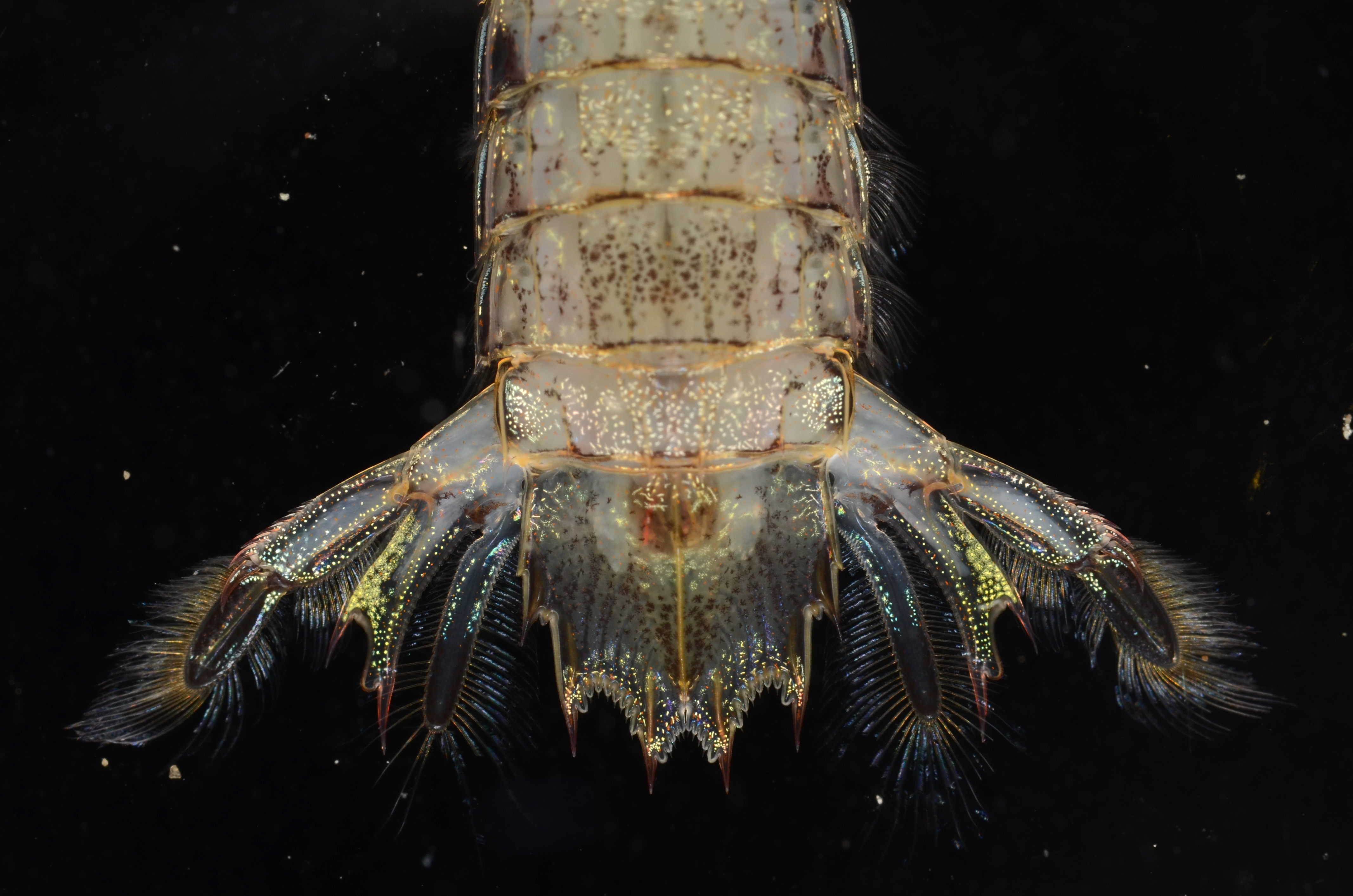
Oratosquilla oratoria
species of crustacean
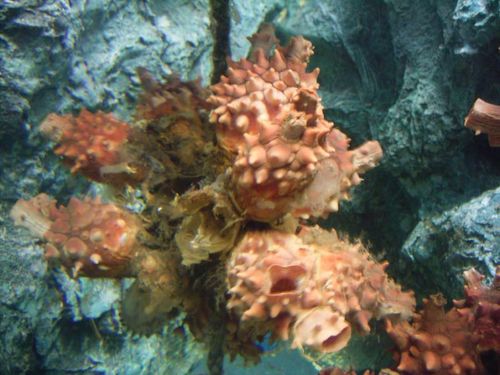
Halocynthia roretzi
species of sea squirt

kakiage
, a Japanese dish, is a type of
tempura. It is made by batter-dipping and deep-frying a batch of ingredients such as shrimp bits (or a clump of small-sized shrimp). Kakiage may use other seafood such as small scallops, shredded vegetables or a combination of such ingredients.
ankimo
is a Japanese dish made with monkfish liver.

funazushi
thumb|300px| Funazushi cut into bite-sized pieces and served on a dish, Maibara, Shiga. What appears white is lactic acid fermented rice. The orange color is the egg.

namasu
thumb|Kōhaku namasu Thin strips of pickled daikon radish and carrot
is a Japanese dish consisting of thinly sliced uncooked (nama) vegetables and seafood, marinated in rice vinegar (su) for several hours, pickling them slightly. Namasu was brought to Japan from China during the Nara period (710-794).
Matsumaezuke
thumb|Matsumaezuke
is a pickled dish of dried squid and kelp, native to Hokkaidō, Japan, named in reference to the Matsumae clan which once governed the region, then known as Ezo.
kusaya
thumb|right|300px|Freshly grilled kusaya on Hachijō-jima island
is a salted, dried and fermented fish that is produced in the Izu Islands, Japan. It has a pungent smell and is similar to the fermented Swedish herring surströmming.
thumb|right|200px|Bottled kusaya from Niijima island
Ika sōmen
hitsumabushi
Hitsumabushi is a local dish of Japan, consisting of sliced unagi (eel) grilled in kabayaki style on rice. Hitsumabushi became common in the 1950s, when farm-raised eel became widely available.
Motoyaki
thumb|right|Oyster motoyaki
Motoyaki is a style of cooking, involving baked food topped with a mayonnaise-based sauce and served in an oyster shell. It is typically available in Japanese restaurants on the Pacific coast of Canada. Examples of motoyaki dishes are oyster motoyaki and lobster motoyaki.
rui-be
is a dish of the Ainu people of northern Japan, consisting of seafood that is frozen outdoors, sliced like sashimi, and served with soy sauce and water peppers.
kaki fry
Japanese deep-fried oysters
tatami iwashi
food
kazunoko
thumb|200px|Dish of kazunoko prepared ready to serve.
, in Japanese cuisine, are the eggs or the ovaries (egg skeins) of the Pacific herring (Japanese: ) that have been salted or dried.
anago
is the Japanese word for saltwater eels, normally referring to ma-anago (Conger myriaster). Ma-anago are used for a seafood dish in Japan. They are often simmered (sushi) or deep-fried (tempura), compared to unagi (freshwater eels) which are usually barbecued with a sauce (kabayaki). Anago is also slightly less rich and oily than unagi. Anago has a very soft texture and sweet taste.