Category
page 1Root vegetables

Onion
The onion (Allium cepa , from Latin ), also known as the bulb onion or common onion, is a vegetable that is the most widely cultivated species of the genus Allium. The shallot is a botanical variety of the onion which was classified as a separate species until 2011. The onion's close relatives include garlic, scallion, leek, and chives.

potato
The potato () is a starchy tuberous vegetable native to the Americas that is consumed as a staple food in many parts of the world. Potatoes are underground stem tubers of the plant Solanum tuberosum, a perennial in the nightshade family Solanaceae.

Allium sativum
Garlic (Allium sativum) is a species of bulbous flowering plants in the genus Allium. Its close relatives include the onion, shallot, leek, chives, Welsh onion, and Chinese onion. Garlic is native to central and western Asia, stretching from the Black Sea through the southern Caucasus, northeastern Iran, and the Hindu Kush. It has naturalized in many other parts of the world, including Mediterranean Europe and China. There are two subspecies and hundreds of varieties of garlic.

sweet potato
species of plant

carrot
The carrot (Daucus carota subsp. sativus) is a root vegetable, typically orange in colour, though heirloom variants including purple, black, red, white, and yellow cultivars exist, all of which are domesticated forms of the wild carrot, Daucus carota, native to Europe and Southwestern Asia. The plant probably originated in Iran and was originally cultivated for its leaves and seeds.
.jpg)
Raphanus sativus
The radish (Raphanus sativus or '''Raphanus raphanistrum subsp. sativus') is a flowering plant in the mustard family, Brassicaceae. Its large taproot is commonly used as a root vegetable, although the entire plant is edible and its leaves are sometimes used as a leaf vegetable. Originally domesticated in Asia, radishes are now grown and consumed globally. The radish is sometimes considered to form a species complex with the wild radish and instead treated as the subspecies Raphanus raphanistrum subsp. sativus''.

parsley
Parsley, or garden parsley (Petroselinum crispum), is a species of flowering plant in the family Apiaceae that is native to the Balkans. It has been introduced and naturalized in Europe and elsewhere in the world with suitable climates, and is widely cultivated as a herb and a vegetable.

cassava
Manihot esculenta, commonly called cassava, manioc, or yuca (among numerous regional names), is a woody shrub of the spurge family, Euphorbiaceae, native to South America, from Brazil, Paraguay and parts of the Andes. Although a perennial plant, cassava is extensively cultivated in tropical and subtropical regions as an annual crop for its edible starchy tuberous root. Cassava is predominantly consumed in boiled form, but substantial quantities are processed to extract cassava starch, called tapioca, which is used for food, animal feed, and industrial purposes. The Brazilian , and the related

Lilium
Lilium ( ) is a genus of herbaceous flowering plants growing from bulbs, all with large and often prominent flowers. Lilies are a group of flowering plants which are important in culture and literature in much of the world. Most species are native to the Northern Hemisphere and their range is temperate climates and extends into the subtropics. Many other plants have "lily" in their common names, but do not belong to the same genus and are therefore not true lilies. True lilies are known to be highly toxic to cats.

Colocasia esculenta
Taro (; Colocasia esculenta) is a root vegetable. It is the most widely cultivated species of several plants in the family Araceae that are used as vegetables for their corms, leaves, stems and petioles. Taro corms are a food staple in African, Caribbean, Oceanian, East Asian, Southeast Asian and South Asian cultures (similar to yams).

Carum carvi
Caraway (Carum carvi), also known as meridian fennel, is a biennial plant in the family Apiaceae, native to western Asia, Europe, and North Africa.
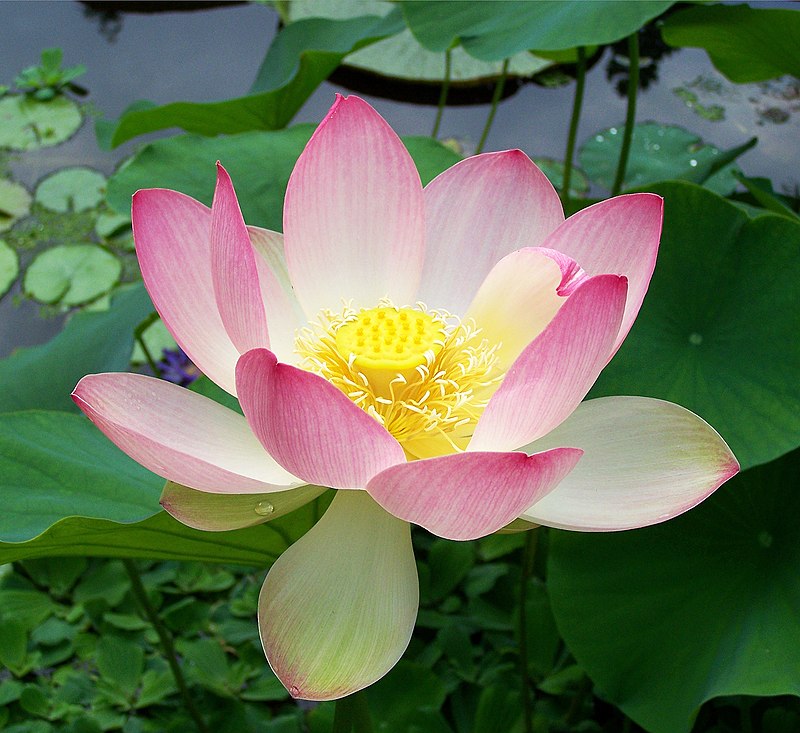
Nelumbo nucifera
species of plant

Beta vulgaris
species of the genus beet

leek
A leek is a biennial vegetable, a cultivar of Allium ampeloprasum, the broadleaf wild leek (syn. Allium porrum). The edible part of the plant is a bundle of leaf sheaths that is sometimes colloquially called a "stem" or "stalk".
.jpg)
turnip
The turnip or white turnip (Brassica rapa subsp. rapa) is a root vegetable commonly grown in temperate climates worldwide for its white, fleshy taproot. Small, tender varieties are grown for human consumption, while larger varieties are grown as feed for livestock. The name turnip used in many regions may also be used to refer to rutabaga (or neep or swede), which is a different but related vegetable.

Helianthus tuberosus
species of sunflower native to eastern North America (for the root vegetable use Q55706475)

Pastinaca sativa
thumb|Pastinaca sativa fruits and seeds
thumb|right|Flowering parsnip, second year

Armoracia rusticana
thumb|right|Sections of roots of the horseradish plant
thumb|upright|Foliage of the horseradish plant
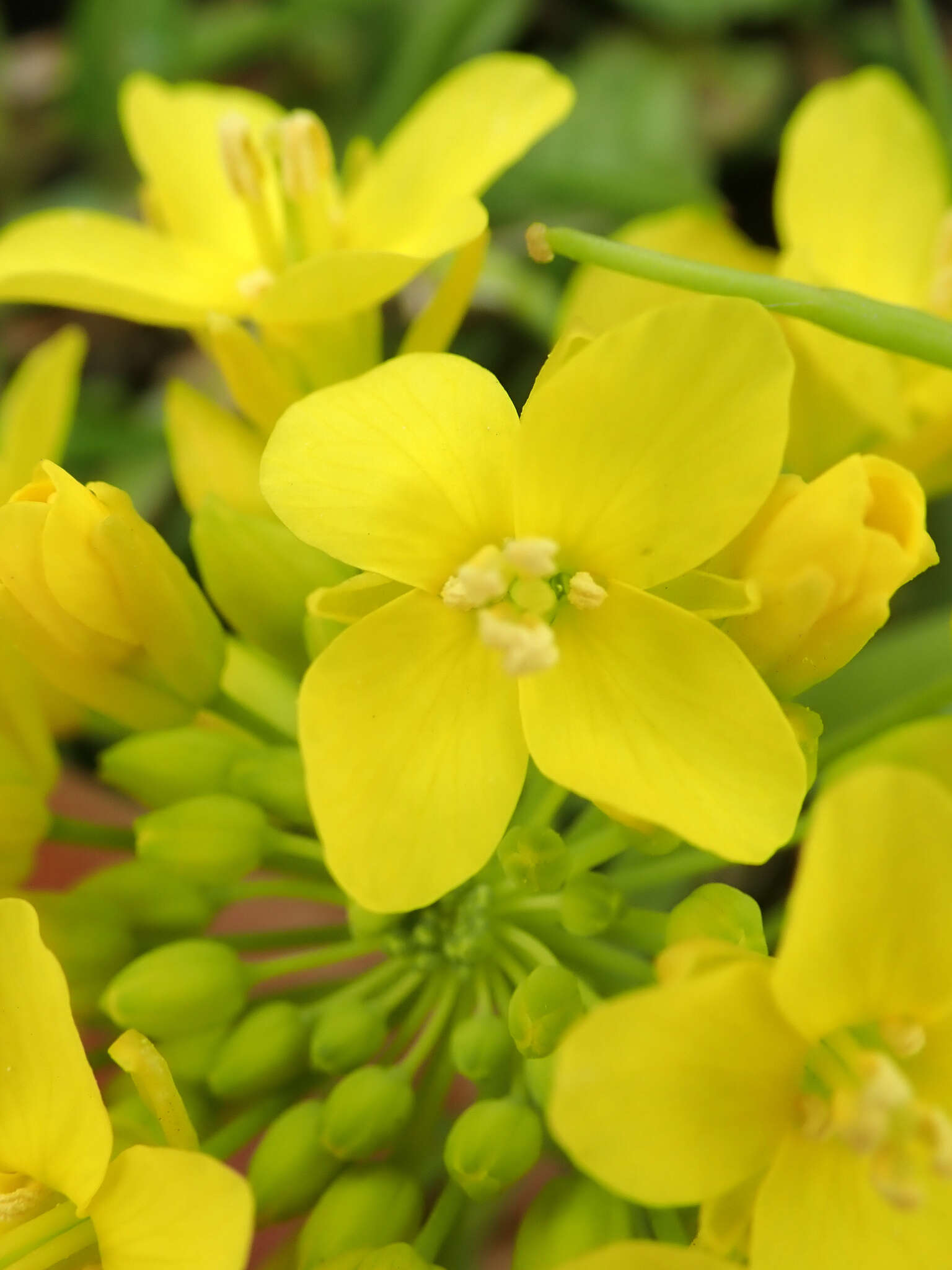
Brassica napus subsp. rapifera
Rutabaga ( ; North American English) or swede (British English and some Commonwealth English) is a root vegetable, a form of Brassica napus (which also includes rapeseed). Other names include Swedish turnip, neep (Scots), and turnip (Scottish and Canadian English, Irish English, Cornish English and Manx English, as well as some dialects of English in Northern England, New England English, and Australian English). However, elsewhere, the name turnip usually refers to the related white turnip.

sugar beet
cultivated crop

Allium ascalonicum
The shallot is a cultivar group of the onion. Until 2010, the (French red) shallot was classified as a separate species, Allium ascalonicum. The taxon was synonymized with Allium cepa (the common onion) in 2010, as the difference was too small to justify a separate species.

Brassica rapa
species of plant

Arctium lappa
species of plant

yam
edible tuber

Typha
Typha is a genus of about 30 species of monocotyledonous flowering plants in the family Typhaceae. These plants have a variety of common names, in British English bulrush or (mainly historically) reedmace, in American English cattail or punks, in Australia cumbungi or bulrush, in Canada bulrush or cattail, and in New Zealand raupō, bullrush, cattail, or reed.

garden chervil
Chervil (; Anthriscus cerefolium), sometimes called French parsley or garden chervil (to distinguish it from similar plants also called chervil), is a delicate annual herb related to parsley. It was formerly called myrhis due to its volatile oil with an aroma similar to the resinous substance myrrh. It is commonly used to season mild-flavoured dishes and is a constituent of the French herb mixture .

Arctium
Arctium is a genus of biennial plants commonly known as burdock, family Asteraceae. Native to Europe and Asia, several species have been widely introduced worldwide. Burdock's clinging properties, in addition to providing an excellent mechanism for seed dispersal, led to the invention of the hook-and-loop fastener.
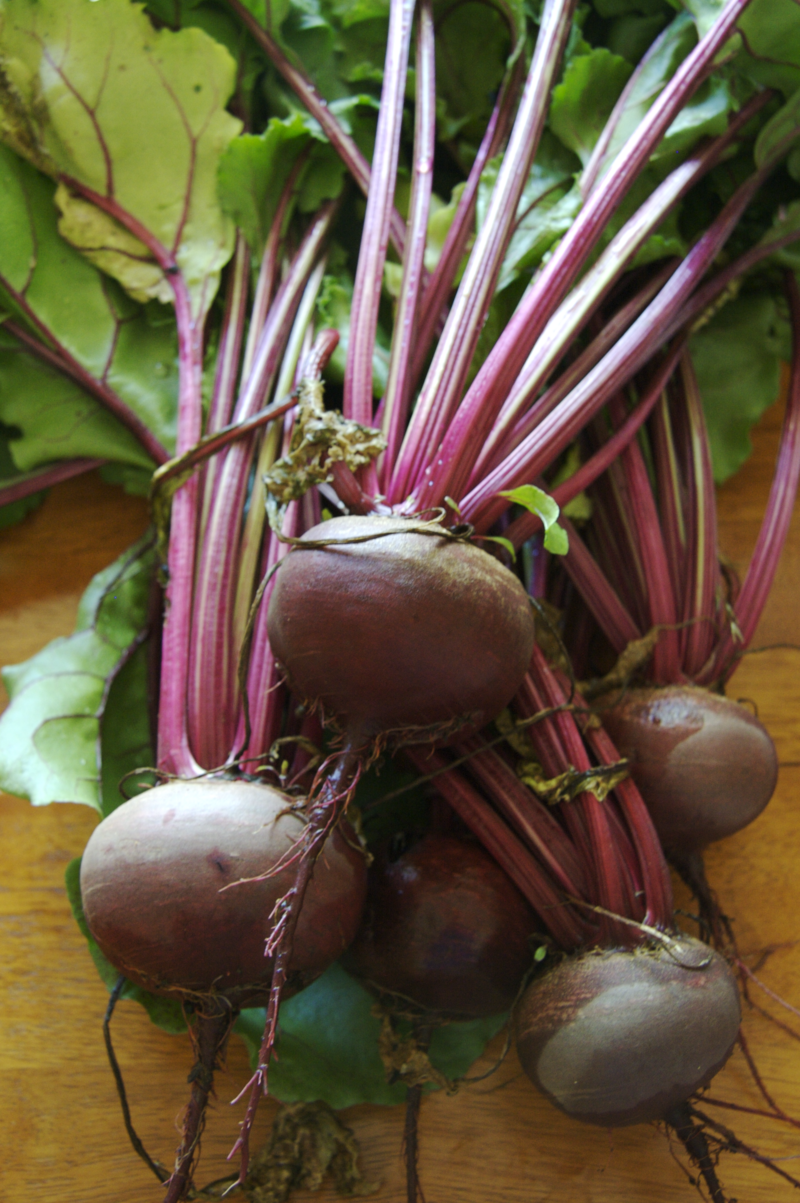
beet
Beetroot or beet is the taproot portion of a Beta vulgaris subsp. vulgaris plant in the Conditiva Group. The plant is a root vegetable also known as the table beet, garden beet, or dinner beet, or else categorized by color as red beet or golden beet. Its leaves constitute a leaf vegetable called beet greens. It is native to the Azores, Western Europe to the Mediterranean and India.
Beetroot can be eaten raw, roasted, steamed, or boiled. Beetroot can also be canned, either whole or cut up, and often are pickled, spiced, or served in a sweet-and-sour sauce.

Mirabilis jalapa
species of plant

Eleocharis dulcis
grass-like sedge grown for its edible corms
Argentina anserina
species of plant

root vegetable
plant root used as a vegetable

Typha angustifolia
species of plant

Pachyrhizus erosus
species of plant

Tragopogon
Tragopogon, also known as goatsbeard or salsify, is a genus of flowering plants in the family Asteraceae. It includes the vegetable known as salsify, as well as a number of common wild flowers.

Hemerocallis
A daylily, day lily or ditch-lily is a flowering plant in the genus Hemerocallis , a member of the family Asphodelaceae, subfamily Hemerocallidoideae, native to Asia. Despite the common name, it is not taxonomically classified in the lily genus. Gardening enthusiasts and horticulturists have long bred Hemerocallis species for their attractive flowers; a select few species of the genus have edible petals, while some are extremely toxic. Thousands of cultivars have been registered by the American Daylily Society, the only internationally recognized registrant according to the International Code

Cyperus esculentus
species of plant in the sedge family Cyperaceae

Raphanus raphanistrum
species of flowering plant

Amorphophallus paeoniifolius
species of plant

Maranta arundinacea
species of plant

Amorphophallus konjac
species of plant

Sagittaria
Sagittaria is a genus of about 30 species of aquatic plants whose members are referred to by the Native American word wapato () and a variety of other common names, including arrowhead, duck potato, swamp potato, tule potato, and katniss. Most are native to South, Central, and North America, but there are also some from Europe, Africa, and Asia.

Psophocarpus tetragonolobus
species of plant, Winged bean

Sagittaria sagittifolia
species of plant

rampion bellflower
species of plant

Smilax
Smilax is a genus of about 300–350 species, found in the tropics and subtropics worldwide. They are climbing flowering plants, many of which are woody and/or thorny, in the monocotyledon family Smilacaceae, native throughout the tropical and subtropical regions of the world.
Common names include catbriers, greenbriers, prickly-ivys and smilaxes. Sarsaparilla (also zarzaparrilla, sarsparilla) is a name used specifically for the Neotropical S. ornata as well as a catch-all term in particular for American species. Occasionally, the non-woody species such as the smooth herbaceous greenbrier (S. h

Lepidium meyenii
species of plant

Erythronium
Erythronium, the fawn lily, trout lily, '''dog's-tooth violet or adder's tongue', is a genus of Eurasian and North American plants in the lily family, most closely related to tulips. The name Erythronium derives from Ancient Greek () "red" in Greek, referring to the red flowers of E. dens-canis''. Of all the established species, most live in North America; only six species are found in Europe and Asia.
%20Domin%20-%20%E8%91%9B%E7%95%91%E8%91%8D%2C%20%E8%BE%9B%E8%91%8D%20-%20idem%2C%201804.jpg)
white radish
Daikon (大根 (だいこん) or mooli (Raphanus sativus var. longipinnatus) is a mild-flavored winter radish usually characterized by fast-growing leaves and a long, white, root. Native to continental East Asia, daikon and its cultivars are now harvested and consumed globally. In some locations, daikon is left unharvested to loosen compacted soils and recover nutrients.

Lathyrus tuberosus
species of plant

Cordyline fruticosa
species of plant

Oxalis tuberosa
species of plant
.JPG)
Smallanthus sonchifolius
The yacón (Smallanthus sonchifolius) is a species of daisy traditionally grown in the northern and central Andes from Colombia to northern Argentina for its crisp, sweet-tasting, tuberous roots. Their texture and flavour are very similar to jícama, mainly differing in that yacón has some slightly sweet, resinous, and floral (similar to violet) undertones to its flavour, probably due to the presence of inulin, which produces the sweet taste of the roots of elecampane, as well. Another name for yacón is Peruvian ground apple, possibly from the French name of potato, pomme de terre (ground apple)

Cordyline australis
species of plant

Plectranthus
Plectranthus is a genus of about 85 species of flowering plants from the mint/sage family, Lamiaceae, found mostly in southern and tropical Africa and Madagascar. Common names include spur-flower. Plectranthus species are herbaceous perennial plants, rarely annuals or soft-wooded shrubs, sometimes succulent; sometimes with a tuberous base.
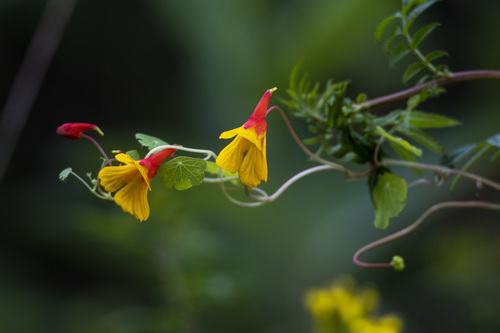
Mashua
food crop plant species
%20flower%2C%20my%20back%20yard%2C%20Gurgaon%2C%20India.jpg)
Xanthosoma
Xanthosoma is a genus of flowering plants in the arum family, Araceae. The genus is native to tropical America but widely cultivated and naturalized in other tropical regions. Several are grown for their starchy corms, an important food staple of tropical regions, known variously as malanga, otoy, otoe, cocoyam (or new cocoyam), tannia, tannier, yautía, macabo, ocumo, macal, taioba, dasheen, quequisque, ʻape and (in Papua New Guinea) as Singapore taro (taro kongkong). Many other species, including especially Xanthosoma roseum, are used as ornamental plants; in popular horticultural literature

Tragopogon porrifolius
species of plant

celeriac
Celeriac ('''Apium graveolens Rapaceum Group, synonyms Apium graveolens Celeriac Group and Apium graveolens var. rapaceum), also called celery root, knob celery, and turnip-rooted celery' (although it is not a close relative of the turnip), is a group of cultivars of Apium graveolens'' cultivated for their edible bulb-like hypocotyl, and shoots.

Dioscorea polystachya
species of plant