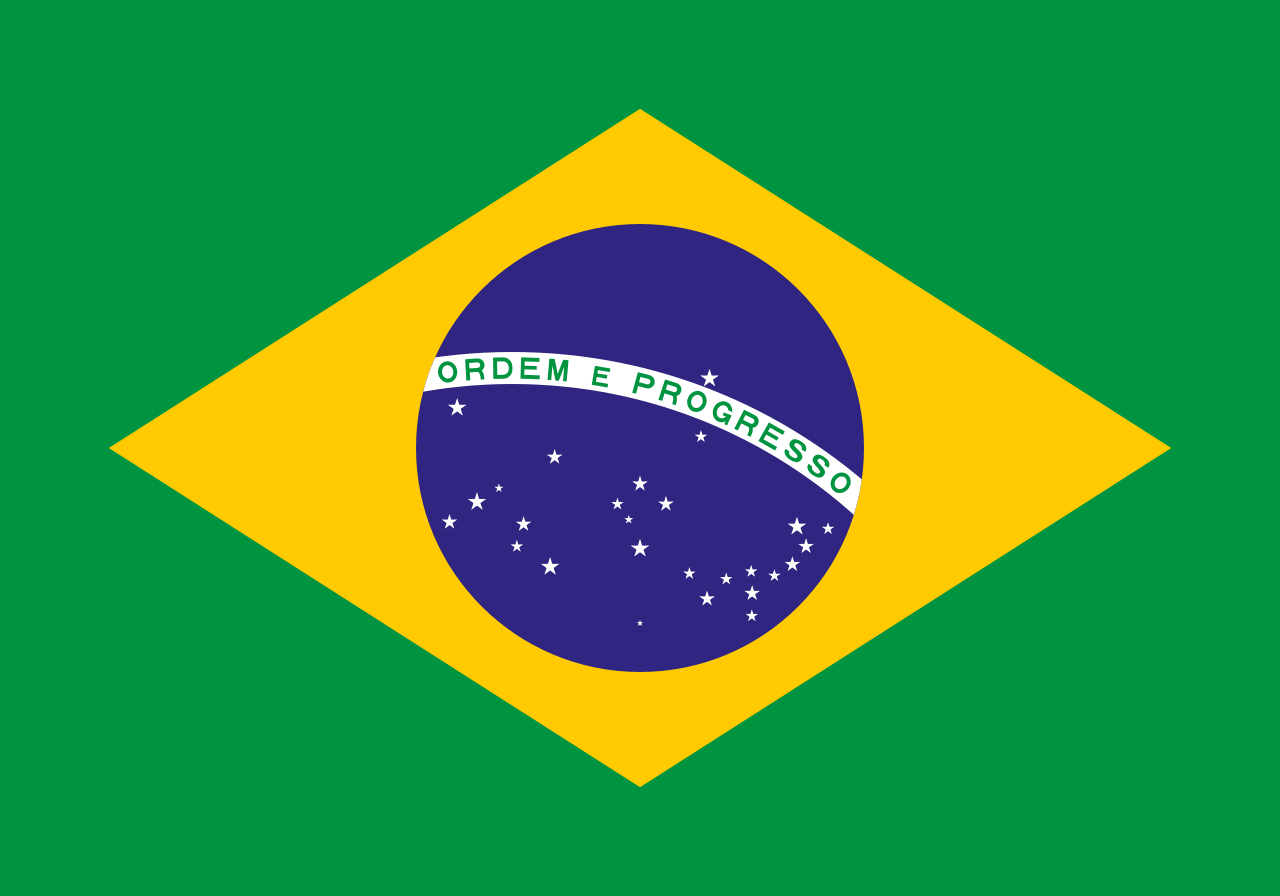
Brasilien
Also known as Federative Republic of Brazil, Brasil
Staat in Südamerika
AI overview
Brazil is the largest country in South America and the world's fifth-largest by area, with over 213 million people making it the seventh-most populous nation globally. It matters as the world's primary Portuguese-speaking nation and the only country in the Americas where Portuguese is official, giving it unique cultural and linguistic significance in the region.
AI-generated from the Wikipedia summary — may contain errors.
Weather now
cached 8h ago19°clear sky
53% 1.2 m/s OpenWeatherMap
7-day forecast
via Open-Meteo
Country

- Capital
- Brasília
- Population
- 213,421,037
- Region
Travel guide
Understand
Brazil is the largest country in South America. The country has a soul of history and culture and includes nightlife, scenic beauty, white sandy beaches, inland waterways and lush green forests that are among the largest in the world.
Get in
thumb|375px|A map showing the visa requirements of Brazil, with countries in green and light blue having visa-free access
Get around
Travelling between major cities in Brazil can take a lot of time.
Sleep
thumb|Night in [[Campinas]] High season in Brazil follows the school holidays calendar, December and January (summer) being the busiest months. New Year, Carnival (movable between February and March, see Understand above) and Holy week are the peak periods, and prices can skyrocket, especially in coastal cities like Rio and Salvador. Also, during those holidays, many hotels restrict bookings to a 3 or 4-day minimum and charge in advance.
Hotels are plentiful in just about all areas of Brazil and can range from luxury beach resorts to very modest and inexpensive choices. The Brazilian tourism regulation board imposes specific minimum attributes for each type of facility, but as the 1-5 star rating is no longer enforced, check in advance if your hotel provides the kind of services you expect.
Pousada means guesthouse (the local equivalent of a French auberge or a British boarding house), and are usually simpler than hotels, and will offer fewer services (room service, laundry etc.). Pousadas are even more widespread than hotels.
In wilderness areas like the Pantanal, travelers usually stay in fazendas, which are ranches with guest facilities. In small towns of Minas Gerais people are fond of hotéis-fazenda (farm hotels) where you can swim, ride, walk, play football, and camp as well as sleep in picturesque barracks.
Also there is great fun in going on a boat hotel which will take you to inaccessible places on the rivers and lakes for great fishing trips or for simply relaxi…
Stay healthy
When visiting the Midwestern states of Brazil, the relative humidity can be below 30% during the dry season from June to September. It is important to drink plenty of water to avoid the unpleasant effects of dehydration.
Article · Deutsch
Brasilien (portugiesisch Brasil, gemäß Lautung des brasilianischen Portugiesisch [bɾaˈziu̯] ), amtlich die Föderative Republik Brasilien, ist der Fläche nach der fünftgrößte und mit rund 215 Millionen Einwohnern der Bevölkerung nach der siebtgrößte Staat der Erde. Nach Fläche und Bevölkerung ist es auch das größte Land Südamerikas, von dessen Fläche es 47,3 Prozent einnimmt. Bis auf die Länder Chile und Ecuador hat Brasilien mit jedem anderen südamerikanischen Staat eine gemeinsame . Der Name Brasilien geht auf den portugiesischen Namen pau-brasil des Brasilholz-Baumes (Paubrasilia echinata) zurück. Gemäß eines „Sensationsfundes“ sollen die Spuren menschlicher Besiedlung ca. 30.000 Jahre zurückreichen, nach der bislang geltenden Auffassung der Wissenschaft jedoch maximal 15.000 Jahre. Nach der europäischen Entdeckung Amerikas und der Aufteilung des südamerikanischen Kontinents durch den Vertrag von Tordesillas wurde Brasilien eine portugiesische Kolonie. Diese mehr als drei Jahrhunderte andauernde Kolonialzeit, in der Einwanderer verschiedenster Herkunft (freiwillig oder gezwungenermaßen) nach Brasilien kamen, trug erheblich zur heutigen ethnischen Vielfalt Brasiliens bei. Nach der im Jahre 1822 erlangten staatlichen Unabhängigkeit, auf die eine Zeit der konstitutionellen Monarchie folgte, wurde das Land 1889 als Vereinigte Staaten von Brasilien zu einer Republik. Nach der Zeit der Militärdiktatur ab 1964 kehrte das Land 1985 zur Demokratie mit einem präsidentiellen Regierungssystem zurück.
Abstract from DBpedia / Wikipedia · CC BY-SA
Gallery (639)
On the map
60 mapped locations
Connections
Categories
BrazilBRICS nationsCountries and territories where Portuguese is an official languageCountries in South AmericaFederal constitutional republicsFormer Portuguese coloniesG15 nationsG20 membersMember states of MercosurMember states of the Community of Portuguese Language CountriesMember states of the United NationsStates and territories established in 1822