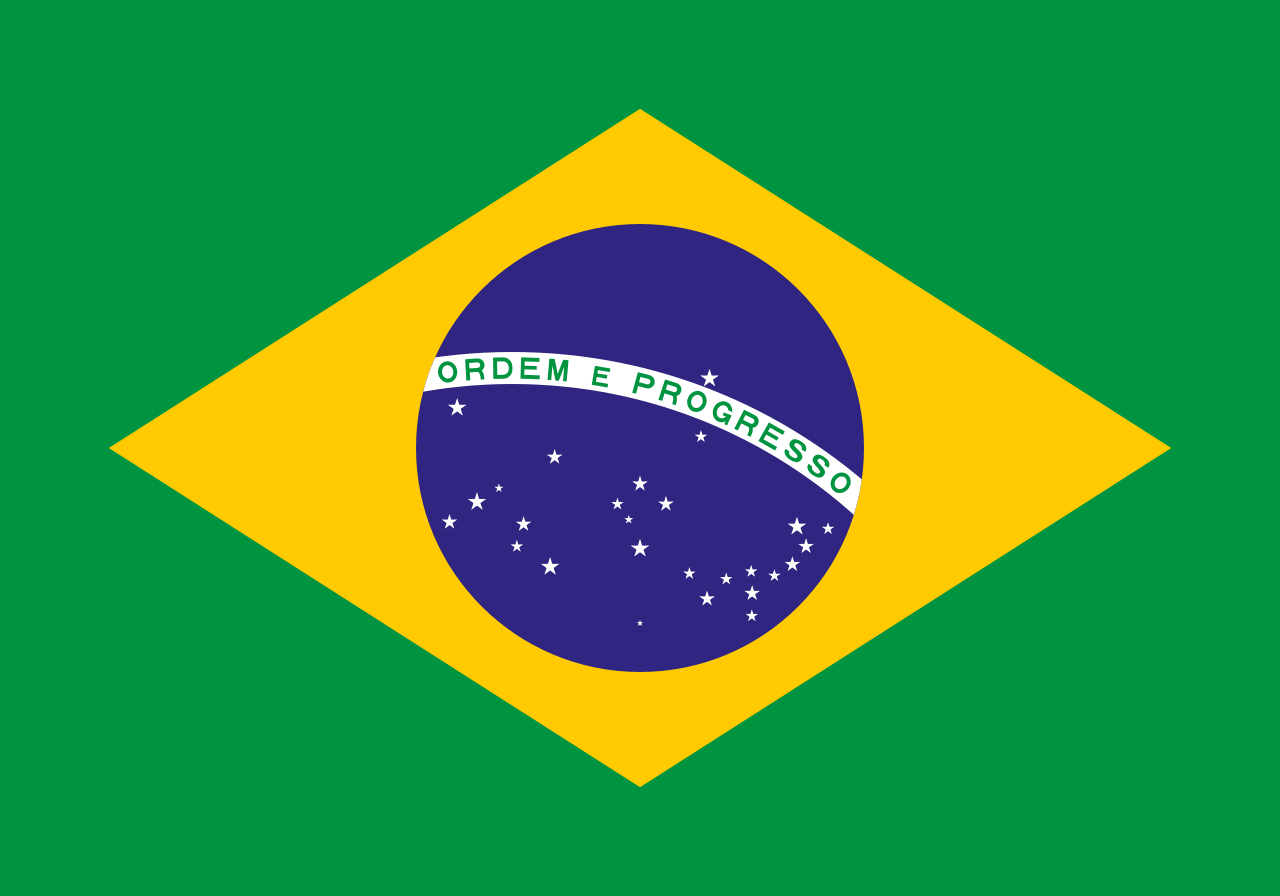
Brasile
Also known as Federative Republic of Brazil, Brasil
stato dell'America meridionale
AI overview
Brazil is the largest country in South America and the world's fifth-largest by area, with over 213 million people making it the seventh-most populous nation globally. It matters as the world's primary Portuguese-speaking nation and the only country in the Americas where Portuguese is official, giving it unique cultural and linguistic significance in the region.
AI-generated from the Wikipedia summary — may contain errors.
Weather now
cached 7h ago19°clear sky
53% 1.2 m/s OpenWeatherMap
7-day forecast
via Open-Meteo
Country

- Capital
- Brasília
- Population
- 213,421,037
- Region
Travel guide
Understand
Brazil is the largest country in South America. The country has a soul of history and culture and includes nightlife, scenic beauty, white sandy beaches, inland waterways and lush green forests that are among the largest in the world.
Get in
thumb|375px|A map showing the visa requirements of Brazil, with countries in green and light blue having visa-free access
Get around
Travelling between major cities in Brazil can take a lot of time.
Sleep
thumb|Night in [[Campinas]] High season in Brazil follows the school holidays calendar, December and January (summer) being the busiest months. New Year, Carnival (movable between February and March, see Understand above) and Holy week are the peak periods, and prices can skyrocket, especially in coastal cities like Rio and Salvador. Also, during those holidays, many hotels restrict bookings to a 3 or 4-day minimum and charge in advance.
Hotels are plentiful in just about all areas of Brazil and can range from luxury beach resorts to very modest and inexpensive choices. The Brazilian tourism regulation board imposes specific minimum attributes for each type of facility, but as the 1-5 star rating is no longer enforced, check in advance if your hotel provides the kind of services you expect.
Pousada means guesthouse (the local equivalent of a French auberge or a British boarding house), and are usually simpler than hotels, and will offer fewer services (room service, laundry etc.). Pousadas are even more widespread than hotels.
In wilderness areas like the Pantanal, travelers usually stay in fazendas, which are ranches with guest facilities. In small towns of Minas Gerais people are fond of hotéis-fazenda (farm hotels) where you can swim, ride, walk, play football, and camp as well as sleep in picturesque barracks.
Also there is great fun in going on a boat hotel which will take you to inaccessible places on the rivers and lakes for great fishing trips or for simply relaxi…
Stay healthy
When visiting the Midwestern states of Brazil, the relative humidity can be below 30% during the dry season from June to September. It is important to drink plenty of water to avoid the unpleasant effects of dehydration.
Article · Italiano
Il Brasile (in portoghese: Brasil), ufficialmente Repubblica Federale del Brasile (República Federativa do Brasil), è una repubblica federale dell'America meridionale.Con una superficie di oltre 8,5 milioni di km², è il quinto stato del mondo per superficie totale (pari al 47,3% del territorio sudamericano), bagnato dall'oceano Atlantico a est, confina a nord con il dipartimento francese d'oltremare della Guyana francese, il Suriname, la Guyana e il Venezuela, a nord-ovest con la Colombia, a ovest con il Perù e la Bolivia, a sud-ovest con il Paraguay e l'Argentina, e a sud con l'Uruguay (confina con tutti i paesi del Sud America, eccetto che con Ecuador e Cile). La maggior parte del paese si trova nella zona tropicale, con la foresta amazzonica che copre 3,6 milioni di km quadrati del suo territorio, dove le stagioni non sono particolarmente ostili dal punto di vista climatico, e che grazie alla sua vegetazione e al clima, ne fanno uno dei paesi con il maggior numero di specie di animali nel mondo. Precedentemente abitato da indigeni, fu scoperto dagli europei nel 1500, da una spedizione portoghese guidata da Pedro Álvares Cabral. Dopo il trattato di Tordesillas, il territorio brasiliano fece parte del Regno di Portogallo, da cui ottenne l'indipendenza il 7 settembre 1822. In seguito il paese divenne un impero per poi diventare una repubblica. La sua attuale Costituzione, formulata nel 1988, definisce il Brasile come una Repubblica federale presidenziale, formata dall'unione del Distretto Federale e dei 26 Stati federati (in totale il territorio brasiliano è ripartito in 5 565 comuni, la più piccola unità politico-amministrativa del Brasile). La sua prima capitale fu Salvador, che fu sostituita da Rio de Janeiro fino a quando non si fece una nuova capitale: Brasilia. Anche se i suoi oltre 200 milioni di abitanti rendono il Brasile il sesto stato più popoloso del mondo, complessivamente lo stato ha una bassa densità di popolazione: la maggior parte dei brasiliani è concentrata lungo la costa, mentre nell'entroterra lo stato è relativamente poco abitato, soprattutto in virtù della presenza della foresta amazzonica. La lingua ufficiale è il portoghese. La religione più seguita è il cattolicesimo, il che fa del Brasile lo Stato con il maggior numero di cattolici al mondo, seguita da una crescita notevole del pentecostalismo. Quella brasiliana è considerata una società multietnica, essendo formata dai discendenti di europei, indigeni, africani e asiatici. L'economia brasiliana è la più grande in America Latina e la nona al mondo per dimensioni del PIL nominale e la settima per potere d'acquisto (PPP). Il Brasile è una delle economie a più rapida crescita economica e le riforme economiche hanno dato un nuovo riconoscimento a livello internazionale al paese, sia in ambito regionale sia mondiale. Il Brasile è membro fondatore dell'Organizzazione delle Nazioni Unite (ONU), della Comunità dei Paesi di lingua portoghese (CPLP), dell'Unione latina, dell'Organizzazione degli Stati americani (OAS), dell'Organizzazione degli Stati ibero-americani (OEI), del Mercosul e dell'Unione delle nazioni sudamericane (UNASUR), ed è uno dei paesi del G20 e del BRICS. Nel 2017, il Brasile è il terzo paese più diseguale dell'America Latina dopo l'Honduras e la Colombia.
Gallery (639)
On the map
60 mapped locations
Connections
Categories
BrazilBRICS nationsCountries and territories where Portuguese is an official languageCountries in South AmericaFederal constitutional republicsFormer Portuguese coloniesG15 nationsG20 membersMember states of MercosurMember states of the Community of Portuguese Language CountriesMember states of the United NationsStates and territories established in 1822