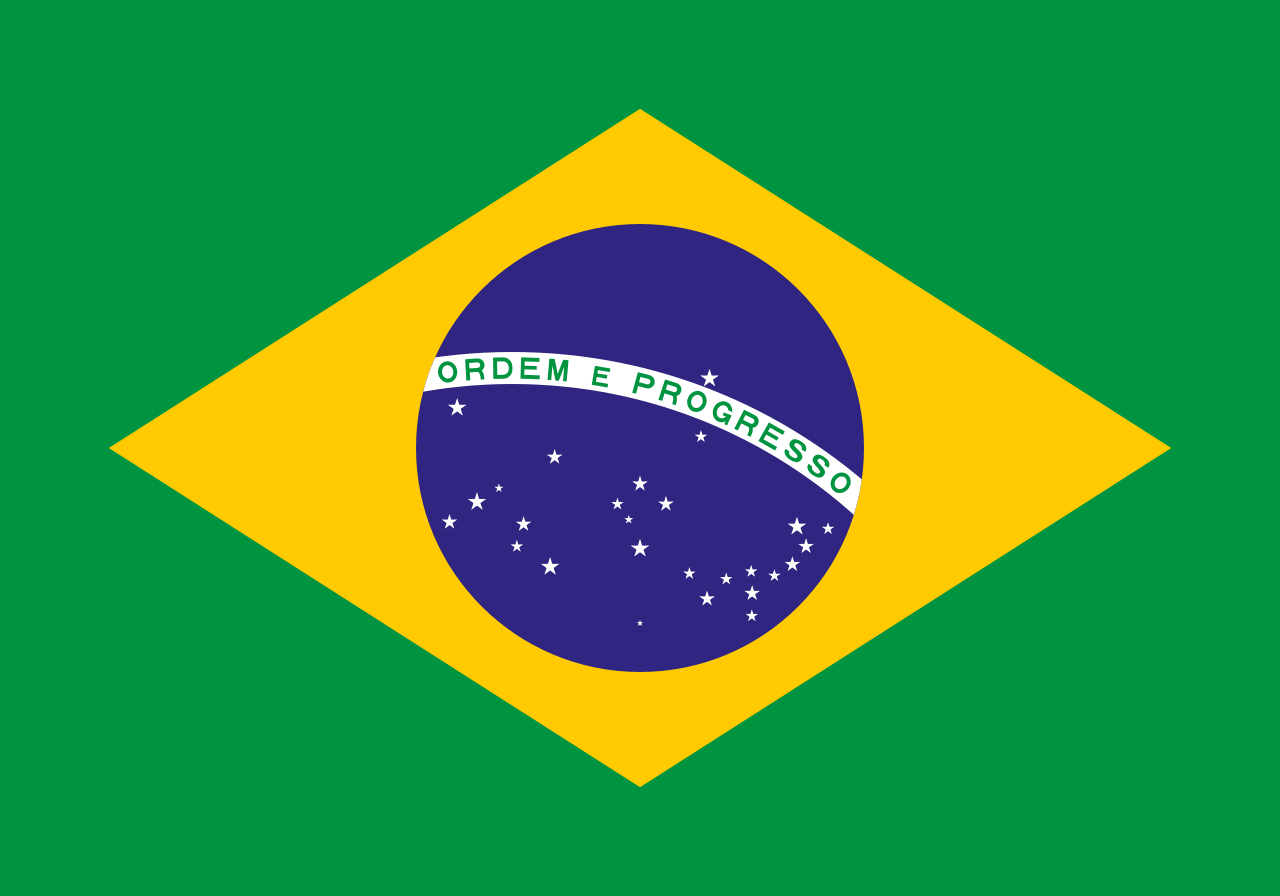
Brasil
Also known as Federative Republic of Brazil
país de América del Sur
AI overview
Brazil is the largest country in South America and the world's fifth-largest by area, with over 213 million people making it the seventh-most populous nation globally. It matters as the world's primary Portuguese-speaking nation and the only country in the Americas where Portuguese is official, giving it unique cultural and linguistic significance in the region.
AI-generated from the Wikipedia summary — may contain errors.
Weather now
cached 27h ago21°clear sky
53% 1.0 m/s OpenWeatherMap
7-day forecast
via Open-Meteo
Country

- Capital
- Brasília
- Population
- 213,421,037
- Region
Travel guide
Understand
Brazil is the largest country in South America. The country has a soul of history and culture and includes nightlife, scenic beauty, white sandy beaches, inland waterways and lush green forests that are among the largest in the world.
Get in
thumb|375px|A map showing the visa requirements of Brazil, with countries in green and light blue having visa-free access
Get around
Travelling between major cities in Brazil can take a lot of time.
Sleep
thumb|Night in [[Campinas]] High season in Brazil follows the school holidays calendar, December and January (summer) being the busiest months. New Year, Carnival (movable between February and March, see Understand above) and Holy week are the peak periods, and prices can skyrocket, especially in coastal cities like Rio and Salvador. Also, during those holidays, many hotels restrict bookings to a 3 or 4-day minimum and charge in advance.
Hotels are plentiful in just about all areas of Brazil and can range from luxury beach resorts to very modest and inexpensive choices. The Brazilian tourism regulation board imposes specific minimum attributes for each type of facility, but as the 1-5 star rating is no longer enforced, check in advance if your hotel provides the kind of services you expect.
Pousada means guesthouse (the local equivalent of a French auberge or a British boarding house), and are usually simpler than hotels, and will offer fewer services (room service, laundry etc.). Pousadas are even more widespread than hotels.
In wilderness areas like the Pantanal, travelers usually stay in fazendas, which are ranches with guest facilities. In small towns of Minas Gerais people are fond of hotéis-fazenda (farm hotels) where you can swim, ride, walk, play football, and camp as well as sleep in picturesque barracks.
Also there is great fun in going on a boat hotel which will take you to inaccessible places on the rivers and lakes for great fishing trips or for simply relaxi…
Stay healthy
When visiting the Midwestern states of Brazil, the relative humidity can be below 30% during the dry season from June to September. It is important to drink plenty of water to avoid the unpleasant effects of dehydration.
Article · Español
Brasil, cuyo nombre oficial es República Federativa de Brasil (en portugués, República Federativa do Brasil, pron. AFI [ʁe'publikɐ fedeɾaˈt͡ʃivɐ 'dʊ braˈziw]), es un país soberano de América del Sur que comprende la mitad oriental del continente y algunos grupos de pequeñas islas en el océano Atlántico. Es el país más grande de América Latina.Con una superficie estimada en más de 8,5 millones de km², es el quinto país más grande del mundo en área total (equivalente a 50 % del territorio sudamericano). Delimitado por el océano Atlántico al este, Brasil tiene una línea costera de 7491 km. Al norte limita con el departamento ultramarino francés de la Guayana Francesa, Surinam, Guyana y Venezuela; al noroeste con Colombia; al oeste con Perú y Bolivia; al suroeste con Paraguay y Argentina, y al sur con Uruguay. De este modo tiene frontera con todos los países de América del Sur, excepto Ecuador y Chile. La mayor parte del país está comprendido entre los trópicos terrestres, por lo que las estaciones climáticas no se sienten de una manera radical en gran parte de su territorio. La selva amazónica cubre 3,6 millones de km² del territorio. Gracias a su vegetación y al clima, es uno de los países con más especies de animales en el mundo. La región del actual Brasil, hasta entonces habitado por indígenas, tuvo su primer contacto con los europeos en el año 1500 d. C. a través de una expedición portuguesa liderada por Pedro Álvares Cabral. Tras el Tratado de Tordesillas, el territorio brasileño fue el segmento del continente americano que correspondió al reino de Portugal, del cual obtuvo su independencia el 7 de septiembre de 1822. Así, el país pasó de ser parte central del reino de Portugal a un imperio para finalmente convertirse en una república. Su primera capital fue Salvador de Bahía, que fue sustituida por Río de Janeiro hasta que se construyó una nueva capital, Brasilia. Su constitución actual, formulada en 1988, define a Brasil como una república federativa presidencialista. La federación está formada por la unión del Distrito Federal, los 26 estados y los 5570 municipios. A pesar de que sus más de 215 millones de habitantes hacen de Brasil el séptimo país más poblado del mundo, presenta un bajo índice de densidad poblacional. Esto se debe a que la mayor parte de la población se concentra a lo largo del litoral, mientras que el interior del territorio aún está marcado por enormes vacíos demográficos. El idioma oficial y el más hablado es el portugués, que lo convierte en el mayor país lusófono del mundo. Por su parte, la religión con más seguidores es el catolicismo, siendo el país con mayor número de católicos nominales del mundo. La sociedad brasileña es considerada una sociedad multiétnica al estar formada por descendientes de europeos, indígenas, africanos y asiáticos. La economía brasileña es la mayor de América del Sur, América Latina y del hemisferio sur, la undécima mayor del mundo por PIB nominal y la octava mayor por paridad del poder adquisitivo (PPC). Es considerado una economía de renta media-alta por el Banco Mundial y un país recientemente industrializado, que tiene la mayor proporción de riqueza global de América Latina debido al abundante petróleo y diversos minerales encontrados fácilmente en el país. Sin embargo, su abundante riqueza está muy concentrada, convirtiendo al país en uno de los más desiguales del mundo, el 10 % más rico de su población recibió el 54 % de la renta nacional en 2018. Como potencia regional y media, la nación tiene reconocimiento e influencia internacional, siendo que también es clasificada como una potencia global emergente y como una potencial superpotencia por varios analistas. El país es miembro fundador de la Organización de las Naciones Unidas (ONU), G20, Comunidad de Países de Lengua Portuguesa (CPLP), Unión Latina, Organización de los Estados Americanos (OEA), Organización de los Estados iberoamericanos (OEI), Mercado Común del Sur (Mercosur) y de la Unión de Naciones Sudamericanas (Unasur), además de ser uno de los países BRICS.
Gallery (639)
On the map
60 mapped locations
Connections
Categories
BrazilBRICS nationsCountries and territories where Portuguese is an official languageCountries in South AmericaFederal constitutional republicsFormer Portuguese coloniesG15 nationsG20 membersMember states of MercosurMember states of the Community of Portuguese Language CountriesMember states of the United NationsStates and territories established in 1822