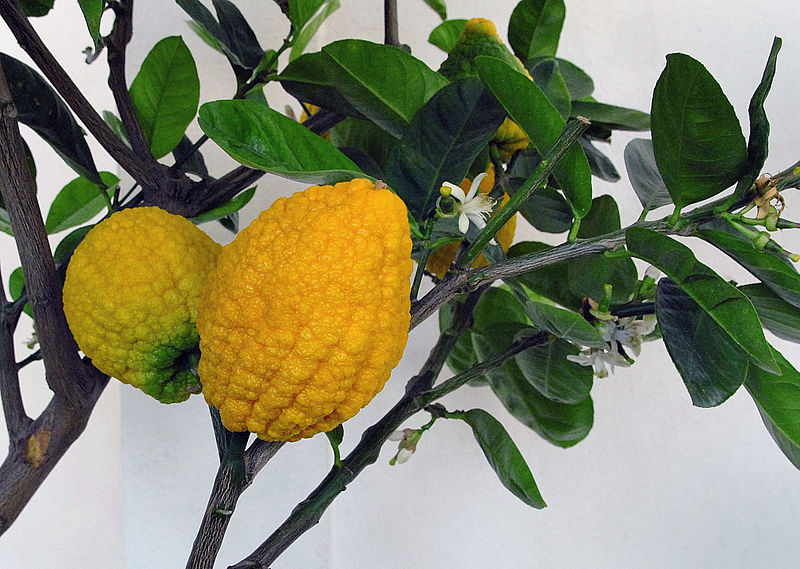
Citrus medica
Also known as citron
The citron (Citrus medica) is a large fragrant citrus fruit with a thick, coarse rind. It resembles a lemon, but is larger. It is one of the original citrus fruits from which all other citrus types developed through natural hybrid speciation or artificial hybridization. Though citron cultivars take on a wide variety of physical forms, they are all closely related genetically. It is used in Asian and Mediterranean cuisine, traditional medicines, perfume, and religious rituals and offerings. Hybrids of citrons with other citrus are commercially more prominent, most notably lemons and many limes,
AI overview
The citron is a large, fragrant citrus fruit with a thick rind that is one of the original citrus fruits from which nearly all other citrus varieties developed through natural and artificial breeding. Today it is used in cooking, traditional medicine, perfume, and religious practices, though its hybrid offspring like lemons and limes are more commercially important than the citron itself.
AI-generated from the Wikipedia summary — may contain errors.
Species
Least ConcernCitron
Citrus medica
SPECIES
- KingdomPlantae
- PhylumTracheophyta
- ClassMagnoliopsida
- OrderSapindales
- FamilyRutaceae
Native toAssam, Bangladesh, East Himalaya, Myanmar, Nepal, West Himalaya
Observations3,403
枸櫞(学名:Citrus medica ,注音:ㄐㄩˇ ㄩㄢˊ,漢語拼音:jǔ yuán),又称香櫞、香水檸檬,是芸香科柑橘屬的植物;和檸檬的外觀上相似。枸櫞是猶太人慶祝住棚節必備的植物之一。 枸櫞和酸橙雜交的後代就是現今各種的檸檬。
via GBIF · IUCN · Kew POWO
Wikidata facts
- Image
- Chinesische Zedrat Zitrone.jpg
Sources (4)
Article
23 sectionsContents
- Etymology
- Other languages
- Origin and distribution
- Antiquity
- Theophrastus
- Pliny the Elder
- Medieval authors
- Description and variation
- Fruit
- Plant
- Varieties and hybrids
- Uses
- Culinary
- Medicine
- Religious
- In Judaism
- In Buddhism
- In Hinduism
- Perfumery
- Gallery
- Citations
- Further reading
- External links
The citron (Citrus medica) is a large fragrant citrus fruit with a thick, coarse rind. It resembles a lemon, but is larger. It is one of the original citrus fruits from which all other citrus types developed through natural hybrid speciation or artificial hybridization. Though citron cultivars take on a wide variety of physical forms, they are all closely related genetically. It is used in Asian and Mediterranean cuisine, traditional medicines, perfume, and religious rituals and offerings. Hybrids of citrons with other citrus are commercially more prominent, most notably lemons and many limes, were created using citrons.
== Etymology == The fruit's name is derived from the Latin citrus, which is also the origin of the genus name. The binomial name Citrus medica derives from Media, the kingdom of the Medes, where it was believed to originate (but see "Origin and distribution" below).