
Marokko
Also known as Kingdom of Morocco, Marocco, al-Maġrib, Lmaġrib, Maroc, ma, MAR
Staat in Nordafrika
AI overview
Morocco is a North African country located in the Maghreb region with coastlines on both the Mediterranean Sea and Atlantic Ocean, bordered by Algeria and the disputed territory of Western Sahara. The country is geopolitically significant due to its strategic location, its occupation of Western Sahara since 1975, and its territorial claims regarding Spanish-controlled enclaves and islands off its coast.
AI-generated from the Wikipedia summary — may contain errors.
Weather now
15°few clouds
41% 1.2 m/s OpenWeatherMap
7-day forecast
via Open-Meteo
Country
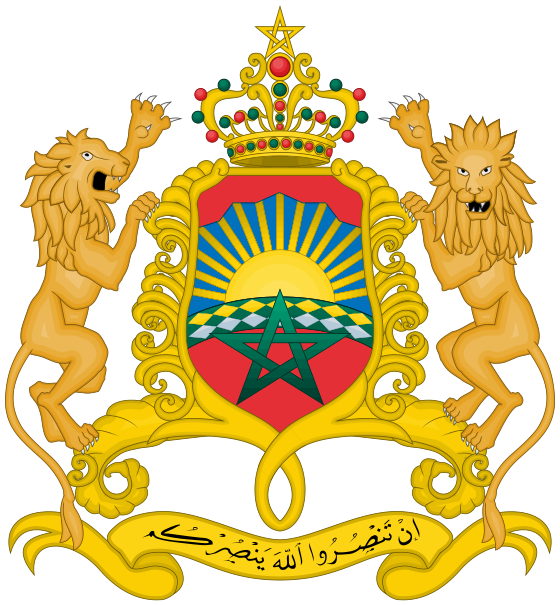

- Capital
- Rabat
- Population
- 36,828,330
- Region
- Africa · Northern Africa
Travel guide
Get in
thumb|375px|A map showing the visa requirements of Morocco, with countries in green having visa-free access
Get around
With an area of 446,300 square kilometres (172,300 sq mi), Morocco is a relatively easy country to get around in. A trip from Taroudant to Rabat will easily take you 5½ hours by car, depending on traffic conditions.
See
thumbnail|Jemaa-el-Fna square in Marrakech thumbnail|Chefchaouen thumbnail|At the beach of Agadir
Movie-famous Casablanca might be the most famous of Moroccan cities and is home to the huge Hassan II mosque, the second largest mosque in the world with only the Grand Mosque of Mecca surpassing it. Many travellers quickly leave this vibrant and modernist metropolis on a search for a more traditional Moroccan experience, but admiring the impressive colonial architecture, Hispano-Moorish and art-deco outlook of the city centre is actually time well spent. Marrakesh, known as the "Red City" and probably the most prominent former imperial capital, will leave you with memories to cherish for life. Spend your days wandering through the lively souqs, admiring the old gates and defense walls, see the Saadian Tombs, the remnants of the El Badi Palace and visit the Koutoubia Mosque with its 12th century minaret. However, when evening falls make sure to head back to Jamaa el-Fnaa, the largest square in Africa, as it fills up with steam-producing food stalls. Indulge in the bustling activity there, listen to Arabic story tellers, watch magicians and Chleuh dancers. Fez, once Morocco's capital, is another gorgeous imperial city. Get lost in its lovely labyrinth of narrow Medieval streets, enjoy its huge medina, see the beautiful city gates, the ancient University of Al-Karaouine and the Bou Inania Madrasa. Also, make sure to visit a traditional leather tanning factory. The city of Meknes i…
Eat
thumb|Casablanca's souk
Moroccan cuisine is often reputed to be some of the best in the world, with countless dishes and variations proudly bearing the country's colonial and Arabic influences; see French cuisine and Middle Eastern cuisine. Unfortunately as a tourist through Morocco, especially if you're on a budget, you'll be limited to the handful of dishes that seem to have a monopoly on cafe and restaurant menus throughout the country. Most restaurants serve dishes foreign to Morocco considering that Moroccans can eat their domestic dishes at home. Apart from major cities, Moroccans do not generally eat out in restaurants so choice is generally limited to international fare such as French, Italian and Chinese cuisine.
Article · Deutsch
Marokko ([maˈrɔko], arabisch المغرب al-Maghrib, DMG al-Maġrib ‚der Westen‘, marokkanisches Tamazight ⵍⵎⴰⵖⵔⵉⴱ Elmaɣrib / ⵎⵓⵕⵕⴰⴽⵓⵛ Muṛṛakuc), offiziell Königreich Marokko (arabisch المملكة المغربية, DMG al-Mamlaka al-Maġribiyya), ist ein Staat im Nordwesten Afrikas. Er ist durch die Straße von Gibraltar vom europäischen Kontinent getrennt. Als westlichstes der fünf (mit Westsahara sechs) Maghrebländer grenzt es im Norden an das Mittelmeer, im Westen an den Atlantischen Ozean und im Osten an Algerien. Marokkos Südgrenze ist wegen des Westsaharakonfliktes bis zum Abhalten eines UN-Referendums über die zukünftige Zugehörigkeit der Westsahara international umstritten. Die bedeutendsten Städte des Landes sind Casablanca, die Hauptstadt Rabat, Fès, Marrakesch, Agadir, Tanger und Meknès. Neun Stätten gehören zum Welterbe in Marokko. Marokko ist seit 1956 wieder unabhängig und gemäß Verfassung von 1992 eine konstitutionelle Monarchie. Der König beherrscht das Land teilweise autoritär, vor allem die Meinungsfreiheit ist stark eingeschränkt. Frauen werden in Marokko unterdrückt.
Abstract from DBpedia / Wikipedia · CC BY-SA
Gallery (59)
On the map
9 mapped locations
Connections
Categories
1956 establishments in Africa1956 establishments in MoroccoCountries and territories where Arabic is an official languageCountries in AfricaCountries in North AfricaFree-content attributionFree content from UNESCO PublishingMaghrebi countriesMember states of the African UnionMember states of the Arab LeagueMember states of the Organisation internationale de la Francophonie