File:Myresluger2.jpg · Wikimedia Commons · See Wikimedia Commons
Myrmecophagidae
Sign in to saveAlso known as anteater
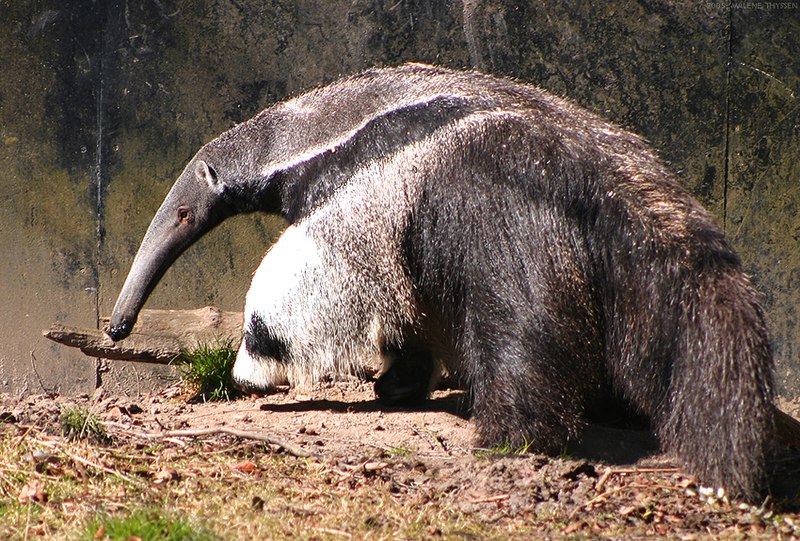
The Myrmecophagidae are a family of anteaters. Two genera and three species are in the family, consisting of the giant anteater, and the tamanduas. The fossil Eurotamandua from the Messel Pit in Germany may be an early anteater, but its status is currently debated. The name is derived from the Ancient Greek words (), meaning "ant", and (''''), meaning "eater".
OverviewAI-generated
Myrmecophagidae is a family of mammals within the order Pilosa. It belongs to the class Mammalia, phylum Chordata, and kingdom Animalia. The scientific name for this taxon is Myrmecophagidae.
Records of this family are held by institutions including TTU, UCMP, AMNH, and NHMUK. These records originate from the United States, Costa Rica, Bolivia, Colombia, and Brazil. The family has 28,902 occurrences and 9 records in available datasets.
Synthesized by Vinony from 19 facts across 5 sources: Wikidata, GBIF, Gbif Occ, iDigBio, Vinony graph. Generated from structured data (not the Wikipedia text) and checked against those facts — may still contain errors.
Species
Myrmecophagidae
FAMILY
- KingdomAnimalia
- PhylumChordata
- ClassMammalia
- OrderPilosa
- FamilyMyrmecophagidae
via GBIF
Museum specimens
- Specimen records
- 9
- Family
- Myrmecophagidae
- Collections
- TTU, UCMP, AMNH, NHMUK
- Recorded in
- United States, Costa Rica, Bolivia, Colombia, Brazil
Wikidata facts
- Instance of
- taxon
- Parent taxon
- Vermilingua
- Image
- Myresluger2.jpg
Show 8 more facts
- different from
- Formicariidae
- Commons category
- Myrmecophagidae
- taxon name
- Myrmecophagidae
- taxon rank
- family
- Code of nomenclature
- International Code of Zoological Nomenclature
- topic's main category
- Category:Anteaters
- Commons gallery
- Myrmecophagidae
- taxon common name
- mravljinčarji
via Wikidata · CC0
~3 min read
Encyclopedic overview
6 sectionsContents
- Characteristics
- Distribution
- Reproduction
- Evolutionary history
- Taxonomy
- References
The Myrmecophagidae are a family of anteaters. Two genera and three species are in the family, consisting of the giant anteater, and the tamanduas. The fossil Eurotamandua from the Messel Pit in Germany may be an early anteater, but its status is currently debated. The name is derived from the Ancient Greek words (), meaning "ant", and (''''), meaning "eater".
==Characteristics== Myrmecophagids are medium to large animals, with distinctively elongated snouts and long, narrow tongues. They have powerful claws on their toes, enabling them to rip open termite mounds and ant nests to eat the insects inside. They have no teeth, but produce a large amount of sticky saliva to trap the insects, as well as backward-pointing spines on their tongues. Ants and termites are almost their only food in the wild, and their primary source of water, although they sometimes also drink free-standing water, and occasionally eat fruits.
Excerpted from Wikipedia’s “Myrmecophagidae” article, available under the CC BY-SA 4.0 licence.