Category
page 1Czech cuisine

goulash
Goulash (, ) is a meal made of meat and vegetables seasoned with paprika and other spices. Originating in Hungary, goulash is a common meal predominantly eaten in Central Europe but also in other parts of Europe. It is one of the national dishes of Hungary and a symbol of the country.

strudel
Strudel ( , ) is a type of layered pastry with a filling that is usually sweet, but savoury fillings are also common. It became popular in the 18th century throughout the Austrian Empire. Strudel is part of Austrian cuisine and German cuisine but is also common in other Central European cuisines. In Italy it is recognized as a (PAT) of South Tyrol.

smetana
dairy product produced by souring heavy cream, popular in Eastern and Central Europe
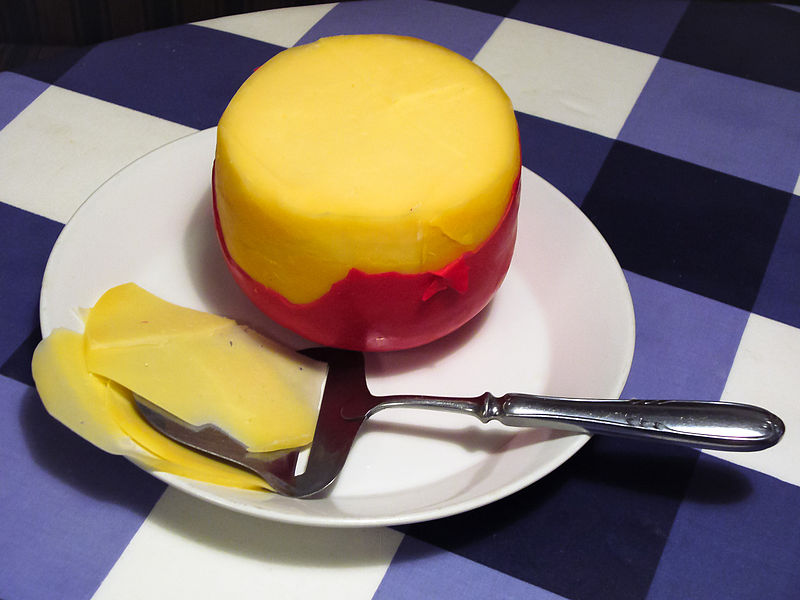
Edam
Dutch cheese

potato pancake
fried pancakes of grated or ground potato

cinnamon roll
sweet food pastry

cabbage roll
dish of cabbage leaves with a filling

steak tartare
meat dish made from finely chopped raw beef or horse meat

knödel
Knödel (; and ) or Klöße (; : Kloß) are boiled dumplings commonly found in Central European and Eastern European cuisine. Countries in which their variant of is popular include Austria, Bosnia, Croatia, Czech Republic, Germany, Poland, Romania, Serbia, Slovakia and Slovenia. Similar dishes can be found in most other European cuisines, such as Scandinavian, Romanian, northeastern Italian, Jewish, Ukrainian and Belarusian cuisines. Usually made from flour, bread or potatoes, they are often served as a side dish, but can also be a dessert such as plum dumplings, or even meat balls in soup. Many v
pea soup
thick soup usually made out of dried split peas

Gugelhupf
A Gugelhupf (also Kugelhupf, Guglhupf, Gugelhopf, , in Czech bábovka [ˈbaːbofka], and, in France, kouglof '''', kougelhof, or kougelhopf, in the Netherlands tulband, short for tulbandcake'') is a cake traditionally baked in a distinctive ring mould, similar to Bundt cake, but leavened with baker's yeast.
open sandwich
single slice of bread with food items on top
Czech cuisine
culinary traditions of the Czechia

halušky
right|thumb|Haluškár strainer

palatschinke
Palačinka (plural Palačinke) is a thin crêpe-like variety of pancake of Greco-Roman origin. The dessert is common in the Balkans, Central-, and Eastern-Europe.
Buchteln
Buchteln (from Czech , pl. , also in German: pl., sing. ; also , , ) are sweet rolls made of enriched yeast dough, filled with powidl, jam, ground poppy seeds or quark, brushed with butter and baked in a large pan so that they stick together and can be pulled apart. The traditional buchtel is filled with powidl. Buchteln may be topped with vanilla sauce, powdered sugar or eaten plain and warm. Buchteln are served tepid, mostly as a breakfast pastry or with tea. In the 19th century, they could be boiled similar to dumplings.

kasha
In English, kasha () is a porridge usually made from buckwheat, a pseudocereal. In the Slavic languages, kasha means porridge. In some varieties of Central and Eastern European cuisine, kasha can apply to any kind of cooked grain. It can be baked but most often is boiled, either in water or milk, but the word can also refer to the grain before preparation, which corresponds to the definition of 'groats'.
sour rye soup
traditional West Slavic soup
pig slaughter
work of slaughtering domestic pigs to obtain pig meat (pork)
head cheese
cold cut non-dairy meat jelly or terrine

rollmops
Rollmops () are pickled herring fillets, rolled into a cylindrical shape, often around a savoury filling.
Vanillekipferl
'''''' are Austrian, German, Swiss, Czech, Slovak and Hungarian small, crescent-shaped biscuits. They were originally made with walnuts, but almonds or hazelnuts can also be used. They get their typical flavour from a heavy dusting of vanilla sugar.

trdelník
Trdelník (; or rarely trdlo, trozkol, or chimney cake) is a kind of spit cake and variant of Kürtőskalács. It is made from dough that is wrapped around a stick, then baked and topped with sugar and walnut mix.

powidl
A powidl (also porvidl, powidła, povidla, or powidel) is a plum butter, a type of fruit spread prepared from the prune plum, that is popular in Central Europe. Unlike jam or marmalade, and unlike the German Pflaumenmus (plum puree), powidl is prepared without additional sweeteners or gelling agents.

pörkölt
Pörkölt () is a meat stew which originates from Hungary, however is eaten throughout Central Europe.
semolina pudding
porridge-type pudding made from semolina

Eisbein
thumb|267px|Corned Eisbein, with Sauerkraut
thumb|267px|Ham hock position
ham hock
joint on the hog's leg
smažený sýr
Czech and Slovak dish of cheese, about 1.5 cm thick, breaded with flour, egg, and bread crumbs and then fried, served with tartar sauce or mayonnaise and a side salad or potatoes
pickled herring
traditional way of preserving herring
Semmelknödel
Semmelknödel () are a kind of bread dumplings made from dried wheat bread rolls like Kaiser rolls, milk, and eggs. The name derives from southern Germany, where semmel means bread rolls and knödel refers to something that has been kneaded. Semmelknödel are a food specialty in southern Germany, Austria, Slovenia and the Czech Republic, as well as northern Italy (where they are called canederli in Trentino, Semmelknödel in South Tyrol and maracund in Lombardy).
kaszanka
Kaszanka is a traditional blood sausage in Central and Eastern European cuisine. It is made of a mixture of pig's blood, pork offal (commonly liver), and buckwheat (kasha) or barley stuffed in a pig intestine. It is usually flavored with onion, black pepper, and marjoram.

lokša
thumb|Sweet lokšas with sugar and poppy seeds
thumb|Lokša with chicken liver and corn salad
Lokša or lokše ( and respectively; may be written in English as loksha or lokshe) is a type of potato pancake like flatbread, popular in the cuisine of Slovakia and South Moravian Region of the Czech Republic. In South Moravia, lokše is also a term for wide noodles added to soups.
Vánočka
Vánočka () is a plaited bread, baked in Czech Republic and Slovakia (in Slovak called vianočka) traditionally at Christmas time. Such special festive Christmas bread made from white flour, either in the form of a wedge or of plait, was first mentioned around 1400 by Benedictine monk Jan of Holešov in his work Treatise on Christmas Eve. According to his interpretation, this pastry symbolized Christ Child wrapped in cloth.
Svíčková
Svíčková, or svíčková na smetaně (pronounced [ˈsviːt͡ʃkɔvaː na smɛ.ta.ɲɛ]), is a Czech meat dish and one of the most common Czech and Slovak meals. Svíčková is the Czech word for tenderloin, but this dish is traditionally beef topside (falešná svíčková, 'false tenderloin') prepared with vegetables (carrots, parsley root, celeriac and onion), spiced with black pepper, allspice, bay leaf and thyme, and boiled with double cream, though in practice other cuts of beef may sometimes be used. Topside is a cut from the front shoulder equivalent to jumeau à bifteck in French cuisine or girello di spall

chrain
thumb|White
thumb|Red
'''''' (; ; or ; ; ; ; ; ; ; meaning 'horseradish' in all these languages) is a spicy paste made of grated horseradish. It is a common condiment for meat and fish dishes in Eastern and Central European cuisines (Slovene, northern Croatian, Belarusian, Czech, Slovak, German (especially Bavarian), Polish, Romanian, Latvian, Lithuanian, Russian, Ukrainian and Ashkenazi Jewish cuisine). comes from Yiddish , which is in turn a loanword from Slavic languages.
garlic soup
type of soup using garlic as a main ingredient
Leberknödel
Leberknödel () is a traditional dish of German, Austrian, and Czech cuisines.
Marillenknödel
Marillenknödel (; , lit. apricot dumplings) is a pastry common in Austrian (especially Viennese), Czech cuisine, Hungarian cuisine and across Central Europe. Marillen is the Austro-Bavarian term for apricots (most of the German-speaking world uses Aprikose) and this pastry is found predominantly in areas where apricot orchards are common, such as the Wachau and Vinschgau regions.
Czech wine
wine making in Czech Republic

knedle
thumb|Knedle with meat filling
thumb|Knedle made of curd-based dough, filled with strawberries and peaches
thumb|Apricot-filled knedle coated in buttered breadcrumbs and sprinkled with powdered sugar
Knedle (plural from ), is a dish of boiled ball- or oval-shaped dumplings with a filling. The dough can be potato-based or made of choux pastry; sometimes it is curd-based. It is filled with fruits (whole strawberries, prune plums, apricots, pieces of apples), mushrooms, curd cheese, meat, and other ingredients. Knedle are popular in Central and Eastern European countries. The fruit-filled variant
Christmas carp
traditional fish dish
Štramberk ears
moravian corn-shaped gingerbread product

poppy seed roll
pastry
Prague ham
type of boneless ham originally from Prague
milk-cream strudel
food

Mohnnudel
thumb|Mohnnudeln in detail
Kulajda
Kulajda is a Czech cuisine soup. One version is made with sour cream, potatoes, dill and quail egg. Mushrooms are also an important ingredient of the soup.
pot roast
American roasted beef dish
Rinderroulade
thumb|270px|Uncooked Rouladen
thumb|270px|Sliced beef roulade filled with bacon, [[onion and pickled cucumber. The carrot piece on top belongs to the broth, which is used as gravy for the complements.]]
Moravian cuisine
cooking traditions of Moravia
eel as food
flesh from eels
Rice pudding cake
Vepřo knedlo zelo
Czech national dish
Česnečka
thumb|Česnečka at a restaurant in Hrádek nad Nisou, Czech Republic
nut roll
pastry
serviettenknödel
Serviettenknödel, (German pronunciation ) also called Serviettenklöße (lit. "napkin dumpling") are a kind of bread dumplings made from dried wheat bread rolls like Kaiser rolls, milk and eggs. Servierttenknödel are a middle European dish made from the same dough as Semmelknödel and are usually served as a side dish. They are sometimes served as a main course or a dessert.
Meter cake
Long sponge cake