Category
page 1Dissociative drugs

xenon
Xenon is a chemical element; it has symbol Xe and atomic number 54. It is a dense, colorless, odorless noble gas found in Earth's atmosphere in trace amounts. Although generally unreactive, it can undergo a few chemical reactions such as the formation of xenon hexafluoroplatinate, the first noble gas compound to be synthesized.

(RS)-ketamine
Ketamine is a cyclohexanone-derived general anesthetic and NMDA receptor antagonist with analgesic and hallucinogenic properties, used medically for anesthesia, depression, and pain management. Ketamine exists as its two enantiomers, S- (esketamine) and R- (arketamine), and has antidepressant action likely involving other mechanisms in addition to NMDA antagonism.
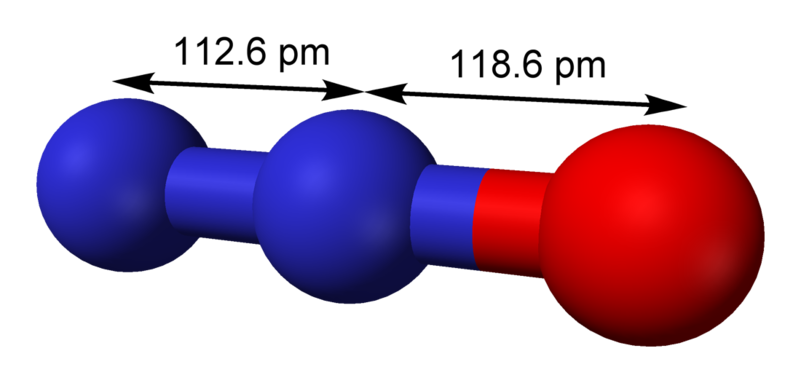
nitrous oxide
chemical compound

diethyl ether
chemical compound
.jpg)
phencyclidine

dextromethorphan
Dextromethorphan is a cough suppressant used in many cough and cold medicines. In 2022, the US Food and Drug Administration (FDA) approved the combination dextromethorphan/bupropion to serve as a rapid-acting antidepressant in people with major depressive disorder.

amantadine
Amantadine, sold under the brand name Gocovri among others, is a medication used to treat dyskinesia associated with parkinsonism and influenza caused by type A influenzavirus, though its use for the latter is no longer recommended because of widespread drug resistance. It is also used for a variety of other conditions. The drug is taken by mouth.
memantine
Memantine, sold under the brand name Namenda among others, is a medication used to slow the progression of moderate-to-severe Alzheimer's disease. It is taken by mouth.
enflurane
Enflurane (2-chloro-1,1,2-trifluoroethyl difluoromethyl ether) is a halogenated ether. Developed by Ross Terrell in 1963, it was first used clinically in 1966. It was increasingly used for inhalational anesthesia during the 1970s and 1980s but is no longer in common use.

poppers
Poppers are recreational drugs belonging to the alkyl nitrite family of chemical compounds. When fumes from these substances are inhaled, they act as potent vasodilators, producing mild euphoria, warmth, and dizziness. Most effects have a rapid onset and are short-acting. Its recreational use is believed to be potentially dangerous for people with heart problems, anaemia, or glaucoma. Reported adverse effects include fainting, retinal toxicity, and vision loss.
Dissociative
Dissociatives, colloquially dissos, are a subclass of hallucinogens that distort perception of sight and sound and produce feelings of detachment – dissociation – from the environment and/or self. Although many kinds of drugs are capable of such an effect, dissociatives are unique in that they do so in such a way that they produce hallucinogenic effects, which may include dissociation, a general decrease in sensory experience, hallucinations, dream-like states or anesthesia.

esketamine

inhalant
Inhalants are a broad range of household and industrial chemicals whose volatile vapors or pressurized gases can be concentrated and breathed in via the nose or mouth to produce intoxication, in a manner not intended by the manufacturer. They are inhaled at room temperature through volatilization (in the case of gasoline or acetone) or from a pressurized container (e.g., nitrous oxide or butane), and do not include drugs that are sniffed after burning or heating.

methoxetamine
Methoxetamine (MXE) is a dissociative hallucinogen that has been sold as a designer drug. It differs from many dissociatives such as ketamine and phencyclidine (PCP) that were developed as pharmaceutical drugs for use as general anesthetics in that it was designed specifically to increase the antidepressant effects of ketamine.
dextrorphan
Dextrorphan (DXO) is a psychoactive drug of the morphinan class which acts as an antitussive or cough suppressant and in high doses a dissociative hallucinogen. It is the dextrorotatory enantiomer of racemorphan; the levorotatory enantiomer is levorphanol. Dextrorphan is produced by O-demethylation of dextromethorphan by CYP2D6. Dextrorphan is an NMDA antagonist and contributes to the psychoactive effects of dextromethorphan.
tiletamine
Tiletamine is a dissociative anesthetic and pharmacologically classified as an NMDA receptor antagonist. It is an arylcyclohexylamine chemically related to ketamine. Tiletamine hydrochloride exists as odorless white crystals.
NMDA receptor antagonist
class of anesthetics that work to antagonize, or inhibit the action of, the N-Methyl-D-aspartate receptor (NMDAR)
eticyclidine
PCE (Eticyclidine, CI-400) is a dissociative anesthetic drug with hallucinogenic effects. It is similar in effects to phencyclidine but is slightly more potent. PCE was developed by Parke-Davis in the 1970s and evaluated for anesthetic potential under the code name CI-400, but research into PCE was not continued after the development of ketamine, a similar drug with more favourable properties. Due to its similarity in effects to PCP, PCE was placed into the Schedule 1 list of illegal drugs in the 1970s, although it was only briefly abused in the 1970s and 1980s and is now little known.
dizocilpine
Dizocilpine (INN), also known as MK-801, is a pore blocker of the NMDA receptor, a glutamate receptor, discovered by a team at Merck in 1982. Glutamate is the brain's primary excitatory neurotransmitter. The channel is normally blocked with a magnesium ion and requires depolarization of the neuron to remove the magnesium and allow the glutamate to open the channel, causing an influx of calcium, which then leads to subsequent depolarization. Dizocilpine binds inside the ion channel of the receptor at several of PCP's binding sites thus preventing the flow of ions, including calcium (Ca2+), thro
3-methoxyphencyclidine
3-Methoxyphencyclidine (3-MeO-PCP) is a dissociative hallucinogen of the arylcyclohexylamine class related to phencyclidine (PCP) which has been sold online as a designer drug. It has been used across Europe and the United States. In some cases, consumption has been known to be fatal. It acts mainly as an NMDA receptor antagonist, though it has also been found to interact with the sigma σ receptor and the serotonin transporter. The drug does not possess any opioid activity nor does it act as a dopamine reuptake inhibitor.
Diphenidine
Diphenidine (1,2-DEP, DPD, DND) is a dissociative anesthetic that has been sold as a designer drug.
Diphenidine was first synthesized in 1924 using a Bruylants reaction similar to the one later employed in the discovery of phencyclidine in 1956. Following the 2013 UK ban on arylcyclohexylamines, diphenidine and the related compound methoxphenidine emerged on the grey market. Anecdotal reports indicate that high doses of diphenidine can produce "bizarre somatosensory phenomena and transient anterograde amnesia."
racemorphan
Racemorphan, or morphanol, is the racemic mixture of the two stereoisomers of 17-methylmorphinan-3-ol, each with differing pharmacology and effects:
N-(1-(4-methoxyphenyl)cyclohexyl)piperidine
4-Methoxyphencyclidine (methoxydine, 4-MeO-PCP) is a dissociative anesthetic drug that has been sold online as a research chemical. The synthesis of 4-MeO-PCP was first reported in 1965 by the Parke-Davis medicinal chemist Victor Maddox. A 1999 review published by a chemist using the pseudonym John Q. Beagle suggested the potency of 4-MeO-PCP in man was reduced relative to PCP, two years later Beagle published a detailed description of the synthesis and qualitative effects of 4-MeO-PCP, which he said possessed 70% the potency of PCP. 4-MeO-PCP was the first arylcyclohexylamine research chemica
perzinfotel
Perzinfotel (EAA-090) is a drug which acts as a potent NMDA antagonist. It has neuroprotective effects and has been investigated for the treatment of stroke, but lacks analgesic effects. Nevertheless, it shows a good safety profile compared to older drugs, although further development of this drug has been discontinued.
rolicyclidine
Rolicyclidine (PCPy) is a dissociative anesthetic that is similar in effects to phencyclidine, but is slightly less potent and has fewer stimulant effects. It instead produces a sedative effect described as being somewhat similar to a barbiturate, but with additional PCP-like dissociative, anaesthetic and hallucinogenic effects. Due to its similarity in effects to PCP, PCPy was placed into the Schedule I list of illegal drugs in the 1970s, although it has never been widely abused and is now little known.
arylcyclohexylamine
class=skin-invert-image|thumb|upright|Phencyclidine, the prototypical arylcyclohexylamine derivative.
Arylcyclohexylamines, also known as arylcyclohexamines or arylcyclohexanamines, are a chemical class of pharmaceutical, designer, and experimental drugs.
ephenidine
Ephenidine (also known as NEDPA and EPE) is a dissociative anesthetic that has been sold online as a designer drug. It is illegal in some countries as a structural isomer of the banned opioid drug lefetamine, but has been sold in countries where it is not yet banned.
tenocyclidine
Tenocyclidine (TCP) is a dissociative anesthetic with psychostimulant effects. It was discovered by a team at Parke-Davis in the late 1950s. It is similar in effects to phencyclidine (PCP) but is considerably more potent. TCP has slightly different binding properties to PCP, with more affinity for the NMDA receptors, but less affinity for the sigma receptors. Because of its high affinity for the PCP site of the NMDA receptor complex, the 3H radiolabelled form of TCP is widely used in research into NMDA receptors.
Template:Ketamine-related arylcyclohexylamines list
Wikimedia template
Midafotel
Midafotel (CPPene; SDZ EAA 494) is a potent, competitive antagonist at the NMDA receptor. It was originally designed as a potential therapy for excitotoxicity, epilepsy or neuropathic pain. It looked very promising in in vitro trials proving to be a potent competitive antagonist at the NMDA without affecting other receptors. Research continued through to in vivo cat studies where it proved to limit damage after occluding the middle cerebral artery, leading to ischaemia. It also blocked photosensitive epilepsies in baboons.
DL-methorphan
Methorphan is an opioid drug that occurs in two isomeric forms, each with differing pharmacology and effects:
Dextromethorphan (Drug)
cough suppressant drug susceptible to misuse
arketamine
Arketamine (developmental code names PCN-101, HR-071603), also known as '(R)-ketamine or (R)-(−)-ketamine', is the (R)-(−) enantiomer of ketamine. Similarly to racemic ketamine and esketamine, the S(+) enantiomer of ketamine, arketamine is biologically active; however, it is less potent as an NMDA receptor antagonist and anesthetic and thus has never been approved or marketed for clinical use as an enantiopure drug. Arketamine is currently in clinical development as a novel antidepressant.
methoxphenidine
Methoxphenidine (methoxydiphenidine, 2-MeO-Diphenidine, MXP) is a dissociative of the diarylethylamine class that has been sold online as a designer drug. Methoxphenidine was first reported in a 1989 patent where it was tested as a treatment for neurotoxic injury. Shortly after the 2013 UK ban on arylcyclohexylamines methoxphenidine and the related compound diphenidine became available on the gray market, where it has been encountered as a powder and in tablet form. Though diphenidine possesses higher affinity for the NMDA receptor, anecdotal reports suggest methoxphenidine has greater oral po
PCPr
PCPr is an arylcyclohexylamine dissociative anesthetic drug with hallucinogenic and stimulant effects. It is around the same potency as phencyclidine, although slightly less potent than the ethyl homologue eticyclidine, and has reportedly been sold as a designer drug in Germany and other European countries since the late 1990s.
N-ethylnorketamine
'''N-Ethylnorketamine (ethketamine, NENK, 2-Cl-2'-Oxo-PCE''') is a designer drug which is presumed to have similar properties to ketamine, a dissociative anesthetic drug with hallucinogenic and sedative effects. It has been sold over the internet since around September 2012, and identified in seized drug samples by analytical laboratories in the UK and other European countries.
fluorolintane
Fluorolintane (also known as 2-FPPP and 2-F-DPPy) is a dissociative anesthetic drug that has been sold online as a designer drug.
gacyclidine
Gacyclidine (GK-11, OTO-313) is a psychoactive drug which acts as a dissociative via functioning as a non-competitive NMDA receptor antagonist. It is closely related to phencyclidine (PCP), and specifically, is a derivative of tenocyclidine (TCP). Gacyclidine exhibits neuroprotective effects similar to those of other NMDA receptor antagonists, with the advantage of being substantially less neurotoxic maybe due to its interaction with "non-NMDA" binding sites.
dieticyclidine
Dieticyclidine (PCDE), or diethylphenylcyclohexylamine, is a psychoactive drug and research chemical of the arylcyclohexylamine chemical class related to phencyclidine (PCP) and eticyclidine (PCE). It acts as an NMDA receptor antagonist but has low potency and acts mainly as a prodrug for eticyclidine.
(RS)-norketamine
Norketamine, or '''N-desmethylketamine''', is the major active metabolite of ketamine, which is formed mainly by CYP3A4. Similarly to ketamine, norketamine acts as a noncompetitive NMDA receptor antagonist, but is about 3–5 times less potent as an anesthetic in comparison.
3-HO-PCP
3-Hydroxyphencyclidine (3-HO-PCP) is a dissociative of the arylcyclohexylamine class related to phencyclidine (PCP) that has been sold online as a designer drug.
2-fluorodeschloroketamine
2-Fluorodeschloroketamine (also known as '''2'-Fl-2-Oxo-PCM, fluoroketamine, and 2-FDCK''') is a dissociative anesthetic related to ketamine. Its sale and use as a designer drug has been reported in various countries. It is an analogue of ketamine where the chlorine group has been replaced by fluorine. Due to its recent emergence, the pharmacological specifics of the compound are mostly unclear, but effects are reported to be similar to its parent compound, ketamine.
selfotel
Selfotel (CGS-19755) is a drug which acts as a competitive NMDA antagonist, directly competing with glutamate for binding to the receptor. Initial studies showed it to have anticonvulsant, anxiolytic, analgesic and neuroprotective effects, and it was originally researched for the treatment of stroke, but subsequent animal and human studies showed phencyclidine-like effects, as well as limited efficacy and evidence for possible neurotoxicity under some conditions, and so clinical development was ultimately discontinued.