Category
page 1Iraqi cuisine

yogurt
Yogurt (; , from , ; also spelled yoghurt, yogourt or yoghourt) is a food produced by bacterial fermentation of milk. Fermentation of sugars in the milk by these bacteria produces lactic acid, which acts on milk protein to give yogurt its texture and characteristic tart flavor. Cow's milk is most commonly used to make yogurt. Milk from water buffalo, goats, ewes, mares, camels, and yaks is also used to produce yogurt. The milk used may be homogenized or not. It may be pasteurized or raw. Each type of milk produces substantially different results.

Anethum graveolens
Dill (Anethum graveolens) is an annual herb in the celery family Apiaceae. Native to North Africa and West Asia, dill is grown widely in Eurasia, where its leaves and seeds are used as a herb or spice for flavouring food.

Trigonella foenum-graecum
thumb|Fenugreek greens

saffron
alt=Saffron|thumb|Saffron crocus, Crocus sativus, with its vivid crimson stigmas and styles

pilaf
Pilaf (), pilav, pilau or plov () is a rice dish, or in some regions, a wheat dish, whose recipe usually involves cooking in stock or broth, adding spices, and other ingredients such as vegetables and meat, and employing some technique for achieving cooked grains that do not adhere.

falafel

shawarma
Shawarma (; ) is a Middle Eastern dish that originated during the Ottoman Empire, consisting of meat that is cut into thin slices, stacked in an inverted cone, and roasted on a slow-turning vertical spit. Traditionally made with lamb or mutton, it may also be made with chicken, turkey meat, beef, falafel or veal. The surface of the rotisserie meat is routinely shaved off once it cooks and is ready to be served. Shawarma is a popular street food throughout the Arab world, Israel and the Greater Middle East.

cardamom
thumb|True cardamom plant (Elettaria cardamomum)
thumb|Cardamom seeds

Turkish coffee
coffee brewing method originating from Turkey

ayran
Ayran ( ) is a cold savory yogurt-based beverage that is consumed across Central Asia, the Balkans, and the Middle East. The principal ingredients are yogurt, water and salt. Herbs such as mint may be optionally added. Some varieties are carbonated. It is a national drink of Turkey.

semolina
Semolina is a coarse flour traditionally made from durum wheat. Its high protein and gluten content make it especially suitable for pasta.
Jalebi
thumb|Jalebi being prepared by a street vendor in Bangalore, India
Jalebi is a common sweet snack in the Indian subcontinent, West Asia and some parts of Africa. It goes by many names, including jilapi, zelepi, jilebi, jilipi, zulbia, zoolbia, jerry, mushabak, '''''z'labia, or zalabia.'''''

Turkish delight
Turkish gelatinous candy

tandoor
upright=1.2|thumb|Modern ceramic wood-fired tandoors

tehina
Tahini (; , or, in Iraq, ) is a Middle Eastern condiment (a seed butter) made from ground sesame seeds. The most common variety comes from hulled seeds, but unhulled ones can also be used; the latter variety is slightly bitter, but more nutritious. The seeds are more commonly roasted than raw. Tahini can be served by itself (as a dip), made into a salad dressing, or used as a major ingredient in hummus, baba ghanoush, or halva.

tzatziki
Tzatziki ( ), also known as cacık () or tarator, is a class of dip, soup, or sauce found in the cuisines of Southeastern Europe and West Asia. It is made of salted strained yogurt or diluted yogurt mixed with cucumbers, garlic, salt, olive oil, red wine vinegar, sometimes with lemon juice, and herbs such as dill, mint, parsley and thyme. It is served as a cold appetiser (meze), a side dish, and as a sauce for souvlaki and gyros sandwiches and other foods.

dolma
Dolma is a family of stuffed dishes largely associated with Ottoman cuisine. It mainly includes vegetables and leaves, and occasionally seafood, offal, fruits, and meats, that are hollowed out or wrapped, then filled with a mixture of rice, minced meat, herbs, and spices. The leaf-wrapped type can be specifically known as sarma, but colloquially dolma is used for both.

shashlik
Shashlik, or shashlyck ( shashlyk ), is a dish of skewered and grilled cubes of meat, similar to or synonymous with shish kebab. It is known traditionally by various other names in the Caucasus, Eastern Europe and Central Asia, and from the 19th century became popular as shashlik across much of the Russian Empire and nowadays in former Soviet Union republics.

börek
Börek (also burek or byrek) is a family of pastries or pies made in the Middle East and Southeast Europe. The pastry is made of a thin flaky dough such as filo with a variety of fillings, such as meat, cheese, spinach, or potatoes. A börek may be prepared in a large pan and cut into portions after baking, or as individual pastries. They are usually baked but some varieties can be fried. Börek is sometimes sprinkled with sesame or nigella seeds, and it can be served hot or cold.
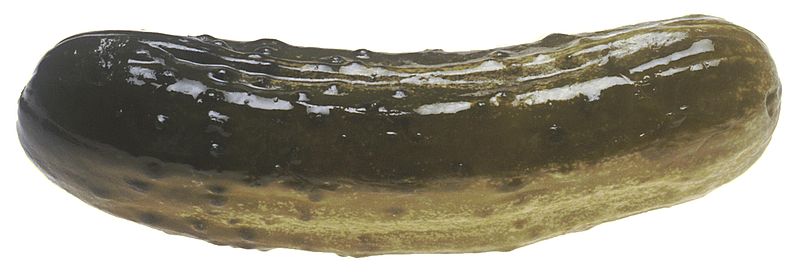
pickled cucumber
cucumber preserved in vinegar
.jpg)
Tabbouleh
Tabbouleh (), also transcribed tabouleh, tabbouli, tabouli, or taboulah, is a Levantine salad of finely chopped parsley, soaked bulgur, tomatoes, mint, and onion, seasoned with olive oil, lemon juice, salt and sweet pepper. Some variations add lettuce, or use semolina instead of bulgur.

sherbet
sweet drink

halloumi
Halloumi, or haloumi, is a cheese originating from Cyprus. It is traditionally made from a mixture of goat milk and sheep's milk; however, due to industrial tactics to increase profit, modern halloumi increasingly contains cow's milk. The cheese's texture is often described as "squeaky". It has a high melting point and so can easily be fried or grilled, a property that makes it a popular meat alternative among vegetarians. Rennet (mostly vegetarian or microbial) is used to curdle the milk in halloumi production, although no acid-producing bacteria are used in its preparation.

baba ghanoush
Levantine appetizer consisting of finely chopped roasted eggplant, olive oil, lemon juice, various seasonings, and tahini

kibbeh
Kibbeh (, also kubba and other spellings; ; ) is a popular dish in the Arab world and the Levant in particular, made of spiced lean ground meat and bulgur wheat. Kibbeh is considered to be a national dish of Lebanon and Syria.

kaymak
Kaymak, sarshir, or qashta/ashta ( ; or ; ) is a creamy dairy food similar to clotted cream, made from the milk of water buffalo, cows, sheep, or goats in Central Asia, Turkic regions, some Balkan countries, some Caucasus countries, and the Levant.

sujuk
Sujuk, sugou or sucuk (/suːˈd͡ʒʊk/) is a dry, spicy and fermented sausage which is consumed in several Anatolian, Balkan, Middle Eastern and Central Asian cuisines. Sujuk mainly consists of ground meat and animal fat usually obtained from beef or lamb, but beef is mainly used in Turkey, Egypt, Sudan, Armenia, Azerbaijan, Bosnia and Herzegovina, Albania, Georgia, Bulgaria, Kazakhstan, and Kyrgyzstan.
khash
type of food

Maqluba
Maqluba (also attested by a variety of other spellings in English; ) is a traditional Levantine dish, a variety of Pilaf that is popular across Palestine, Jordan, Syria, Lebanon, Israel, and Iraq. It consists of meat, rice, and fried vegetables placed in a pot which is flipped upside down when served, hence the name.
Arabic coffee
serving and drinking customs of Arabic coffee

qatayef
thumb|Assorted qatayef
Qatayef, katayef, atayef or '''qata'if''' ( ) is an Arabic dessert. It is a type of sweet dumpling filled with cream or nuts, or a filled folded pancake with a thickness similar to a Scottish crumpet.
scorched rice
crunchy, slightly browned cooked rice
fattoush
Fattoush (; also fattush, fatush, fattoosh, and fattouche) is a Levantine salad made from toasted or fried pieces of pita combined with mixed greens and other vegetables, such as radishes, cucumber and tomatoes. Fattoush is a common part of meals in communities in the Levant.
Fesenjān
Fesenjān (; also called Fesenjoon in Tehrani dialect) is a sweet and sour Iranian stew (a khoresh). The roots of this Persian delicacy trace back to the Sassanid Persia's golden age. It is typically served over rice in the Iranian manner. In Iran, it is made with minced meat (lamb, sheep or beef), meatballs, chicken or duck. Like other khoresh stews served over rice, fesenjan is common also to Iraqi cuisine through Iranian pilgrims visiting Shia sites such as Imam Husayn shrine. As a festive dish for special occasions, it has become part of Jewish Rosh Hashannah celebrations, even though the t
shish kebab
skewered meat dish

joshpara
Joshpara is a kind of dumpling popular in Central Asia, South Caucasus and the Middle East. They are made of unleavened wheat dough squares filled with ground meat and condiments.

lokma
Lokma is a dessert made of leavened and deep-fried dough balls, soaked in syrup or honey, sometimes coated with cinnamon or other ingredients. The dish was described as early as the 13th century by al-Baghdadi as luqmat al-qādi (), "judge's morsels".

Haleem
Haleem or halim is a type of stew that is widely consumed in South Asia, the Middle East and Central Asia. Although the dish varies from region to region, it optionally includes wheat or barley, lentils and meat. It is made by slow cooking the meat in lentils and spices. It is served hot with flat breads or on its own. Popular variations of haleem include keşkek (in Turkey, Tajikistan, Uzbekistan, Azerbaijan and Northern Iraq); harisa (in the Arab world and Armenia); halim (in Afghanistan, Iran, West Bengal, Mauritius, Pakistan and Bangladesh); and Hyderabadi haleem (in India).
Iraqi cuisine
culinary traditions of Iraq
Kurdish cuisine
cuisine of the Kurdish people
mujadara
Mujaddara ( mujaddarah, with alternative spellings in English majadra, mejadra, moujadara, mudardara, and megadarra) is a dish consisting of cooked lentils together with groats, generally rice, and garnished with sautéed onions. It is especially popular in the Levant.

Abgoosht
250px|thumbnail|right|Abgoosht served at a traditional-style restaurant in Iran
thumb|right|180px|A dizi dish during consumption
Abgoosht or abgusht ( Âbgušt, ; literally "meat broth") is an Iranian stew. It is also called dizi (, ), which refers to the traditional stoneware crocks it is served in. Some describe it as a "hearty mutton Persian soup thickened with chickpeas."

harees
Harees, haresa, hareesa, arizah, harise, jarish, jareesh, (), harisa (), or korkot () is a dish of boiled, cracked, or coarsely-ground cracked wheat or bulgur, mixed with meat and seasoned. Its consistency varies between a porridge and a gruel. Harees is known throughout Armenia where it is served on Easter, and the Arab world, where it is commonly eaten in Arab states of the Persian Gulf in the month of Ramadan, and in Iraq, Lebanon and Bahrain during Ashura by Shia Muslims.
khubz
Khubz () is the usual word for "bread" in Standard Arabic and in many of the vernaculars. Among the breads popular in Middle Eastern countries are "pocket" pita bread in the Levant and Egypt, and the flat tannur bread in Iraq.
taboon bread
type of bread

baharat
thumb|right|100px|A small jar of homemade Gulf-style baharat

sfiha
Sfiha, esfiha, esfirra, sfija, sfihah, sfeeha or fatay () is a Levantine dish consisting of flatbread cooked with a minced meat topping, often a mix of sheep and veal, and flavored with onions, tomatoes, pine nuts, and spices. It is traditionally found in the countries of the Levant, and is closely related to manakish and lahmacun. Sfiha is particularly associated with Baalbek, a city located in the Beqaa Valley of Lebanon.
tandoor bread
bread made in a tandoor
Mandi
Yemeni dish
Black lime
Dried lime
shish taouk
dish of Levantine cuisine, skewers of marinated chicken pieces
date honey
syrup extracted from dates
Jallab
Jallab or jellab () is a type of fruit syrup popular in the Levant made from carob, dates, grape molasses, and rose water.

Ka'ak
'''Ka'ak' ( , also transliterated ), is a baked good of varying types produced throughout the Arab world and the Near East. The bread, in Middle Eastern countries, is similar to a dry and hardened biscuit and mostly ring-shaped. A similar pastry called "kue kaak''" is also popular in Indonesia.
Arab salad
Salad dishes within Arabic cuisine
Lablabi
Lablabi or lablebi () is a traditional Tunisian dish based on chickpeas in a thin garlic- and cumin-flavored broth, served over small pieces of stale crusty bread. It is a staple comfort food in Tunisia and is also found in variations in Iraq and other parts of the Middle East.
fatayer
Fatayer (; ; ) are meat pies that can alternatively be stuffed with spinach or cheese such as feta or akkawi. They are part of Arab and Levantine cuisine and are eaten in Lebanon, Syria, Palestine, Jordan, Iraq, Egypt, Fatayer are also popular in Argentina, where they are considered a variety of empanada under the name (singular form ), and in Brazil, where they are known as ("closed sfihas", singular form ).
leblebi
Leblebi (; ; ; ; ; ; ) is a snack made from roasted chickpeas, common and popular in Iran, Palestine, Jordan, Syria, Lebanon, Iraq, Greece, Turkey and Bulgaria and sometimes seasoned with salt, hot spices, dried cloves, or candy coated.
Masgouf
Masgouf (), is a Mesopotamian dish consisting of seasoned, grilled carp; it is often considered the national dish of Iraq.
amba
mango pickle condiment