Category
page 1Swedish cuisine

mead
Mead (, ), also called honey wine, and hydromel (particularly when low in alcohol content), is an alcoholic beverage made by fermenting honey mixed with water, and sometimes with added ingredients such as fruits, spices, grains, or hops. The alcoholic content ranges from about 3.5% ABV to more than 20%. Possibly the most ancient alcoholic drink, the defining characteristic of mead is that the majority of the beverage's fermentable sugar is derived from honey. It may be still, carbonated, or naturally sparkling, and despite a common misconception that mead is exclusively sweet, it can also be d

Rubus chamaemorus
species of plant

mashed potato
potato dish

dolma
Dolma is a family of stuffed dishes largely associated with Ottoman cuisine. It mainly includes vegetables and leaves, and occasionally seafood, offal, fruits, and meats, that are hollowed out or wrapped, then filled with a mixture of rice, minced meat, herbs, and spices. The leaf-wrapped type can be specifically known as sarma, but colloquially dolma is used for both.
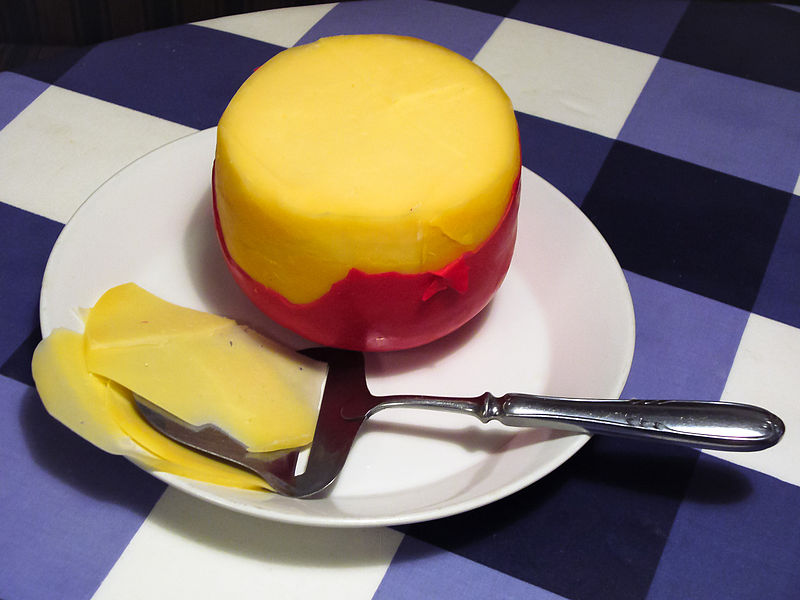
Edam
Dutch cheese

cabbage roll
dish of cabbage leaves with a filling

steak tartare
meat dish made from finely chopped raw beef or horse meat

surströmming
(; ) is lightly salted, fermented Baltic Sea herring traditional to Swedish cuisine since at least the 16th century. It is distinct from fried or pickled herring.
pea soup
thick soup usually made out of dried split peas

meatloaf
thumb|American meatloaf with tomato ketchup
.jpg)
smörgåsbord
Smorgasbord or Smörgåsbord (, ) is a buffet-style meal of Swedish origin. It is served with various hot and mainly cold dishes. It assumed its present form in the 19th century, following old traditions.

Swedish cuisine
culinary traditions of Sweden
open sandwich
single slice of bread with food items on top

gravlax
thumb|Gravlax with hovmästarsås (a mustard and dill sauce)
fish ball
balls made from fish paste which are then boiled or deep-fried

lutefisk
thumb|Lutefisk prepared to eat
.jpg)
shortbread
Shortbread or shortie is a traditional Scottish biscuit usually made from one part white sugar, two parts butter and three to four parts plain wheat flour. Shortbread does not contain leavening, such as baking powder or baking soda. Shortbread is widely associated with Christmas and Hogmanay festivities in Scotland, and some Scottish brands are exported around the world.

smørrebrød
' (; originally , "butter and bread"), smørbrød "butter bread" (Norwegian), or smörgås' "butter goose" (Swedish), is a traditional open-faced sandwich in the cuisines of Denmark, Norway and Sweden that usually consists of a piece of buttered (a dense, dark rye bread) topped with commercial or homemade cold cuts, pieces of meat or fish, cheese or spreads, and garnishes.
Danish
multilayered, laminated sweet pastry
Janssons frestelse
potato dish
nettle soup
traditional soup prepared from stinging nettles

Eisbein
thumb|267px|Corned Eisbein, with Sauerkraut
thumb|267px|Ham hock position
lingonberry jam
traditional fruit preserve in Scandinavian cuisine
Smörgåstårta
(Swedish for ), or sandwich cake (; ; ), is a savoury main dish, not a dessert, of Swedish origin, popular in Sweden, Finland, Estonia, and Iceland, etc. The name is quite literal, with the dish consisting of a cake-like dish, mainly festive, but composed of layers of bread bound with large amounts of sandwich filling and garnish, structurally similar to a layered cream cake, but culinarily more in line with Toast Skagen. When eaten, it is sliced and served like any other cake.
ham hock
joint on the hog's leg
Hollandse Nieuwe
raw herring soaked in a mild preserving liquid
crayfish party
Scandinavian tradition linked to crayfish harvest regulations
pyttipanna
Pytt i panna (Swedish), pytt i panne (Norwegian), pyttipannu (Finnish) or biksemad (Danish), is a culinary dish consisting of chopped meat, potatoes and onions fried in a pan, similar to a hash, and popular in Scandinavia. The term is Swedish for "small pieces in a pan".
kladdkaka
'''''' is a popular Swedish dessert. This dense, compact cake similar to a molten chocolate cake features a crisp exterior and soft, gooey interior. The ingredients are flour, eggs, butter, sugar, vanilla essence and cocoa powder. The main difference between and other cakes is the lack of baking powder. It is sometimes eaten with whipped cream or vanilla ice cream and raspberry coulis and/or raspberries.
Flying Jacob
Swedish casserole dish with chicken and banana
nib sugar
coarse fragments of refined white sugar, often used as a decorative topping for baked goods
liver pâté
pâté and meat spread popular in northern and eastern Europe
Hasselback potatoes
Swedish potato dish
Christmas ham
ham eaten for Christmas
cardamom bread
a type of bread

blodplättar
thumb|right|Finnish blood pancakes
Blodplättar (in Swedish; blodpannekaker in Norwegian, veriohukainen, verilätty or verilettu in Finnish; verikäkk in Estonian), or blood pancakes in English are a dish served in Finland, Estonia, Sweden and Norway made of whipped blood (typically reindeer blood), water or pilsner, flour and eggs. It is similar to black pudding, but is thinner and crispier.
sautéed reindeer
traditional meal from Lapland and Sakha (Yakutia)
crayfish as food
flesh from crayfish
Sami cuisine
cuisine of peoples from the Sápmi territory of the Sami people
.jpg)
Snaps
thumb|A snaps
thumb|Snaps drinking in Sweden, early 20th century.
In the Nordic countries, especially Denmark and Sweden, but not in Iceland, snaps ( , ), among many nicknames, is a small shot of a strong alcoholic beverage taken during the course of a meal.

pölsa
thumb|200px| Pölsa served with a fried egg and pickled beetroot
Pölsa is a traditional northern Swedish dish that is a close relative to Scottish haggis. The main ingredients are beef sinew, liver, heart, lung, onion, and barley, mixed with stock, black pepper, and marjoram. Sometimes ground beef or minced pork is added. It is usually served with mashed or boiled potatoes and pickled beetroot, and sometimes a fried egg.
==Background==
The Norwegian and Danish word pølse means sausage and even if the two dishes don't look the same, the two words are related. Pölsa is simply a traditional variet

vispipuuro
thumb|Whisking while it is cooling down in water filled kitchen sink
Vispipuuro (, "whipped porridge"), russedessert (Norwegian), vispgröt/klappgröt/klappkräm (Swedish name), debesmanna (Latvian name, "sky-semolina"), or mannavaht (Estonian name) is a sweet, wheat semolina (manna) cold porridge made with berries, usually lingonberries.

medisterpølse
thumb|Pieces of fried medister, of approx. 5 cm.
brännvin
Brännvin (Swedish spelling; see ) is an old Nordic term for distilled liquor, generally from potatoes, grain, or (formerly) wood cellulose etc., and is today primarily used as a name for "Nordic-style" spirits, and then mainly divided into unspiced and spiced brännvin. Beverages labelled brännvin are usually plain and have an alcohol content between 30% and 38%.

jellied eels
traditional English dish

Julebord
thumb|Swedish Julbord aboard the cruise boat Gustavsberg VII in 1990.
thumb|Christmas table in a Swedish home.
raspeball
' (also known as , , , , , ') is a traditional Norwegian potato dumpling. A similar German dish is called .
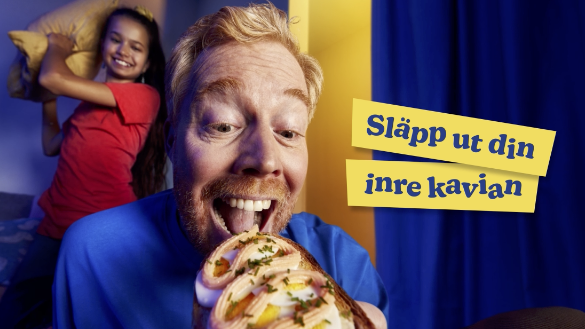
Kalles kaviar
sandwich spreads brand and product
macaroni casserole
dish of cooked macaroni and a mixture of egg and milk with additional ingredients like meats, vegetables or fish
Biff à la Lindström
Swedish meat and vegetable dish
Kalix Löjrom
Roe of Coregonus albula
kebab pizza
pizza with kebab ingredients
Sju sorters kakor
scandinavian tradition
Gebildbrot
thumb|Easter bunny made of yeast dough
Gebildbrot () is a bread or pastry in forms of figurative representations, such as a human, hare, bird or other braidings of dough. Traditionally this pastry is made for and consumed on certain feasts of the liturgical year.
eel as food
flesh from eels
Bostongurka
thumb|225px|Jar with Bostongurka.
Äggakaka
thumb|220x220px|Äggakaka served at a restaurant.
Äggakaka (English: egg cake) is a traditional Scanian dish that is similar to kolbullar or oven pancake (ugnspankaka), that is served with fried slices of pork belly and lingon berries. It used to be made for farmworkers as it was easy to wrap up and eat out on the fields.
Vete Katten
thumb|Interior
Vete-Katten (meaning “The wheat cat” in Swedish) is a classic Sweden pastry- and coffeeshop.
toast skagen
Swedish toast dish
Tjälknöl
Tjälknöl, tjälknul (in Jämtland '''tjælaknul) or tjaele lump''' is a dish originating from Norrland, Sweden. It is made from a frozen moose steak, or other meat, that is roasted at a low temperature.