File:Meninges-en.svg · Wikimedia Commons · See Wikimedia Commons
तानिकाशोथ
Also known as meninx inflammation, Meningitis, meninxitis, spinal meningitis
Meningitis () is acute or chronic inflammation of the protective membranes covering the brain and spinal cord, collectively called the meninges. The most common symptoms are fever, intense headache, vomiting, neck stiffness, and occasionally photophobia. Other symptoms include confusion or altered consciousness, nausea, and an inability to tolerate loud noises. Young children often exhibit only nonspecific symptoms, such as irritability, drowsiness, or poor feeding. A non-blanching rash (a rash that does not fade when a glass is rolled over it) may also be present.
AI overview
Meningitis is an inflammation of the protective membranes surrounding the brain and spinal cord, causing symptoms like fever, severe headache, neck stiffness, and vomiting. It matters because it can be serious and life-threatening, and early recognition through its warning signs is important for getting prompt medical treatment.
AI-generated from the Wikipedia summary — may contain errors.
Key facts
- Medical condition.name
- Meningitis
- Medical condition.image
- Meninges-en.svg
- Medical condition.caption
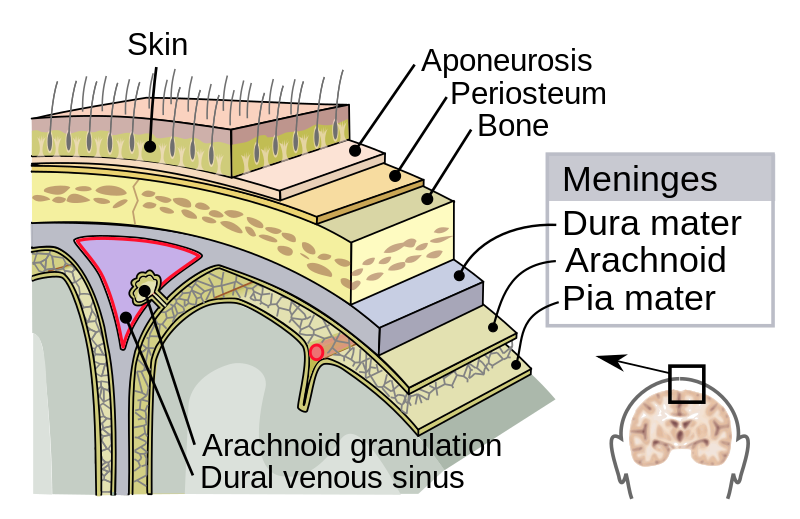
- Meninges of the central nervous system: dura mater, arachnoid mater, and pia mater
- Medical condition.field
- Infectious disease, neurology
- Medical condition.symptoms
- Fever, headache, neck stiffness
- Medical condition.complications
- Deafness, epilepsy, hydrocephalus, cognitive deficits
- Medical condition.causes
- Bacterial, viral, fungal, parasitic, non-infectious, and other
- Medical condition.diagnosis
- Lumbar puncture
- Medical condition.differential
- Encephalitis, sepsis, brain tumor, lupus, Lyme disease, seizures, neuroleptic malignant syndrome, naegleriasis
- Medical condition.prevention
- Vaccination
- Medical condition.medication