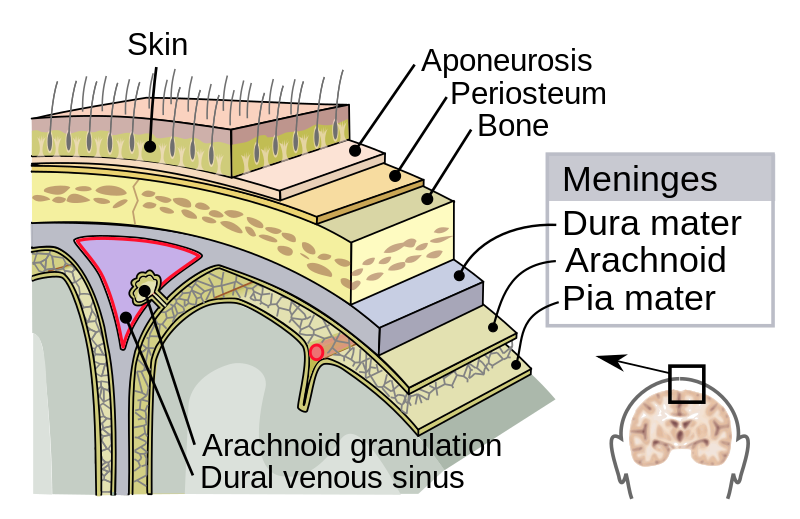
File:Meninges-en.svg · Wikimedia Commons · See Wikimedia Commons
zapalenie opon mózgowo-rdzeniowych
Sign in to saveAlso known as meninx inflammation, Meningitis, meninxitis, spinal meningitis
Meningitis () is acute or chronic inflammation of the protective membranes covering the brain and spinal cord, collectively called the meninges. The most common symptoms are fever, intense headache, vomiting, neck stiffness, and occasionally photophobia. Other symptoms include confusion or altered consciousness, nausea, and an inability to tolerate loud noises. Young children often exhibit only nonspecific symptoms, such as irritability, drowsiness, or poor feeding. A non-blanching rash (a rash that does not fade when a glass is rolled over it) may also be present.