Category
page 1Arab cuisine

Camelus
A camel (from and () from Ancient Semitic: gāmāl) is an even-toed ungulate in the genus Camelus that bears distinctive fatty deposits known as "humps" on its back. Camels have long been domesticated and, as livestock, they provide food (camel milk and meat) and textiles (fiber and felt from camel hair). Camels are working animals especially suited to their desert habitat and are a vital means of transport for passengers and cargo. There are three surviving species of camel. The one-humped dromedary makes up 94% of the world's camel population, and the two-humped Bactrian camel makes up 6%. The

Anethum graveolens
Dill (Anethum graveolens) is an annual herb in the celery family Apiaceae. Native to North Africa and West Asia, dill is grown widely in Eurasia, where its leaves and seeds are used as a herb or spice for flavouring food.
.%20Leiden%20University%20Library%2C%20Collection%20A.%20P.%20H.%20Hotz.jpg)
kabab
Kebab ( , ), kebap, kabob (alternative North American spelling), kebob, or kabab (Hindi and Kashmiri spelling) is a variety of roasted meat dishes that originated in the Middle East.
.JPG)
baklava
Baklava (, or ) is a layered pastry dessert made of filo pastry, filled with chopped nuts, and sweetened with either syrup or honey.

falafel

couscous
Couscous () is a traditional North African dish of small steamed granules of rolled semolina that is often served with a stew spooned on top. Pearl millet, sorghum, bulgur, and other cereals are sometimes cooked in a similar way in other regions, and the resulting dishes are also sometimes called couscous.

shawarma
Shawarma (; ) is a Middle Eastern dish that originated during the Ottoman Empire, consisting of meat that is cut into thin slices, stacked in an inverted cone, and roasted on a slow-turning vertical spit. Traditionally made with lamb or mutton, it may also be made with chicken, turkey meat, beef, falafel or veal. The surface of the rotisserie meat is routinely shaved off once it cooks and is ready to be served. Shawarma is a popular street food throughout the Arab world, Israel and the Greater Middle East.

hummus

cardamom
thumb|True cardamom plant (Elettaria cardamomum)
thumb|Cardamom seeds

moussaka
Moussaka (, , ; ) is an aubergine (eggplant)- or potato-based dish, often including ground meat, which is common in the Balkans and the Middle East, with many local and regional variations.

semolina
Semolina is a coarse flour traditionally made from durum wheat. Its high protein and gluten content make it especially suitable for pasta.

tandoor
upright=1.2|thumb|Modern ceramic wood-fired tandoors

tehina
Tahini (; , or, in Iraq, ) is a Middle Eastern condiment (a seed butter) made from ground sesame seeds. The most common variety comes from hulled seeds, but unhulled ones can also be used; the latter variety is slightly bitter, but more nutritious. The seeds are more commonly roasted than raw. Tahini can be served by itself (as a dip), made into a salad dressing, or used as a major ingredient in hummus, baba ghanoush, or halva.

dolma
Dolma is a family of stuffed dishes largely associated with Ottoman cuisine. It mainly includes vegetables and leaves, and occasionally seafood, offal, fruits, and meats, that are hollowed out or wrapped, then filled with a mixture of rice, minced meat, herbs, and spices. The leaf-wrapped type can be specifically known as sarma, but colloquially dolma is used for both.

pita
Pita ( or ; ; ) or pitta (British English), also known as Arabic bread, Arab bread (), Syrian bread, Lebanese bread, and pide (Turkish) is a family of yeast-leavened round flatbreads baked from wheat flour, common in the Mediterranean, Middle East, and neighboring areas. It includes the widely known version with an interior pocket. In the United Kingdom, the term is used for pocket versions such as the Greek pita, used for barbecues as a souvlaki wrap. The Western name pita may sometimes be used to refer to various other types of flatbreads that have different names in their local languages, s

rose water
flavoured water made by distilling rose petals with water
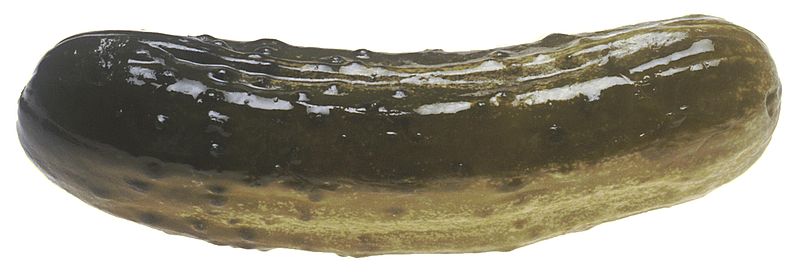
pickled cucumber
cucumber preserved in vinegar

shakshuka
thumb|Individual portion of shakshouka

bulgur
thumb|Coarse bulgur

cabbage roll
dish of cabbage leaves with a filling

tajine
thumb|A Portuguese-made tagine pot
A tagine or tajine, also tajin or tagin () is a Maghrebi dish, and the earthenware pot in which it is cooked. It is also called or .

kofta
thumb|Koofteh Tabrizi from Iran
Kofta is a family of meatball or meatloaf dishes found in South Asian, Central Asian, Balkan, Middle Eastern, North African, and South Caucasian cuisines. In the simplest form, koftas consist of balls of minced meat—usually beef, chicken, lamb or mutton, camel, seldom pork, or a mixture—mixed with spices and sometimes other ingredients. The earliest known recipes are found in early Turkish cookbooks and call for ground lamb.

gyros
Gyros, sometimes anglicized as a gyro (; , ), is meat cooked on a vertical rotisserie, then sliced and served wrapped or stuffed in pita bread, along with other ingredients such as tomato, onion, fried potatoes, and tzatziki. In Greece and Cyprus, it is normally made with pork or sometimes with chicken, whilst ground beef and lamb are sometimes used in other countries.

baba ghanoush
Levantine appetizer consisting of finely chopped roasted eggplant, olive oil, lemon juice, various seasonings, and tahini

kibbeh
Kibbeh (, also kubba and other spellings; ; ) is a popular dish in the Arab world and the Levant in particular, made of spiced lean ground meat and bulgur wheat. Kibbeh is considered to be a national dish of Lebanon and Syria.

Lamajun
Lahmacun, lahmajun or lahmajo is a Middle Eastern flatbread topped with minced meat (most commonly beef or lamb), minced vegetables, and herbs such as onions, garlic, tomatoes, red peppers, and parsley, flavored with spices such as chili pepper and paprika, then baked. Lahmacun is often wrapped around vegetables, including pickles, tomatoes, peppers, onions, lettuce, parsley, and roasted eggplant.

Arab cuisine
cuisine of the Arabs

Harissa
Harissa (, from Tunisian Arabic) is a hot chili pepper paste, native to Tunisia. Peppers in the country were first grown in the Cape Bon Peninsula, birthplace of the condiment, with Nabeul famous for being the primary center for its production. The main ingredients are roasted red peppers, Baklouti peppers, spices and herbs such as garlic paste, caraway seeds, coriander seeds, cumin and olive oil to carry the oil-soluble flavors.

Harira
Harira () is a traditional North African soup prepared in Morocco and Algeria, with many variations. Harira is popular as a starter, and is also eaten on its own as a light snack. It is mostly served during Ramadan, although it can be made throughout the year.

Moroccan cuisine
culinary traditions of Morocco

Egyptian cuisine
culinary traditions of Egypt

strained yogurt
dairy product

salep
Salep, also spelled sahlep, salepi or sahlab, is a flour made from the tubers of the orchid genus Orchis (including species Orchis mascula and Orchis militaris). These tubers contain a nutritious, starchy polysaccharide called glucomannan. Salep flour is consumed in beverages and desserts, especially in the cuisines of the former Byzantines and Ottoman, notably in the Levant where it is a traditional winter beverage. An increase in consumption is causing local extinctions of orchids in parts of Greece, Turkey, and Iran.
ful medames
Syrian salad of fava beans, chopped tomatoes, onion, parsley, lemon juice, olive oil, pepper and salt)

Maqluba
Maqluba (also attested by a variety of other spellings in English; ) is a traditional Levantine dish, a variety of Pilaf that is popular across Palestine, Jordan, Syria, Lebanon, Israel, and Iraq. It consists of meat, rice, and fried vegetables placed in a pot which is flipped upside down when served, hence the name.

torshi
thumb|Turşu in Turkey
Torshi, tursu or turshi () are the pickled vegetables of many Middle Eastern, Caucasian, Slavic and Balkan cuisines.
chorba
Chorba, ( ; ) shorwa, shurba, shurpa, shurbah or shorba ( ) is a broad class of stews or rich soups found in national cuisines across North Africa, The Middle East, Iran, Turkey, Southeast Europe, Central Asia, East Africa and South Asia. It is often prepared with added ingredients but is also served alone as a broth or with bread.
Lebanese cuisine
culinary traditions of Lebanon

Botargo
Bottarga is salted, cured fish roe pouch, typically of the grey mullet or the bluefin tuna (). The best-known version is produced around the Mediterranean; similar foods are the Japanese and Taiwanese , which is softer, and Korean , from mullet or freshwater drum. It has many names and is prepared in various ways. Due to its scarcity and involved preparation it is expensive and regarded as a delicacy.

joshpara
Joshpara is a kind of dumpling popular in Central Asia, South Caucasus and the Middle East. They are made of unleavened wheat dough squares filled with ground meat and condiments.

Lahoh
Lahoh ( ; ) is a type of spongy flatbread eaten regularly in Yemen, Djibouti, Kenya, Ethiopia, Somalia and Saudi Arabia. Yemenite Jewish immigrants popularized the dish in Israel. It is called canjeero/canjeelo in southern Somalia and called lahoh in Somaliland, Djibouti, Yemen and Saudi Arabia.

Mansaf
Mansaf ( /ˈman.saf/) is a traditional Jordanian dish made of lamb, cooked in a sauce of fermented dried yogurt and served with rice or bulgur.
Iraqi cuisine
culinary traditions of Iraq

manakish
thumb|right|Za'atar bread
Manakish (; singular '''man'ousheh''') is a popular Levantine pastry, consisting of dough topped with za'atar (), cheese (), or ground meat. It can be sliced or folded, and it can be served either for breakfast or lunch.
Palestinian cuisine
culinary traditions of Palestine
sarma
cabbage, vine leaf, or other leaf roll

musakhan
Musakhan (), also known as muhammar (), is a Palestinian dish composed of roasted chicken baked with onions, sumac, allspice, saffron, and fried pine nuts served over taboon bread. Originating in the Tulkarm and Jenin area, musakhan is often considered the national dish of Palestine. The dish is particularly popular among Palestinians and Jordanians. It is also eaten by Druze in the Galilee, especially around Iksal and Sandala, and in the Triangle. The dish can be found in Syria, Lebanon and Jordan as well. The dish owes its name to the practice of Palestinian farmers reheating old taboon brea
stuffed peppers
dish involving filling the cavities of a pepper with other food
mujadara
Mujaddara ( mujaddarah, with alternative spellings in English majadra, mejadra, moujadara, mudardara, and megadarra) is a dish consisting of cooked lentils together with groats, generally rice, and garnished with sautéed onions. It is especially popular in the Levant.
Syrian cuisine
culinary traditions of Syria

Mulukhiyah
Mulukhiyah (Arabic: ملوخية, romanized: mulūkhiyyah), also known as mulukhiyya , molokhiyya, melokhiyya, molohiya or ewédú, is a type of jute plant and a dish made from the leaves of Corchorus olitorius, commonly known in English as jute, '''Jew's-mallow, nalta jute, or tossa jute'. It is used as a vegetable and is mainly eaten in Egypt, the Levant (Lebanon, Syria, Palestine, Jordan and Israel), Sudan, Cyprus, Libya, Tunisia, Nigeria, and Algeria. It is called saluyot in the Philippines. Mulukhiyah'' is rather bitter, and when boiled, the resulting liquid is a thick, highly mucilaginous broth;
Algerian cuisine
culinary traditions of Algeria
chermoula
Chermoula (Berber: tacermult or tacermilt, ) or charmoula is a marinade and relish used in Algerian, Libyan, Moroccan and Tunisian cooking. It is traditionally used to flavor fish or seafood, but it can be used on other meats or vegetables. It is somewhat similar to the Latin American chimichurri.
Baghrir
Baghrir or beghrir (Arabic:البغرير), also known as ghrayef or mchahda, is a pancake consumed in Algeria, Morocco and Tunisia. They are small, spongy, and made with semolina or flour; when cooked correctly, they are riddled with tiny holes (which soak up whatever sauce they are served with). The most common way to eat baghrir in Algeria and Morocco is by dipping them in a honey-butter mixture, but they can also be cut into wedges and served with jam. Baghrir is popular for breakfast, as a snack, and for iftar during Ramadan. On the 9th day of Ramadan, the Mozabite people of Algeria exchange bag
skhug
Zhug (from Yemenite Arabic or IPA: [zħuːq] through ), also known as sahawiq (Yemeni Arabic: , IPA: [saħaːwiq]), is a hot sauce originating in Yemeni cuisine. In other countries of the Arabian Peninsula it is also called mabooj (), and bisbaas.
Asida
Asida (, or Maghrebi ġsydë, ), a common dish in the Arab world, is a lump of dough made by stirring wheat flour into boiling water, sometimes with added butter or honey. Similar in texture to fufu, it is eaten mainly in Middle East and African countries. It is considered one of the best-known desserts and traditional dishes in many Arab countries.
Libyan cuisine
culinary traditions of Libya
Yemeni cuisine
culinary traditions of Yemen
freekeh
Freekeh (sometimes spelled frikeh) or farik ( / ALA-LC: farīkah; pronounced free-kah /ˈfɹiːkə/) is a cereal food made from green durum wheat (Triticum turgidum var. durum) that is roasted and rubbed to create its flavour. It is an ancient dish derived from Levantine and North African cuisines, remaining popular in many countries of the eastern Mediterranean Basin, where durum wheat originated.
Akkawi
Akkawi cheese (, also Akawi, Akawieh and Ackawi) is a white brine cheese named after the Palestinian city of Akka (Acre, present-day Israel).