Category
page 1Culinary terminology

restaurant
thumb|The dining room of the Via Sophia in Washington, D.C., United States, which is a high-end luxury restaurant establishment
thumb|A Turkish restaurant in Mongolia
thumb|The dining room of Le Bernardin, which is a restaurant in Midtown, [[Manhattan, New York City. Restaurants may serve cuisines native to foreign countries. This one, for instance, serves French cuisine along with seafood.]]
A restaurant is a business that prepares and serves food and beverages to customers. Meals are generally served and eaten on the premises, but many restaurants also offer take-out and food delivery servic

sauce
thumb|250px|Samosas accompanied by four sauces
thumb|250px|Hummus
thumb|250px|A chef whisking a sauce

cook
occupation involving cooking food

butcher
A butcher is a skilled tradesperson who specialises in meatcutting, breaking down animal carcasses into primal cuts, preparation and retailing of meat, and sometimes slaughtering animals, or participates within any combination of these tasks. They may prepare standard cuts of meat and poultry for sale in retail or wholesale food establishments. A butcher may be employed by supermarkets, grocery stores, butcher shops and fish markets, slaughter houses, or may be self-employed.

sweetness
right|thumb|Sweet foods, such as this strawberry [[shortcake, are often eaten for dessert.]]
Sweetness is a basic taste most commonly perceived when eating foods rich in sugar. Sweet tastes are generally regarded as pleasurable. In addition to sugars like sucrose, many other chemical compounds are sweet, including aldehydes, ketones, and sugar alcohols. Some are sweet at very low concentrations, allowing their use as non-caloric sugar substitutes. Such non-sugar sweeteners include saccharin, aspartame, sucralose and stevia. Other compounds, such as miraculin, may alter perception of sweetness

pressure cooker
utensil for cooking food under high pressure steam
%20-%20IMG%207331.JPG)
baker
thumb|The Baker (); oil-on-canvas painting by [[Job Adriaensz Berckheyde (1630–1693) now held by the Worcester Art Museum.]]

smoking
exposing food to the smoke to flavour or preserve it

stew
A stew is a combination of solid food ingredients that have been cooked in liquid and served in the resultant gravy. Ingredients can include any combination of vegetables and may include meat, especially tougher meats suitable for slow-cooking, such as beef, pork, venison, rabbit, lamb, poultry, sausages, and seafood. While water can be used as the stew-cooking liquid, stock is also common. A small amount of red wine or other alcohol is sometimes added for flavour. Seasonings and flavourings may also be added. Stews are typically cooked at a relatively low temperature (simmered, not boiled), a

umami
Umami ( from , ), or savoriness, is one of the five basic tastes. It is characteristic of broths and cooked meats.

toast
bread that has been browned to a crisp-like texture

frying
thumb|Fried plantain
Frying is the cooking of food in oil or another fat. Similar to sautéing, pan-fried foods are generally turned over once or twice during cooking to ensure that the food is evenly cooked, using tongs or a spatula, whereas sautéed foods are cooked by "tossing in the pan". A large variety of foods may be fried. Frying is a dehydration process which involves the transfer of mass and heat. Different chemical changes take place during the frying process such as protein denaturation, starch gelatinization, surface browning, rapid water evaporation and oil absorption.

barbecue
thumb|upright=1.35|Meat being barbecued at The Salt Lick restaurant

aspic
thumb|upright|Aspic with chicken and eggs
Aspic () or meat jelly is a savoury gelatin made with a meat stock or broth, set in a mold to encase other ingredients. These often include pieces of meat, seafood, vegetable, or eggs. Aspic is also sometimes referred to as aspic gelée or aspic jelly. In its simplest form, aspic is essentially a gelatinous version of conventional soup.

pickling
thumb|A jar of pickled cucumbers (front) and a jar of [[pickled onions (back)]]
Pickling is the process of preserving or extending the shelf life of food by either anaerobic fermentation in brine or immersion in vinegar. The pickling procedure typically affects the food's texture and flavor. The resulting food is called a pickle, or, if named, the name is prefaced with the word "pickled". Foods that are pickled include vegetables, fruits, mushrooms, meats, fish, dairy and eggs.

marinating
thumb|275x275px|Raw chicken marinating
Marinating is the process of soaking foods in a seasoned, often acidic, liquid before cooking. This sauce, called the marinade, can be either acidic (made with ingredients such as vinegar, lemon juice, or wine), or enzymatic (made with ingredients such as pineapple, papaya, yogurt, or ginger), or have a neutral pH. In addition to these ingredients, a marinade often contains oil, salt, herbs, and spices to further flavor the food items. It is commonly used to flavor foods and to tenderize tougher cuts of meat; the process may last seconds or days.

baking
thumb|upright=1.35|Freshly baked bread
thumb|upright=1.35|Anders Zorn – Bread baking (1889)

steaming
thumb|Traditional rice steamers in Laos
Steaming is a method of cooking using steam. In steaming, the food is fully immersed in steam, with no air present, so that the steam condenses on the food, and then the condensate drips down away from the food. This is often achieved in a food steamer, a kitchen appliance made specifically to cook food with steam, but food can also be steamed in a wok. In the American Southwest, steam pits used for cooking have been found dating back about 5,000 years. Steaming is considered a healthy cooking technique that can be used for many kinds of foods.
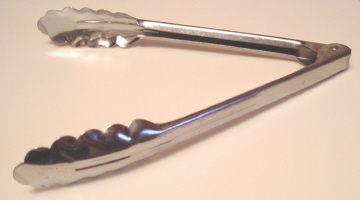
deep frying
cooking method in which food is submerged in hot fat

chef
A chef is a professional cook and tradesperson who is proficient in many aspects of food preparation, often focusing on a particular cuisine. The word "chef" is derived from the term (), the director or head of a kitchen. Chefs can receive formal training from an institution, as well as by apprenticing with an experienced chef.

grilling
thumb|right|Steaks and chicken breasts being grilled over charcoal
thumb|Hamburgers being grilled over a [[charcoal fire]]
thumb|Grilling Mangal (barbecue)|mangals and [[kebabs]]

roux
thumb|A dark roux in development
thumb|A white roux
thumb|A roux-based sauce

sautéing
thumb|Leeks being sautéed
Sautéing or sauteing (, ; , in reference to tossing while cooking) is a method of cooking that uses a relatively small amount of oil or fat in a shallow pan over relatively high heat. Various sauté methods exist.

purée
thumb|right|180px|Cauliflower purée

roasting
thumb|upright=1.35|Slow-roasting pig on a rotisserie
thumb|upright=1.35|Tudor style roasting meat on a spit
Roasting is a cooking method that uses dry heat where hot air covers the food, cooking it evenly on all sides with temperatures of at least from an open flame, oven, or other heat source. Roasting can enhance the flavor through caramelization and Maillard browning on the surface of the food. Roasting uses indirect, diffused heat (as in an oven), and is suitable for slower cooking of meat in a larger, whole piece. Meats and most root and bulb vegetables can be roasted. Any piece of meat,

molecular gastronomy
approach to culinary arts based on scientific understanding and techniques

braising
thumb|right|Braised ox cheek in star anise and [[soy sauce]]
Braising (from the French word ) is a combination cooking method that uses both wet and dry heats: typically, the food is first browned at a high temperature, then simmered in a covered pot in cooking liquid (such as wine, broth, coconut milk, or beer). It is similar to stewing, but braising is done with less liquid and usually used for larger cuts of meat. Braising of meat is often referred to as pot roasting, though some authors make a distinction between the two methods, based on whether additional liquid is added. Osso buco and c
cordon bleu
meat and cheese dish

bitterness
thumb|The Bitter Draught by Adriaen Brouwer.|354x354px
Bitterness, also known as bitter, is one of the most sensitive of tastes, and many experience it as unpleasant, sharp, or off-putting, but it is sometimes desirable and intentionally added via various bittering agents. Common bitter foods and drinks include coffee, unsweetened cocoa, South American mate, coca tea, Momordica charantia, unripe olives, citrus peel, some varieties of cheese, many plants in the Brassicaceae family, Taraxacum greens, Marrubium vulgare, wild chicory, and escarole. The ethanol in alcoholic beverages tastes bitter,
stir frying
cooking technique

stuffing
thumb|Stuffing a domesticated turkey|turkey
thumb|Stuffed Turkey as food|turkey
thumb|right|Chilean empanada with ground meat stuffing
poaching
cooking technique
sous vide
method of cooking food in an enclosed container using prolonged mild heat

flambé
thumb|right|Bananas Foster includes a flambé.
thumb|right|Roasted quails flambéed with Cognac

caramelization
Caramelization (or caramelisation) is a process of browning of sugar used extensively in cooking for the resulting butter-like flavor and brown color. The brown colors are produced by three groups of polymers: (C24H36O18), (C36H50O25), and (C125H188O80). As the process occurs, volatile chemicals such as diacetyl (known for its intense butter-like taste) are released, producing the characteristic caramel flavor.
side dish
food item that accompanies the main course
fillet
cut or slice of boneless meat or fish

mirepoix
thumb|upright=1.15|Vegetables (with the addition of leeks) prepared for mirepoix, on a cutting board
A '''''' ( , ) is a mixture of diced vegetables cooked with fat (usually butter) for a long time on low heat without colouring or browning. The ingredients are not sautéed or otherwise hard-cooked, because the intention is to sweeten rather than caramelise them. Historically including various meats before settling at its current meaning as a vegetable base, is a long-standing part of French cuisine and is the flavour base for a wide variety of dishes, including stocks, soups, stews, and sauces
fermented food
food produced by a method converting substrates to fermentation end products
culinary art
art of the preparation, cooking and presentation of food, usually in the form of meals

bain-marie
thumb|A bain-marie on a stovetop
A bain-marie ( , ), also known as a water bath or double boiler, a type of heated bath, is a piece of equipment used in science, industry, and cooking to heat materials gently or to keep materials warm over a period of time. A bain-marie is also used to melt ingredients for cooking.

julienne
thumb|upright=1.3|Julienned daikon radish and [[carrot]]
thumb|right|Red onion julienne for Peruvian ceviche
pastry chef
chef skilled in the preparation of pastries
sourness
Sourness, also known as sour, is a basic taste sensation perceived through hydrogen ions from acidic compounds interacting with taste bud receptors, and it can also refer to an unpleasant or acidic quality in taste, disposition, or tone. It is a warning sign for potentially spoiled food, though it is balanced in some food products by sweetness, and it is associated with a low pH.
amuse-bouche
An amuse-bouche (; ) or amuse-gueule (, ; ) is a single, bite-sized'' hors d'œuvre''. Amuse-bouches are different from appetizers in that they are not ordered from a menu by patrons but are served free and according to the chef's selection alone. These are served both to prepare the guest for the meal and to offer a glimpse of the chef's style.

simmering
thumb|right|250px|Meatball soup simmering on a stove

Quenelle
__NOTOC__
curing
food preservation with salt

charcuterie
thumb|upright=1.35|Charcuterie hanging in a French shop
Charcuterie (, , also , ; ; from , and ) is a branch of French cuisine devoted to prepared meat products, such as bacon, ham, sausage, terrines, galantines, ballotines, pâtés, and confit, primarily from pork.

saltiness
thumb|470x470px
Saltiness is one of the basic tastes. It appears to have two components: a low-salt signal and a high-salt signal. The low-salt signal produces a sensation of deliciousness, while the high-salt signal typically produces a sensation of "too much salt".
duxelles
Duxelles () is a French cuisine term that refers to a mince of mushrooms, onions, herbs (such as thyme or parsley), and black pepper, sautéed in butter and reduced to a paste. Cream is sometimes used, and some recipes add a dash of madeira or sherry.
.jpg)
confit
thumb|upright=1.35|Duck confit
Confit (, ; ) (from the French word confire, literally "to preserve") is any type of food that is cooked slowly over a long period as a method of preservation.
reduction
process of thickening and intensifying the flavor of a liquid mixture such as a soup, sauce, wine, or juice by simmering or boiling

seasoning
thumb|upright=1.15|The ingredients for Recado rojo|achiote paste: oregano, ground cloves, ground cumin, minced garlic, and ground annatto
Seasoning is the process of supplementing food via herbs, spices, and/or salts, intended to enhance a particular flavour.
confiture
A confiture is any fruit jam, marmalade, paste, sweetmeat, or fruit stewed in thick syrup. Confit, the root of the word, comes from the French word confire, which literally means 'preserved'; a confit being any type of food that is cooked slowly over a long period of time as a method of preservation.

rillettes
Rillettes (, also , ) is a preservation method similar to confit in which meat is seasoned, submerged in fat, and cooked slowly over the course of four to ten hours. The meat is shredded and packed into sterile containers covered in fat. Rillettes is traditionally made with goose or duck, and are commercially most commonly made with pork, but also made with other meats such as chicken, game birds, rabbit and sometimes with fish such as anchovies, tuna, pike or salmon. Rillettes are typically served at room temperature spread thickly on toasted bread.

kneading
right|thumb|Hand kneading dough for bread
thumb|How-to knead dough.
In cooking (and more specifically baking), kneading is a process in the making of bread dough, used to mix the ingredients and add strength and stiffness to the final product. It shortens baking times by forming gluten structural protein complexes more quickly than would occur without kneading and incorporates air into the dough.

rotisserie
thumb|upright=1.35|Rotisserie chicken cooking on a horizontal rotisserie
glaze
coating of a glossy, often sweet, sometimes savoury, substance applied to food typically by dipping, dripping, or with a brush
food presentation
art of modifying, processing, arranging, or decorating food to enhance its aesthetic appeal