Category
page 1GABAA receptor positive allosteric modulators

nitrogen
Nitrogen is a chemical element; it has symbol N and atomic number 7. Nitrogen is a nonmetal and the lightest member of group 15 of the periodic table, often called the pnictogens. It is a common element in the universe, estimated at seventh in total abundance in the Milky Way and the Solar System. At standard temperature and pressure, two atoms of the element bond to form N2, a colourless and odourless diatomic gas. N2 forms about 78% of Earth's atmosphere, making it the most abundant chemical species in air. Because of the volatility of nitrogen compounds, nitrogen is relatively rare in the s

lanthanum
Lanthanum is a chemical element; it has symbol La and atomic number 57. It is a soft, ductile, silvery-white metal that tarnishes slowly when exposed to air. It is the first and the prototype of the lanthanide series, a group of 15 similar elements between lanthanum and lutetium in the periodic table. Lanthanum is traditionally counted among the rare-earth elements. Like most other rare-earth elements, its usual oxidation state is +3, although some compounds are known with an oxidation state of +2. Lanthanum has no biological role in humans but is used by some bacteria. It is not par

cholesterol
Cholesterol is the principal sterol of all animals, distributed in body tissues, especially the brain and spinal cord, and in animal fats and oils.
2.png)
benzene
Benzene is an organic chemical compound with the molecular formula C6H6. The benzene molecule is composed of six carbon atoms joined in a planar hexagonal ring with one hydrogen atom attached to each. As it contains only carbon and hydrogen atoms, benzene is a hydrocarbon.

testosterone
Testosterone is the primary male sex hormone and androgen in males. In humans, testosterone plays a key role in the development of male reproductive tissues such as testicles and prostate, as well as promoting secondary sexual characteristics such as increased muscle and bone mass, and the growth of body hair. It is associated with increased aggression, sex drive, dominance, courtship display, and a wide range of behavioral characteristics. In addition, testosterone in both sexes is involved in health and well-being, where it has a significant effect on overall mood, cognition, social and sexu

methanol
Methanol (also called methyl alcohol, wood alcohol, and wood spirit, amongst other names) is an organic chemical compound and the simplest aliphatic alcohol, with the chemical formula (a methyl group linked to a hydroxyl group, often abbreviated as MeOH). It is a light, volatile, colorless and flammable liquid with a distinctive alcoholic odor similar to that of ethanol (potable alcohol), but is more acutely toxic than the latter.
Methanol acquired the name wood alcohol because it was once produced through destructive distillation of wood. Today, methanol is mainly produced industrially by hyd

Valeriana officinalis
species of flowering plant in the family Caprifoliaceae

butane
Butane () is an alkane with the formula C4H10. Butane exists as two isomers, n-butane, and iso-butane, . Both isomers are highly flammable, colorless, easily liquefied gases that quickly vaporize at room temperature and pressure. Butanes are a trace component of natural gases, which contain higher concentrations of other hydrocarbons such as propane, ethane, and especially methane. Liquefied petroleum gas is a mixture of propane and some butanes.

acetone
Acetone (2-propanone or dimethyl ketone) is an organic compound with the formula . It is the simplest and smallest ketone (). It is a colorless, highly volatile, and flammable liquid with a characteristic pungent odor.

propane
thumb|A 20 lb () steel propane cylinder. This cylinder is fitted with an overfill prevention device (OPD) valve, as evidenced by the trilobular handwheel.
Propane () is a three-carbon chain alkane with the molecular formula . It is a gas at standard temperature and pressure, but becomes liquid when compressed for transportation and storage. A by-product of natural gas processing and petroleum refining, it is often a constituent of liquefied petroleum gas (LPG), which is commonly used as a fuel in domestic and industrial applications and in low-emissions public transportation; other constituent

chloroform
Chloroform, or trichloromethane (often abbreviated as TCM), is an organochloride with the formula and a common solvent. It is a volatile, colorless, sweet-smelling, dense liquid produced on a large scale as a precursor to refrigerants and polytetrafluoroethylene (PTFE). Chloroform was once used as an inhalational anesthetic between the 19th century and the first half of the 20th century. It is miscible with many solvents but it is only very slightly soluble in water (only 8 g/L at 20°C).
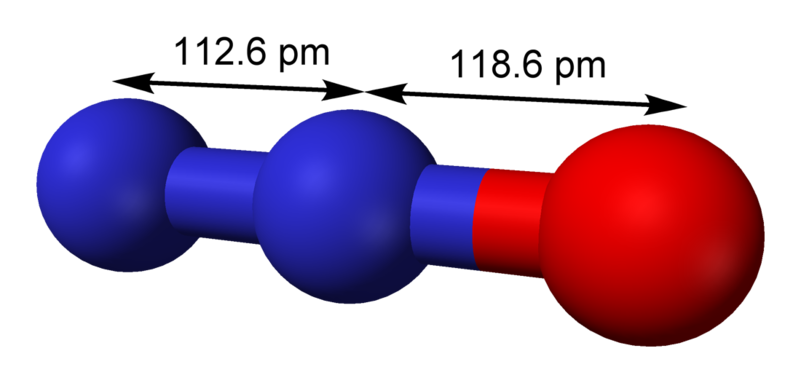
nitrous oxide
chemical compound

toluene
Toluene (), also known as toluol (), is a substituted aromatic hydrocarbon with the chemical formula , often abbreviated as , where Ph stands for the phenyl group. It is a colorless, water-insoluble liquid with the odor associated with paint thinners. It is a mono-substituted benzene derivative, consisting of a methyl group (CH3) attached to a phenyl group by a single bond. As such, its systematic IUPAC name is methylbenzene. Toluene is predominantly used as an industrial feedstock and a solvent.

diethyl ether
chemical compound
progesterone
Progesterone (; P4) is an endogenous steroid and progestogen sex hormone involved in the menstrual cycle, pregnancy, and embryogenesis of humans and other species. It belongs to a group of steroid hormones called the progestogens and is the major progestogen in the body. Progesterone has a variety of important functions in the body. It is also a crucial metabolic intermediate in the production of other endogenous steroids, including the sex hormones and the corticosteroids, and plays an important role in brain function as a neurosteroid.

nitric oxide
chemical compound

isopropyl alcohol
simplest secondary alcohol

fluoxetine
Fluoxetine, sold under the brand name Prozac, among others, is an antidepressant medication of the selective serotonin reuptake inhibitor (SSRI) class used for the treatment of major depressive disorder, anxiety, obsessive–compulsive disorder (OCD), panic disorder, premenstrual dysphoric disorder, and bulimia nervosa. It is also approved for treatment of major depressive disorder in adolescents and children 8 years of age and over. It has also been used to treat premature ejaculation. Fluoxetine is taken by mouth.

L-menthol
Menthol is a monoterpenoid organic compound that occurs naturally in the oils of certain plants in the mint family, such as corn mint and peppermint. It is a white or clear waxy crystalline substance that is solid at room temperature and melts slightly above. The main form of menthol occurring in nature is (−)-menthol, which is assigned the (1R,2S,5R) configuration.

alprazolam

propofol
Propofol is the active component of an intravenous anesthetic formulation used for induction and maintenance of general anesthesia. The formulation was approved under the brand name Diprivan. Numerous generic versions have since been released. Intravenous administration is used to induce unconsciousness, after which anesthesia may be maintained using a combination of medications. It is manufactured as part of a sterile injectable emulsion formulation using soybean oil and lecithin, giving it a white milky coloration.

potassium bromide
chemical compound

midazolam
Midazolam, sold under the brand name Versed among others, is a benzodiazepine medication used for anesthesia, premedication before surgical anesthesia, and procedural sedation, and to treat severe agitation. It induces sleepiness, decreases anxiety, and causes anterograde amnesia.

Piper methysticum
Kava or kava kava (Piper methysticum: Latin 'pepper' and Latinized Greek 'intoxicating') is a plant in the pepper family, native to the Pacific Islands. The name kava is from Tongan and Marquesan, meaning 'bitter'. Kava can refer to either the plant or a psychoactive beverage made from its root. The beverage is a traditional ceremonial and recreational drink from Polynesia, Micronesia, and Melanesia. Nakamals and kava bars exist in many countries. Traditional kava is made by grinding fresh or dried kava root, mixing it with water or coconut milk, and straining it into a communal bowl. Outside

ivermectin
Ivermectin is an antiparasitic medication. After its discovery in 1975, its first uses were in veterinary medicine to prevent and treat heartworm and acariasis. Approved for human use in 1987, it is used to treat infestations including head lice, scabies, river blindness (onchocerciasis), strongyloidiasis, trichuriasis, ascariasis and lymphatic filariasis. It works through many mechanisms to kill the targeted parasites, and can be taken by mouth, or applied to the skin for external infestations. It belongs to the avermectin family of medications.

Scutellaria
Scutellaria is a genus of flowering plants in the mint family, Lamiaceae. They are known commonly as skullcaps. The generic name is derived from the Latin scutella, meaning "a small dish, tray or platter", or "little dish", referring to the shape of the calyx. The common name alludes to the resemblance of the same structure to "miniature medieval helmets". The genus has a subcosmopolitan distribution, with species occurring nearly worldwide, mainly in temperate regions.

dichloromethane
Dichloromethane (DCM, methylene chloride, or methylene bichloride) is an organochlorine compound with the formula . This colorless, volatile liquid with a chloroform-like, sweet odor is widely used as a solvent. Although it is not miscible with water, it is slightly polar and miscible with many organic solvents.

propyl alcohol
1-Propanol (also propan-1-ol, propanol, n-propyl alcohol) is a primary alcohol with the formula and sometimes represented as PrOH or '''n-PrOH'''. It is a colourless liquid and an isomer of 2-propanol. 1-Propanol is used as a solvent in the pharmaceutical industry, mainly for resins and cellulose esters, and, sometimes, as a disinfecting agent.

sodium bromide
chemical compound

bromide

carbamazepin
Carbamazepine, sold under the brand name Tegretol among others, is an anticonvulsant medication used in the treatment of epilepsy and neuropathic pain. It is used as an adjunctive treatment in schizophrenia along with other medications and as a second-line agent in bipolar disorder. Carbamazepine appears to work as well as phenytoin and valproate for focal and generalized seizures. It is not effective for absence or myoclonic seizures.

flunitrazepam
Flunitrazepam, sold under the brand name Rohypnol among others, is a benzodiazepine used to treat severe insomnia and assist with anesthesia. As with other hypnotics, flunitrazepam has been advised to be prescribed only for short-term use or by those with chronic insomnia on an occasional basis.

phenytoin
Phenytoin (PHT), sold under the brand name Dilantin among others, is an anti-seizure medication. It is useful for the prevention of tonic-clonic seizures (also known as grand mal seizures) and focal seizures, but not absence seizures. The intravenous form, fosphenytoin, is used for status epilepticus that does not improve with benzodiazepines. It may also be used for certain heart arrhythmias or neuropathic pain. It can be taken intravenously or by mouth. The intravenous form generally begins working within 30 minutes and is effective for roughly 24 hours. Blood levels can be measured to deter

halothane
Halothane (bromochlorotrifluoroethane), sold under the brand name Fluothane among others, is a halocarbon with the chemical formula . It is used as a general anaesthetic given by inhalation. It can be used to induce or maintain anaesthesia. Its use in developed countries has been mostly replaced by newer anesthetic agents such as sevoflurane. One of its benefits is that it does not increase the production of saliva, which can be particularly useful in those who are difficult to intubate.

butene
Butene, also known as butylene, is an alkene with the formula . The word butene may refer to any of the individual compounds. They are colourless gases that are present in crude oil as a minor constituent in quantities that are too small for viable extraction. Butene is therefore obtained by catalytic cracking of long-chain hydrocarbons left during refining of crude oil. Cracking produces a mixture of products, and the butene is extracted from this mixture by fractional distillation.

chloroethane
Chloroethane, commonly known as ethyl chloride, is a chemical compound with chemical formula CH3CH2Cl, once widely used in producing tetraethyllead, a gasoline additive. It is a colorless, flammable gas or refrigerated liquid with a faintly sweet odor.
acetophenone
Acetophenone is the organic compound with the formula C6H5C(O)CH3. It is the simplest aromatic ketone. This colorless, viscous liquid is a precursor to useful resins and fragrances.

trichloroethene
Trichloroethylene (TCE, IUPAC name: trichloroethene) is an organochloride with the formula C2HCl3, commonly used as an industrial degreaser. It is a clear, colourless, non-flammable, volatile liquid with a sweet chloroform-like pleasant mild smell and burning sweet taste. Trichloroethylene has been sold under a variety of trade names. Under the trade names Trimar and Trilene, it was used as a volatile anesthetic and as an inhaled obstetrical analgesic. Industrial abbreviations include trichlor, Trike, Tricky and tri. It should not be confused with the similar 1,1,1-trichloroethane, which was c
lithium bromide
chemical compound

niacinamide
Nicotinamide (INN, BAN ) or niacinamide (USAN ) (IUPAC name: 3-pyridinecarboxoamide) is a form of vitamin B3 found in food and used as a dietary supplement and medication. As a supplement, it is used orally (swallowed by mouth) to prevent and treat pellagra (niacin deficiency). This is not to be confused with Niacin. While both are very similar both have different behaviors on the body. While nicotinic acid (niacin) may be used for this purpose, nicotinamide has the benefit of not causing skin flushing. As a cream, it is used to treat acne, and has been observed in clinical studies to improve
sodium thiopental
group of stereiosimers

thymol
Thymol (also known as 2-isopropyl-5-methylphenol, IPMP), , is a monoterpenoid, phenol derivative of p-cymene, isomeric with carvacrol. It occurs naturally in oil of thyme and is extracted from Thymus vulgaris (common thyme), ajwain, and various other plants, as a white crystalline substance with a pleasant aromatic odor.

butan-1-ol
1-Butanol, also known as butan-1-ol or '''n-butanol', is a primary alcohol with the chemical formula C4H9OH and a linear structure. Isomers of 1-butanol are isobutanol, butan-2-ol and tert''-butanol. The unmodified term butanol usually refers to the straight chain isomer.
isoflurane
Isoflurane, sold under the brand name Forane among others, is a halogenated ether used as a general anesthetic. It can be used to start or maintain anesthesia; however, other medications are often used to start anesthesia, due to airway irritation with isoflurane. Isoflurane is a inhalational anesthetic given via inhalation.
nicotinic acid
chemical compound: acid form of vitamin B3

zolpidem
Zolpidem, sold under the brand name Ambien among others, is a medication primarily used for the short-term treatment of sleeping problems. Guidelines recommend that it be used only after cognitive behavioral therapy for insomnia and after behavioral changes, such as sleep hygiene, have been tried. It decreases the time to sleep onset by about fifteen minutes and at larger doses helps people stay asleep longer. It is taken by mouth and is available as conventional tablets, extended-release tablets, or sublingual tablets.
chloral hydrate
chemical compound
chloral
Chloral, also known as trichloroacetaldehyde or trichloroethanal, is the organic compound with the formula Cl3CCHO. This aldehyde is a colourless liquid that is soluble in a wide range of solvents. It reacts with water to form chloral hydrate, a once widely used sedative and hypnotic substance.

borneol
Borneol is a bicyclic organic compound and a terpene derivative. The hydroxyl group in this compound is placed in an endo position. The exo diastereomer is called isoborneol. Being chiral, borneol exists as enantiomers, both of which are found in nature: d-borneol (also written (+)-borneol, dextroborneol, dexborneol) and l-borneol (or (−)-borneol, levoborneol).
isobutyl alcohol
Isobutanol (IUPAC nomenclature: 2-methylpropan-1-ol) is an organic compound with the formula (CH3)2CHCH2OH (sometimes represented as '''i-BuOH'). This colorless, flammable liquid with a characteristic smell is mainly used as a solvent either directly or as its esters. Its isomers are 1-butanol, 2-butanol, and tert''-butanol, all of which are important industrially.

topiramate
Topiramate, marketed as Topamax and other brand names, is an oral medication primarily prescribed for the treatment of epilepsy and the prophylaxis of migraines. For epilepsy, this includes treatment for generalized or focal seizures. It has also been used off-label for alcohol dependence and essential tremor.
1-pentanol
1-Pentanol, (or '''n-pentanol, pentan-1-ol'''), is an organic compound with the formula and is classified as a primary alcohol. It is a colourless liquid with a distinctive aroma. It is one of 8 isomeric alcohols with the formula . It is used as a solvent, a biological drying agent and in the synthesis of some fragrance compounds. It is also a common component of fusel alcohols (fusel oils), the undesirable byproducts of alcoholic fermentation.

norflurane
1,1,1,2-Tetrafluoroethane (also known as norflurane (INN), R-134a, Klea 134a, Freon 134a, Forane 134a, Genetron 134a, Green Gas, Florasol 134a, Suva 134a, HFA-134a, or HFC-134a) is a hydrofluorocarbon (HFC) and haloalkane refrigerant with thermodynamic properties similar to R-12 (dichlorodifluoromethane) but with insignificant ozone depletion potential and a lower 100-year global warming potential (1,430, compared to R-12's GWP of 10,900). It has the formula CFCHF and a boiling point of −26.3 °C (−15.34 °F) at atmospheric pressure. R-134a cylinders are colored light blue. A phaseout
amyl alcohol
chemical compound family
sevoflurane
Sevoflurane, sold under the brand name Sevorane, among others, and informally known as sevo, is a sweet-smelling, nonflammable, highly fluorinated methyl isopropyl ether used as an inhalational anaesthetic for induction and maintenance of general anesthesia. After desflurane, it is the volatile anesthetic with the fastest onset. While its offset may be faster than agents other than desflurane in a few circumstances, its offset is more often similar to that of the much older agent isoflurane. While sevoflurane is only half as soluble as isoflurane in blood, the tissue blood partition coefficien
tert-butyl alcohol
chemical compound

methaqualone
Methaqualone is a sedative-hypnotic medication that was widely prescribed during the mid-20th century. It was marketed under various brand names, including Quaalude ( ) and Sopor, typically containing 300 mg of methaqualone per tablet. A combination drug known as Mandrax was sold primarily in Europe, containing 250 mg of methaqualone and 20 mg of diphenhydramine in a single tablet.
dihydrotestosterone
Dihydrotestosterone (DHT, 5α-dihydrotestosterone, 5α-DHT, androstanolone or stanolone) is an endogenous androgen sex steroid and hormone primarily involved in the growth and repair of the prostate and the penis, as well as the production of sebum and body hair composition.

paraldehyde
Paraldehyde is the cyclic trimer of acetaldehyde molecules. Formally, it is a derivative of 1,3,5-trioxane, with a methyl group substituted for a hydrogen atom at each carbon. The corresponding tetramer is metaldehyde. A colourless liquid, it is sparingly soluble in water and highly soluble in ethanol. Paraldehyde slowly oxidizes in air, turning brown and producing an odour of acetic acid. It attacks most plastics and rubbers and should be kept in glass bottles.

trichloroethane
1,1,1-Trichloroethane, also known as methyl chloroform and chlorothene, is a chloroalkane with the chemical formula . It is an isomer of 1,1,2-trichloroethane. A colourless and sweet-smelling liquid, it was once produced industrially in large quantities for use as a solvent. It is regulated by the Montreal Protocol as an ozone-depleting substance, and as such, use has declined since 1996. Trichloroethane should not be confused with the similar-sounding trichloroethene which is also commonly used as a solvent.