Category
page 1Japanese cuisine terms

ramen
is a Japanese noodle dish. It is a part of Japanese Chinese cuisine. It includes served in several flavors of hot broth. Common flavors are soy sauce and miso, with typical toppings including , nori (dried seaweed), lacto-fermented bamboo shoots (menma), narutomaki, and scallions. Nearly every region in Japan has its own variation of ramen, such as the tonkotsu (pork bone broth) ramen of Kyushu and the miso ramen of Hokkaido.

Eutrema japonicum
Wasabi (Japanese: , , or , ) or Japanese horseradish (Eutrema japonicum syn. Wasabia japonica) is a plant of the family Brassicaceae, which also includes horseradish and mustard in other genera. The plant is native to Japan, the Russian Far East including Sakhalin, and the Korean Peninsula. It grows naturally along stream beds in mountain river valleys in Japan.

Lentinula edodes
The shiitake, (; Chinese, or black mushroom, Lentinula edodes) is a macrofungus native to East Asia and mainland Southeast Asia, which is cultivated and consumed around the globe.

sashimi
thumb|Sashimi on a Shigaraki ware plate
thumb|Sashimi combo of slices of assorted fish, served on a wooden plate
is a Japanese delicacy consisting of fresh raw fish or meat sliced into thin pieces and often eaten with soy sauce.

tempura
is a Japanese dish that usually consists of seafood and vegetables that have been coated in a thin batter and deep-fried. Tempura originated in the 16th century, when Portuguese Jesuits brought the Western-style cooking method of coating foods with flour and frying, via Nanban trade.

miso
is a traditional Japanese seasoning. It is a thick paste produced by fermenting soybeans with salt and kōji (the fungus Aspergillus oryzae), and sometimes rice, barley, seaweed, or other ingredients. It is used for sauces and spreads; pickling vegetables, fish, or meats; and mixing with dashi soup stock to serve as miso soup, a Japanese culinary staple food. Miso is high in protein and rich in minerals, and it played an important nutritional role in feudal Japan. Miso is widely used in both traditional and modern cooking in Japan, and as of 2018 had been gaining worldwide interest.

bento
thumb|right|upright=1.3|A typical bento from a grocery store
A is a single-portion take-out or home-packed meal of Japanese origin, often for lunch, typically including rice and packaged in a box with a lid (often a segmented box with different parts of the meal placed in different sections).

nattō
is a traditional Japanese food made from whole soybeans that have been fermented with Bacillus subtilis var. natto. It is often served as a breakfast food with rice. It is served with karashi mustard, soy or tare sauce, and sometimes Japanese bunching onion. Within Japan, nattō is most popular in the eastern regions, including Kantō, Tōhoku, and Hokkaido.
.jpg)
nori
Nori is a dried edible seaweed used in Japanese cuisine, usually made from species of the red algae genus Pyropia, including P. yezoensis and P. tenera. It has a strong and distinctive flavor, and is generally made into flat sheets and used to wrap rolls of sushi or onigiri (rice balls).

yakitori
thumb| being grilled
thumb| as street food, with salty and sweet sauce
thumb| being freshly grilled in Tokyo

Wagyu
thumb|Japanese Black cattle of the Tajima strain on a farm in northern Hyōgo Prefecture
thumbnail|High-grade sliced Matsusaka beef|Matsusaka wagyu beef
Wagyu (, Hepburn: wagyū, ) is the collective name for the four principal Japanese breeds of beef cattle. All wagyū cattle originate from early twentieth-century cross-breeding between native Japanese cattle and imported stock, mostly from Europe.

fugu
thumb|Takifugu in a tank
Fugu (; ; ) in Japanese, bogeo (; 鰒魚) or bok () in Korean, and hétún () in Standard Modern Chinese refers to pufferfish, normally of the genus Takifugu, Lagocephalus, or Sphoeroides, or a porcupinefish of the genus Diodon, or a dish prepared from these fish.

Matsutake
, Tricholoma matsutake, is a species of mushroom, with a cap that can reach up to wide. It resembles at least one poisonous species.
%20Domin%20-%20%E8%91%9B%E7%95%91%E8%91%8D%2C%20%E8%BE%9B%E8%91%8D%20-%20idem%2C%201804.jpg)
white radish
Daikon (大根 (だいこん) or mooli (Raphanus sativus var. longipinnatus) is a mild-flavored winter radish usually characterized by fast-growing leaves and a long, white, root. Native to continental East Asia, daikon and its cultivars are now harvested and consumed globally. In some locations, daikon is left unharvested to loosen compacted soils and recover nutrients.

wakame
Wakame (Undaria pinnatifida) is a species of kelp native to cold, temperate coasts of the northwest Pacific Ocean. As an edible seaweed, it has a subtly sweet, but distinctive and strong flavour and satiny texture. It is most often served in soups and salads.

kombu
thumb|Dried kombu
thumb|Dried kombu sold in a Japanese supermarket

teppanyaki
thumb|200px|Misono in Kobe—the first restaurant to offer
thumb|A chef cooking at a gas-powered in a Japanese steakhouse
thumb|Chef preparing a flaming onion volcano

osechi
thumb|right|300px|Another example of in three-tiered box
thumb|250px|right|Another example of , casual type
'''' (御節料理, お節料理 or おせち) are traditional Japanese New Year foods. are easily recognizable by their special boxes called jūbako (重箱), which resemble bentō boxes. Like bentō boxes, jūbako are often kept stacked before and after use. Not all parts of Japan, such as Suzu in Ishikawa, practice the custom of eating osechi''.
Kobe beef
Japanese beef

kamaboko
thumb|

tamagoyaki
is a type of Japanese omelette made by rolling together several layers of fried beaten eggs. It is often prepared in a rectangular omelette pan called a makiyakinabe or tamagoyaki. The word "tamago" means egg in Japanese, and the word "yaki" means to be cooked over direct heat.

yakiniku
, meaning "grilled meat", is a Japanese term that, in its broadest sense, refers to grilled meat cuisine.
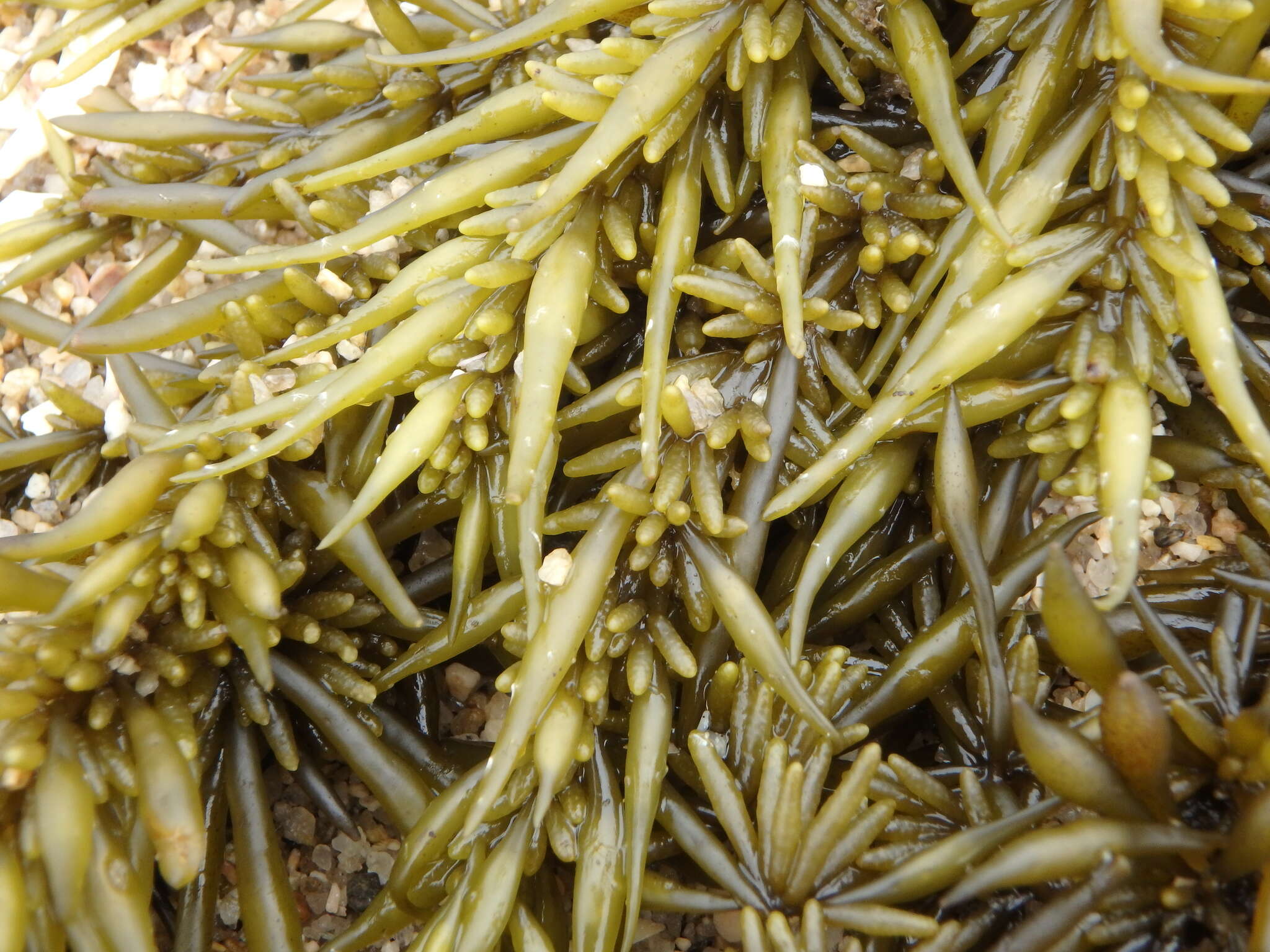
hijiki
(Sargassum fusiforme, syn. Hizikia fusiformis), sometimes called hiziki or tot (), is a brown seaweed that grows wild on the rocky coastlines of East Asia.

kaiseki
thumb|300px| consists of a sequence of dishes, each often small and artistically arranged.

gyokuro
is a type of green tea from Japan. It differs from the standard sencha (a classic green tea grown in the sun) in being grown under the shade rather than the full sun. The name "gyokuro" translates as "jewel dew" (or "jade dew"). According to the Japan Tea Central Association, gyokuro is defined as "a tea manufactured in the same manner as sencha from tea leaves picked from covered tea gardens that are almost completely shaded from sunlight for about 20 days using covering materials such as reed screens, straw, or shading nets, from the time when the new shoots of the first flush start to grow.

Saccharina japonica
species of Phaeophyceae

senbei
, also spelled sembei, is a type of Japanese rice cracker. They come in various shapes, sizes, and flavors, usually savory but sometimes sweet. Senbei are often eaten with green tea as a casual snack and offered to visiting house guests as a courtesy refreshment.
abura-age
is a Japanese food product made from tofu. Thin slices of tofu are deep-fried, and the product can then be split open to form pouches. is often used to wrap , and it is added to miso soup. It is also added to udon noodle dishes, which are called because of legends that foxes () like deep-fried tofu. can also be stuffed, e.g. with , before frying again. There is a thicker variety known as or .

takuan
Takuan (; also spelled takuwan), or takuan-zuke (; 'pickled takuan'), known as danmuji () in the context of Korean cuisine, is a pickled preparation of daikon radish. As a popular part of traditional Japanese cuisine, takuan is often served uncooked alongside other types of tsukemono ('pickled things'). It is also enjoyed at the end of meals to aid digestion.
soy pulp
byproduct of tofu production

korokke
Korokke (; ) is a Japanese deep-fried yōshoku dish originally related to a French dish, the croquette. Korokke is made by mixing cooked chopped meat, seafood, or vegetables with mashed potato or white sauce, usually shaped like a flat patty, rolling it in wheat flour, eggs, and Japanese-style breadcrumbs, then deep-frying this until brown on the outside.
Kukicha
Kukicha (茎茶), or twig tea, also known as bōcha (棒茶), is a Japanese tea blend made of stems, stalks, and twigs of the tea plant. It is available as a green tea or in more oxidised processing. Kukicha has a unique flavour and aroma among teas, due to it being composed of parts of the plant that are excluded from most other teas.

omakase
is a Japanese word meaning "I'll leave it up to you", derived from the Japanese . It is most commonly used at Japanese restaurants as a form of gourmet dining in which the customer does not order from a menu and instead lets the chef decide which seasonal specialties to serve.

tsukemen
thumb|Hiyashi chūka Tsukemen
Tsukemen (, English: "dipping noodles") is a ramen dish in Japanese cuisine consisting of noodles that are eaten after being dipped in a separate bowl of soup or broth. The dish was invented in 1961 by Kazuo Yamagishi, a restaurateur in Tokyo, Japan. Since then, the dish has become popular throughout Japan, as well as overseas in the United States.

unagi
is the Japanese word for freshwater eel, particularly the Japanese eel, . Unagi is a common ingredient in Japanese cooking, often as kabayaki. It is not to be confused with saltwater eel, which is known as anago in Japanese.

hibachi
thumb|A porcelain
thumb|North American "hibachi" cast iron grill

dekopon
thumb|Dekopon blossom
thumb|Dekopon
.jpg)
Binchōtan
thumb|Binchō-tan, or white charcoal
thumbnail|Burning binchō-tan
Binchō-tan (, ), also called white charcoal or binchō-zumi, is a type of high-quality charcoal traditionally used in Japanese cooking. Its use dates back to the Edo period when during the Genroku era, a craftsman named Bichū-ya Chōzaemon () began to produce it in Tanabe, Wakayama. The typical raw material used to make binchō-tan in Japan is oak, specifically ubame oak, now the official tree of Wakayama Prefecture. Wakayama continues to be a major producer of high-quality charcoal, with the town of Minabe, Wakayama, producing more

toso
thumb|O-toso and three sakazuki lacquered Vermilion|vermillion cups
, or o-toso, is spiced medicinal sake traditionally drunk during Japanese New Year celebrations. Toso is also known historically in China.
tororo
grated Dioscorea polystachya

hiyayakko
is a Japanese dish made with chilled tofu and toppings.

Flammulina filiformis
species of edible mushroom

Shimeji
250px|right|thumb|Japanese popular mushrooms, clockwise from left, enokitake, buna-shimeji, bunapi-shimeji, [[king oyster mushroom and shiitake (front).]]
thumb|Lyophyllum shimeji
thumb|:ja:ブナピー|Bunapi (developed by Hokuto Corporation)
robatayaki
thumbnail|300px|Robatayaki at a restaurant in Osaka (2013)
thumb|Robataya Ginmasa Shinjuku Nomura Building
In Japanese cuisine, , often shortened to robata (ろばた in hiragana), refers to a method of cooking, similar to barbecue, in which items of food are cooked at varying speeds over hot charcoal. Many Japanese restaurants, both in Japan and abroad, specialize in this style of food preparation.
Traditionally, the food consists of a combination of morsels of seafood and vegetables, but other kinds of food that are suitable for grilling may also be offered. The robata cooking style is different f
ikejime
thumb|, the tool that is used for performing
or is a method of killing fish that maintains the quality of its meat. The technique originated in Japan, but is now in widespread use. It involves the insertion of a spike quickly and directly into the hindbrain, usually located slightly behind and above the eye, thereby causing immediate brain death. After spiking the brain, a thin needle or piece of wire is inserted into the spinal column's neural canal to prevent any further muscle movement. When a fish is spiked correctly, the fins flare and it relaxes, immediately ceasing all motion. Destroy
honzen-ryōri
is one of three basic styles of Japanese cuisine and a highly ritualized form of serving food, in which prescribed dishes are carefully arranged and served on legged trays; full-course dinner, regular dinner. Honzen has largely disappeared since the mid-20th century, though a few restaurants still serve what they bill as honzen ryōri. It largely survives today as one of the main influences of kaiseki cuisine.
tenkasu
thumb|right|A bowl of Tanuki-soba
Tamagozake
is a Japanese alcoholic drink consisting of heated sake, sugar, and a raw egg.
Shichirin
thumb|Shichirin grill with Pacific saury (sanma)
kushiyaki
is a formal term that encompasses both poultry and non-poultry items, skewered and grilled. At times, restaurants group them as and yakimono (焼き物).
Taiwan mazesoba
Japanese dry noodle dish
The staff ate it later
Japanese entertainment term
aburasoba
Aburasoba (油そば), also known as maze soba (, ), monjasoba (もんじゃそば), tenukisoba (手抜きそば), abu ramen (あぶラーメン) or shirunashi ramen (汁なしラーメン), is a dry noodle dish made with a sauce of soy sauce and lard. Traditional ingredients include shoyu tare base, aroma oil, menma, shredded nori, and green onions. Other variations also include toppings like raw garlic, raw egg, cheese, and minced meat, which are mixed with the noodles before eating.
Mukimono
thumb|right|Mukimono
is the traditional Japanese art of decorative garnishing. Examples of this include carving traditional images (flowers, cranes, turtles and dragons) into skins of fruits and vegetables, as well as carving vegetables (such as daikon, carrot, eggplant) into attractive shapes such as flowers, twists, and fan shapes. These are commonly served as a garnish on the same plate as the meal, or on a small side plate. Carving is done using a kitchen knife. Mukimono is different from Thai fruit carving, which uses a sharp thin knife specifically designed for this purpose.
Koya-dofu
thumb|Koya-dofu
Koya-dofu (kōya-dōfu, 高野豆腐 in Japanese) also known as Shimi-dofu, Kori-dofu, or Koyasan-dofu is frozen-dried tofu, a Japanese pantry staple and an important ingredient in Buddhist vegetarian cookery. It originated from Japan. It is made of soy, coagulants, and baking soda. It looks like a hard sponge and needs to be soaked before use. It is mainly used in stews and soups.