Category
page 1Nicotinic antagonists

xenon
Xenon is a chemical element; it has symbol Xe and atomic number 54. It is a dense, colorless, odorless noble gas found in Earth's atmosphere in trace amounts. Although generally unreactive, it can undergo a few chemical reactions such as the formation of xenon hexafluoroplatinate, the first noble gas compound to be synthesized.

(RS)-ketamine
Ketamine is a cyclohexanone-derived general anesthetic and NMDA receptor antagonist with analgesic and hallucinogenic properties, used medically for anesthesia, depression, and pain management. Ketamine exists as its two enantiomers, S- (esketamine) and R- (arketamine), and has antidepressant action likely involving other mechanisms in addition to NMDA antagonism.
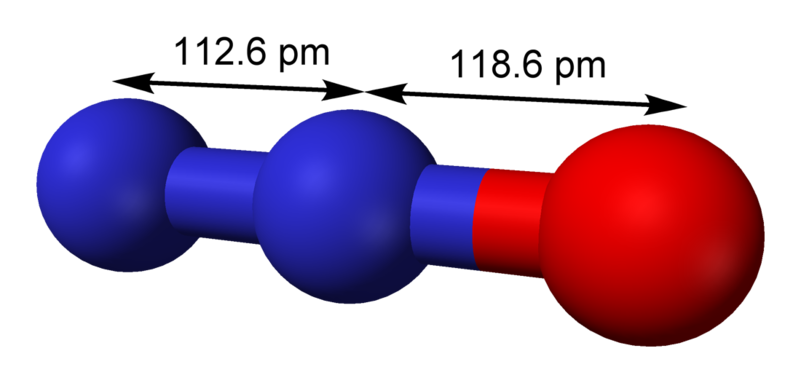
nitrous oxide
chemical compound

barbiturates
thumb|class=skin-invert-image|Barbituric acid, the [[parent structure of all barbiturates]]

fluoxetine
Fluoxetine, sold under the brand name Prozac, among others, is an antidepressant medication of the selective serotonin reuptake inhibitor (SSRI) class used for the treatment of major depressive disorder, anxiety, obsessive–compulsive disorder (OCD), panic disorder, premenstrual dysphoric disorder, and bulimia nervosa. It is also approved for treatment of major depressive disorder in adolescents and children 8 years of age and over. It has also been used to treat premature ejaculation. Fluoxetine is taken by mouth.
%20marketed%20by%20Amneal%20Pharmaceuticals%20(rotated).jpg)
tramadol
Tramadol, sold under the brand name Tramal among others, is an opioid pain medication and a serotonin–norepinephrine reuptake inhibitor (SNRI) used to treat moderate to severe pain. When taken by mouth in an immediate-release formulation, the onset of pain relief usually begins within an hour. It is also available by injection. It is available in combination with paracetamol (acetaminophen).

cyclopropane
Cyclopropane is the cycloalkane with the molecular formula (CH2)3, consisting of three methylene groups (CH2) linked to each other to form a triangular ring. The small size of the ring creates substantial ring strain in the structure. Cyclopropane itself is mainly of theoretical interest, but many cyclopropane derivatives are of commercial or biological significance.
.jpg)
phencyclidine

bupropion
Bupropion, formerly called amfebutamone, and sold under the brand name Wellbutrin among others, is an atypical antidepressant that is indicated in the treatment of major depressive disorder and seasonal affective disorder and to support smoking cessation. A norepinephrine–dopamine reuptake inhibitor (NDRI), it is also popular as an add-on medication in the cases of "incomplete response" to the first-line selective serotonin reuptake inhibitor (SSRI) antidepressant. Bupropion has several features that distinguish it from other antidepressants: It does not usually cause sexual dysfunction, it is

halothane
Halothane (bromochlorotrifluoroethane), sold under the brand name Fluothane among others, is a halocarbon with the chemical formula . It is used as a general anaesthetic given by inhalation. It can be used to induce or maintain anaesthesia. Its use in developed countries has been mostly replaced by newer anesthetic agents such as sevoflurane. One of its benefits is that it does not increase the production of saliva, which can be particularly useful in those who are difficult to intubate.

dextromethorphan
Dextromethorphan is a cough suppressant used in many cough and cold medicines. In 2022, the US Food and Drug Administration (FDA) approved the combination dextromethorphan/bupropion to serve as a rapid-acting antidepressant in people with major depressive disorder.

(RS)-pentobarbital
Pentobarbital (US) or pentobarbitone (British and Australian) is a short-acting barbiturate typically used as a sedative, a preanesthetic, and to control convulsions in emergencies. It can also be used for short-term treatment of insomnia but has been largely replaced by the benzodiazepine family of drugs.
sodium thiopental
group of stereiosimers
isoflurane
Isoflurane, sold under the brand name Forane among others, is a halogenated ether used as a general anesthetic. It can be used to start or maintain anesthesia; however, other medications are often used to start anesthesia, due to airway irritation with isoflurane. Isoflurane is a inhalational anesthetic given via inhalation.

amantadine
Amantadine, sold under the brand name Gocovri among others, is a medication used to treat dyskinesia associated with parkinsonism and influenza caused by type A influenzavirus, though its use for the latter is no longer recommended because of widespread drug resistance. It is also used for a variety of other conditions. The drug is taken by mouth.

curare
thumb|Chondrodendron tomentosum, the main source of 'tube curare' and principal source of [[D-tubocurarine (DTC), the alkaloid constituting medicinal curare]]
thumb|Strychnos toxifera, the [[Strychnos species which is the principal source of 'calabash curare' and its main active constituent, the alkaloid toxiferine]]
sevoflurane
Sevoflurane, sold under the brand name Sevorane, among others, and informally known as sevo, is a sweet-smelling, nonflammable, highly fluorinated methyl isopropyl ether used as an inhalational anaesthetic for induction and maintenance of general anesthesia. After desflurane, it is the volatile anesthetic with the fastest onset. While its offset may be faster than agents other than desflurane in a few circumstances, its offset is more often similar to that of the much older agent isoflurane. While sevoflurane is only half as soluble as isoflurane in blood, the tissue blood partition coefficien

ibogaine
Ibogaine is a psychoactive indole alkaloid derived from plants such as Tabernanthe iboga, characterized by hallucinogenic and oneirogenic effects. Traditionally used by Central African foragers, it has undergone controversial research for the treatment of substance use disorders. Ibogaine exhibits complex pharmacology by interacting with multiple neurotransmitter systems, notably affecting opioid, serotonin, sigma, and NMDA receptors, while its metabolite noribogaine primarily acts as a serotonin reuptake inhibitor and κ-opioid receptor agonist.
imipramine
Imipramine, sold under the brand name Tofranil, among others, is a tricyclic antidepressant (TCA) mainly used in the treatment of depression. It is also effective in treating anxiety and panic disorder. Imipramine is taken by mouth.

coniine
Coniine is a poisonous chemical compound, an alkaloid present in and isolable from poison hemlock (Conium maculatum), where its presence has been a source of significant economic, medical, and historico-cultural interest; coniine is also produced by the yellow pitcher plant (Sarracenia flava), and fool's parsley (Aethusa cynapium). Its ingestion and extended exposure are toxic to humans and all classes of livestock; its mechanism of poisoning involves disruption of the central nervous system, with death caused by respiratory paralysis. The biosynthesis of coniine contains as its penultimate st
pancuronium bromide
aminosteroid muscle relaxant
-Desfluran%20Structural%20Formula%20V1.svg)
desflurane
Desflurane (1,2,2,2-tetrafluoroethyl difluoromethyl ether), under the brand name Suprane, is a highly fluorinated methyl ethyl ether used for induction and maintenance of general anesthesia. Desflurane was developed in the 1980s and approved by the FDA in 1992 as a faster acting and clearing inhalant anesthetic compared to previously used inhalant anesthetics. Like halothane, enflurane, and isoflurane, it is a racemic mixture of (R) and (S) optical isomers (enantiomers). It has the most rapid onset and offset of the volatile anesthetic drugs used for general anesthesia due to its low solubilit
enflurane
Enflurane (2-chloro-1,1,2-trifluoroethyl difluoromethyl ether) is a halogenated ether. Developed by Ross Terrell in 1963, it was first used clinically in 1966. It was increasingly used for inhalational anesthesia during the 1970s and 1980s but is no longer in common use.
vecuronium bromide
muscle relaxant used intravenously for medical use in general anesthesia
allopregnanolone
Allopregnanolone is a naturally occurring neurosteroid which is made in the body from the hormone progesterone. As a medication, allopregnanolone was referred to as brexanolone, sold under the brand name Zulresso, and was used to treat postpartum depression. It was given by injection into a vein.
atracurium besylate
chemical compound

esketamine
tubocurarine
chemical compound
rocuronium bromide
chemical compound
(RS,RS)-reboxetine
Reboxetine, sold under the brand name Edronax among others, is a selective norepinephrine reuptake inhibitor (sNRI) medication marketed as an antidepressant by Pfizer for use in the treatment of major depressive disorder, although it has also been used off-label for panic disorder and attention deficit hyperactivity disorder (ADHD). It is approved for use in many countries worldwide, but is not approved for use in the United States.
kynurenic acid
chemical compound
cisatracurium besylate
chemical compound
5-hydroxyindole-3-acetic acid
chemical compound
conotoxin
A conotoxin is one of a group of neurotoxic peptides isolated from the venom of the marine cone snail, genus Conus.
dextrorphan
Dextrorphan (DXO) is a psychoactive drug of the morphinan class which acts as an antitussive or cough suppressant and in high doses a dissociative hallucinogen. It is the dextrorotatory enantiomer of racemorphan; the levorotatory enantiomer is levorphanol. Dextrorphan is produced by O-demethylation of dextromethorphan by CYP2D6. Dextrorphan is an NMDA antagonist and contributes to the psychoactive effects of dextromethorphan.
mecamylamine
Mecamylamine (INN, BAN; or mecamylamine hydrochloride (USAN); brand names Inversine, Vecamyl) is a non-selective, non-competitive antagonist of the nicotinic acetylcholine receptors (nAChRs) that was introduced in the 1950s as an antihypertensive drug. In the United States, it was voluntarily withdrawn from the market in 2009 but was brought to market in 2013 as Vecamyl and eventually was marketed by Turing Pharmaceuticals.
alcuronium chloride
chemical compound
hexamethonium
Hexamethonium is a non-depolarising ganglionic blocker, a neuronal nicotinic (nAChR) receptor antagonist that acts in autonomic ganglia by binding mostly in or on the nAChR receptor, and not the acetylcholine binding site itself. It does not have any effect on the muscarinic acetylcholine receptors (mAChR) located on target organs of the parasympathetic nervous system, nor on the nicotinic receptors at the skeletal neuromuscular junction, but acts as antagonist at the nicotinic acetylcholine receptors located in sympathetic and parasympathetic ganglia (nAChR).
gallamine
concept amalgam in chemistry
(RS)-thiocolchicoside
Thiocolchicoside (Muscoril, Myoril, Neoflax) is a semi-synthetic derivative of colchicine, used as muscle relaxant with anti-inflammatory and analgesic effects. Its mechanism of action is unknown, but it is believed to act via antagonism of nicotinic acetylcholine receptors (nAchRs). However, it also appears to be a competitive antagonist of GABAA and glycine receptors. As such, it has powerful convulsant activity and should not be used in seizure-prone individuals.
nicotinic antagonist
drug that binds to nicotinic cholinergic receptors (receptors, nicotinic) and block the actions of acetylcholine or cholinergic agonists
levomethadyl acetate
Levacetylmethadol (INN), levomethadyl acetate (USAN), OrLAAM (trade name) or levo-α-acetylmethadol (LAAM) is a synthetic opioid similar in structure to methadone. It has a long duration of action due to its active metabolites.
mivacurium
chemical compound
dizocilpine
Dizocilpine (INN), also known as MK-801, is a pore blocker of the NMDA receptor, a glutamate receptor, discovered by a team at Merck in 1982. Glutamate is the brain's primary excitatory neurotransmitter. The channel is normally blocked with a magnesium ion and requires depolarization of the neuron to remove the magnesium and allow the glutamate to open the channel, causing an influx of calcium, which then leads to subsequent depolarization. Dizocilpine binds inside the ion channel of the receptor at several of PCP's binding sites thus preventing the flow of ions, including calcium (Ca2+), thro
pipecuronium bromide
chemical compound
alpha-bungarotoxin
α-Bungarotoxin is one of the bungarotoxins, components of the venom of the elapid Taiwanese banded krait snake (Bungarus multicinctus). It is a type of α-neurotoxin, a neurotoxic protein that is known to bind competitively and in a relatively irreversible manner to the nicotinic acetylcholine receptor found at the neuromuscular junction, causing paralysis, respiratory failure, and death in the victim. It has also been shown to play an antagonistic role in the binding of the α7 nicotinic acetylcholine receptor in the brain, and as such has numerous applications in neuroscience research.
racemorphan
Racemorphan, or morphanol, is the racemic mixture of the two stereoisomers of 17-methylmorphinan-3-ol, each with differing pharmacology and effects:
laudanosine
Laudanosine or '''N-methyltetrahydropapaverine''' is a metabolite of the pharmaceutical drugs atracurium and cisatracurium. Laudanosine decreases the seizure threshold, and thus it can induce seizures if present at sufficient threshold concentrations; however, such concentrations are unlikely to be produced consequent to chemodegradable metabolism of clinically administered doses of cisatracurium or atracurium.
pempidine
Pempidine is a nicotinic antagonist drug, first reported in 1958 by two research groups working independently, and introduced as an oral treatment for hypertension.
promegestone
Promegestone, sold under the brand name Surgestone, is a progestin medication which is used in menopausal hormone therapy and in the treatment of gynecological disorders. It is taken by mouth.
bungarotoxin
Bungarotoxins are toxins found in the venom of snakes and kraits. Bites from these animals can result in severe symptoms including bleeding or hemorrhage, paralysis and tissue damage that can result in amputation. The paralytic effects of venom are particularly dangerous as they can impair breathing. These symptoms are the result of bungarotoxin presence in the venom. In actuality, venom contains several distinct bungarotoxins, each varying in which receptors they act on and how powerful they are.
ganglionic blocker
chemical compound
18-methoxycoronaridine
18-Methoxycoronaridine (18-MC; developmental code name MM-110), also known as zolunicant (), is a derivative of ibogaine invented in 1996 by the research team around the pharmacologist Stanley D. Glick from the Albany Medical College and the chemists Upul K. Bandarage and Martin E. Kuehne from the University of Vermont. In animal studies it has proven to be effective at reducing self-administration of morphine, cocaine, methamphetamine, nicotine, and sucrose. It has also been shown to produce anorectic effects in obese rats, most likely due to the same actions on the reward system which underl
trimethaphan camsylate
chemical compound
radafaxine
Radafaxine (developmental code GW-353,162; also known as '(2S,3S)-hydroxybupropion or (S,S)-hydroxybupropion') is a norepinephrine–dopamine reuptake inhibitor (NDRI) which was under development by GlaxoSmithKline in the 2000s for a variety of different indications but was never marketed. These uses included treatment of restless legs syndrome, major depressive disorder, bipolar disorder, neuropathic pain, fibromyalgia, and obesity. Regulatory filing was planned for 2007, but development was discontinued in 2006 due to "poor test results".
noribogaine
Noribogaine, also known as '''O-desmethylibogaine or 12-hydroxyibogamine', is the principal psychoactive metabolite of the oneirogen ibogaine. It is thought to be involved in the antiaddictive effects of ibogaine-containing plant extracts, such as Tabernanthe iboga''.
bupropion/naltrexone
Naltrexone/bupropion, sold under the brand name Contrave among others, is a fixed-dose combination medication for the management of chronic obesity in adults in combination with a reduced-calorie diet and increased physical activity. It contains naltrexone, an opioid antagonist, and bupropion, an aminoketone atypical antidepressant. It is taken by mouth. Both medications have individually shown some evidence of effectiveness in weight loss, and the combination has been shown to have some synergistic effects on weight.
coronaridine
Coronaridine, also known as 18-carbomethoxyibogamine, is an alkaloid found in Tabernanthe iboga and related species, including Tabernaemontana divaricata for which (under the now obsolete synonym Ervatamia coronaria) it was named.
rapacuronium bromide
pharmaceutical drug
pentolinium
Pentolinium, also known as pentapyrrolidinium, is a ganglionic blocking agent which acts as a nicotinic acetylcholine receptor antagonist. Formulated as the pentolinium tartrate salt, it was marketed under the trade name Ansolysen. It can be used as an antihypertensive drug during surgery or to control hypertensive crises. It works by binding to the acetylcholine receptor of adrenergic nerves and thereby inhibiting the release of noradrenaline and adrenaline. Blocking this receptor leads to smooth muscle relaxation and vasodilation.