Category
page 1Leaf vegetables

Onion
The onion (Allium cepa , from Latin ), also known as the bulb onion or common onion, is a vegetable that is the most widely cultivated species of the genus Allium. The shallot is a botanical variety of the onion which was classified as a separate species until 2011. The onion's close relatives include garlic, scallion, leek, and chives.

sweet potato
species of plant

Spinacia oleracea
Spinach (Spinacia oleracea) is a leafy green flowering plant native to Central and Western Asia. It is of the order Caryophyllales, family Amaranthaceae, subfamily Chenopodioideae. Its leaves are a common vegetable consumed either fresh, cooked or after storage (using preservation techniques like canning, freezing, or dehydration). The taste differs considerably between cooked and raw: the high oxalate content may be reduced by blanching.

chili pepper
fruit of plants from the genus Capsicum, members of the nightshade family, Solanaceae

Foeniculum vulgare
Fennel (Foeniculum vulgare) is a flowering plant species in the carrot family. It is a hardy, perennial herb with yellow flowers and feathery leaves. It is indigenous to the shores of the Mediterranean but has become widely naturalized in many parts of the world, especially on dry soils near the sea coast and on riverbanks.

Brassica oleracea var. capitata
Cabbage, comprising several cultivars of Brassica oleracea, is a leafy green, red (purple), or white (pale green) biennial plant grown as an annual vegetable crop for its dense-leaved heads. It is descended from the wild cabbage (B. oleracea var. oleracea), and belongs to the "cole crops" or brassicas, meaning it is closely related to broccoli and cauliflower (var. botrytis); Brussels sprouts (var. gemmifera); and Savoy cabbage (var. sabauda).

parsley
Parsley, or garden parsley (Petroselinum crispum), is a species of flowering plant in the family Apiaceae that is native to the Balkans. It has been introduced and naturalized in Europe and elsewhere in the world with suitable climates, and is widely cultivated as a herb and a vegetable.

Chrysanthemum
Chrysanthemums ( ), sometimes abbreviated to mums or chrysanths, are perennial herbaceous flowering plants in the family Asteraceae that bloom in the autumn. They are native to East Asia and northeastern Europe. Most species originate from East Asia, and the center of diversity is in China. Many thousands of horticultural varieties and cultivars exist.

Colocasia esculenta
Taro (; Colocasia esculenta) is a root vegetable. It is the most widely cultivated species of several plants in the family Araceae that are used as vegetables for their corms, leaves, stems and petioles. Taro corms are a food staple in African, Caribbean, Oceanian, East Asian, Southeast Asian and South Asian cultures (similar to yams).

Viola
genus of plants; violets

Urtica
Urtica is a genus of flowering plants in the family Urticaceae. Many species have stinging hairs and may be called nettles or stinging nettles (the latter name applying particularly to U. dioica). The generic name Urtica derives from the Latin for 'sting'.

Taraxacum
thumb|Dandelion bilobed stigma bearing pollen

Amaranthus
Amaranthus is a genus of plants commonly known as amaranths. Some species are known by variants of the common name "pigweed". Some members are annual and others are perennial. The plant can grow from tall with a succulent, hollow stem. Parts of the plant vary from green to reddish. Catkin-like cymes of densely packed flowers grow in the summer or fall.

Beta vulgaris
species of the genus beet

leek
A leek is a biennial vegetable, a cultivar of Allium ampeloprasum, the broadleaf wild leek (syn. Allium porrum). The edible part of the plant is a bundle of leaf sheaths that is sometimes colloquially called a "stem" or "stalk".

common dandelion
plant species
.jpg)
turnip
The turnip or white turnip (Brassica rapa subsp. rapa) is a root vegetable commonly grown in temperate climates worldwide for its white, fleshy taproot. Small, tender varieties are grown for human consumption, while larger varieties are grown as feed for livestock. The name turnip used in many regions may also be used to refer to rutabaga (or neep or swede), which is a different but related vegetable.

Cichorium intybus
thumb|Botanical illustration (1885)

Trigonella foenum-graecum
thumb|Fenugreek greens
.jpg)
Brassica napus
Rapeseed ('''Brassica napus subsp. napus), also known as rape and oilseed rape and canola''', is a yellow-flowered member of the Brassicaceae family.

Portulaca oleracea
species of flowering plant

Urtica dioica
species of plant
.jpg)
Rumex acetosa
Sorrel (Rumex acetosa) is a perennial herbaceous plant in the family Polygonaceae. It is also called common sorrel, garden sorrel, spinach dock and narrow-leaved dock ("dock" often used for the genus).

Plantago
Plantago is a genus of about 200 species of flowering plants in the family Plantaginaceae, commonly called plantains or fleaworts. The common name plantain is shared with the unrelated cooking plantain. Most are herbaceous plants, though a few are subshrubs growing to tall.

borage
Borage ( or ; Borago officinalis), also known as starflower, is an annual herb in the flowering plant family Boraginaceae native to the Mediterranean region. Although the plant contains small amounts of pyrrolizidine alkaloids, some parts are edible and its seeds provide oil.

Calendula officinalis
species of plant
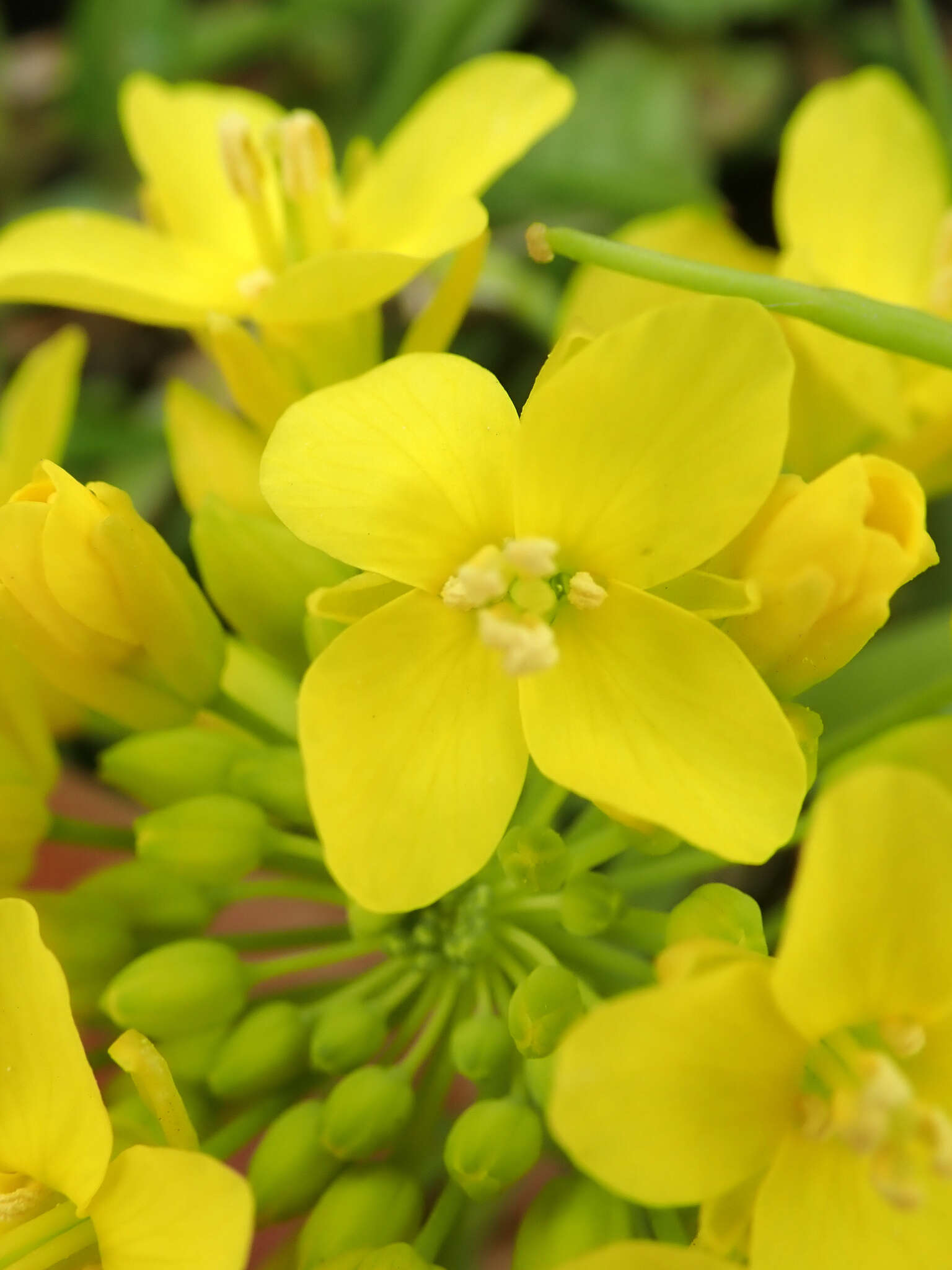
Brassica napus subsp. rapifera
Rutabaga ( ; North American English) or swede (British English and some Commonwealth English) is a root vegetable, a form of Brassica napus (which also includes rapeseed). Other names include Swedish turnip, neep (Scots), and turnip (Scottish and Canadian English, Irish English, Cornish English and Manx English, as well as some dialects of English in Northern England, New England English, and Australian English). However, elsewhere, the name turnip usually refers to the related white turnip.

Plantago major
species of plant

Lepidium sativum
species of plant

Nasturtium officinale
Watercress or yellowcress (Nasturtium officinale) is a species of aquatic flowering plant in the cabbage family, Brassicaceae.

Chenopodium quinoa
Quinoa (Chenopodium quinoa; , from Quechua ' or ') is a flowering plant in the amaranth family. It is an herbaceous annual plant grown as a crop primarily for its edible seeds; the seeds are high in protein, dietary fiber, B vitamins and dietary minerals especially potassium and magnesium in amounts greater than in many grains. Quinoa is not a grass but rather a pseudocereal botanically related to spinach and amaranth (Amaranthus spp.), and originated in the Andean region of northwestern South America. It was first used to feed livestock 5,2007,000 years ago, and for human consumption 3,0004,0

Chenopodium album
species of plant

Brussels sprouts
plant in the genus Brassica grown for use as a vegetable

water spinach
species of plant

Sicyos edulis
Chayote (; previously placed in the obsolete genus Sechium, now in the genus Sicyos, as Sicyos edulis), also known as christophine, mirliton, güisquil, and choko, is an edible plant belonging to the gourd family, Cucurbitaceae. This fruit was first cultivated in Mesoamerica between southern Mexico and Honduras, with the most genetic diversity available in both Mexico and Guatemala. It is one among dozens of foods introduced to the Old World during the Columbian Exchange. At that time, the plant spread to other parts of the Americas, ultimately causing it to be integrated into the cuisine of ma

Brassica rapa
species of plant

corn mint
species of plant

Stellaria media
species of plant
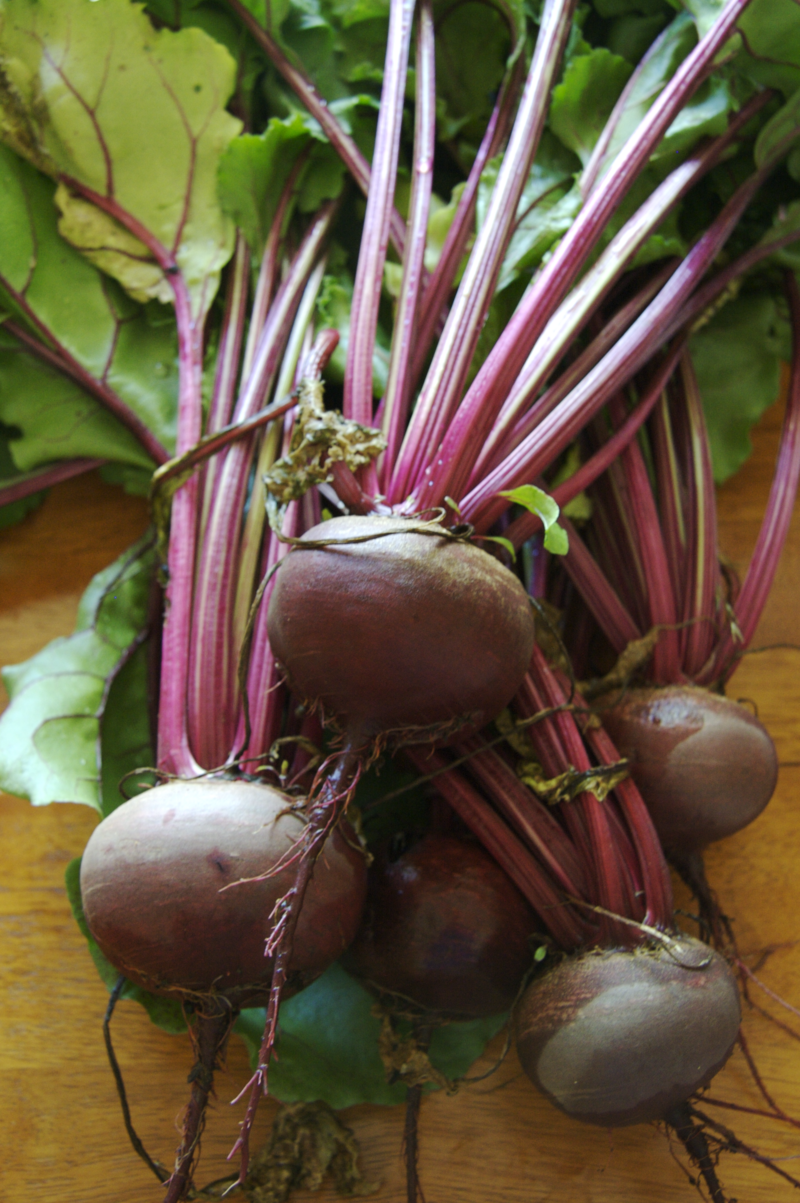
beet
Beetroot or beet is the taproot portion of a Beta vulgaris subsp. vulgaris plant in the Conditiva Group. The plant is a root vegetable also known as the table beet, garden beet, or dinner beet, or else categorized by color as red beet or golden beet. Its leaves constitute a leaf vegetable called beet greens. It is native to the Azores, Western Europe to the Mediterranean and India.
Beetroot can be eaten raw, roasted, steamed, or boiled. Beetroot can also be canned, either whole or cut up, and often are pickled, spiced, or served in a sweet-and-sour sauce.

Brassica juncea
species of mustard plant

Welsh onion
species of plant

Sonchus oleraceus
species of plant

chard
thumb|Swiss chard for sale at an outdoor market

Silene vulgaris
species of plant

Malva sylvestris
species of plant

jute
thumb|Jute fiber
thumb|A jute field in Bangladesh
thumb|Jute rope

Hibiscus sabdariffa
species of plant, Roselle

Aegopodium podagraria
species of plant

Eruca vesicaria subsp. sativa
edible annual plant Eruca vesicaria subsp. sativa
%2C%20La%20Gomera%2C%20Espa%C3%B1a%2C%202012-12-14%2C%20DD%2001.jpg)
Sonchus
Sonchus is a genus of flowering plants in the tribe Cichorieae within the family Asteraceae and are commonly known as sow thistles (less commonly hare thistles or hare lettuces). Sowthistles are annual, biennial or perennial herbs, with or without rhizomes and a few are even woody (subgenus Dendrosonchus, restricted to the Canary Islands and Madeira).

Tropaeolum majus
species of plant

kale
Kale (), also called leaf cabbage, belongs to a group of cabbage (Brassica oleracea) cultivars primarily grown for their edible leaves, but it is also used as an ornamental plant. Its multiple different cultivars vary quite a bit in appearance; the leaves can be bumpy, curly, or flat, and the color ranges from purple to green.

Cichorium endivia
species of plant

Celosia argentea
species of plant

corn salad
species of plant Valerianella locusta

Lycium barbarum
species of plant

Alliaria petiolata
species of plant

Brassica rapa subsp. chinensis
subspecies of plant

Dysphania ambrosioides
species of plant

Napa cabbage
subspecies of plant in the genus Brassica