File:Watervapor_cup.jpg · Wikimedia Commons · See Wikimedia Commons
蒸发
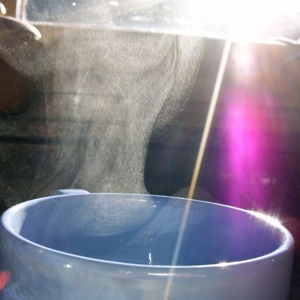
thumb|right|Aerosol of microscopic water droplets suspended in the air above a cup of hot tea after the water vapor has sufficiently cooled and condensed. Water vapor is an invisible gas, but the clouds of condensed droplets refract and scatter the sunlight and are thus visible. thumb|Droplets of water vapor in a pan. thumb|right|280px|Demonstration of evaporative cooling. When the sensor is dipped in ethanol and then taken out to evaporate, the instrument shows progressively lower temperature as the ethanol evaporates. thumb|Rain evaporating after falling on hot pavement
AI overview
Evaporation is the process where liquid water transforms into an invisible gas called water vapor. It matters because it's a key part of how water moves through the environment and can cool things down as it occurs.
AI-generated from the Wikipedia summary — may contain errors.
Wikidata facts
- Image
- Evaporation leaving minerals.png
Show 2 more facts
- Commons category
- Evaporation
- exact match
- purl.obolibrary.org/obo/ENVO_02500034
via Wikidata · CC0
Article · 中文
蒸發是由於液體分子互相碰撞以及從環境中得到熱能補充(假設溫度不變,液體與環境處於熱平衡狀態),有些少數具有足夠動能且位於液體表面的分子,能擺脫分子間作用力而變成氣態從液體中逃逸出去的現象。蒸發僅限於液体表面汽化的过程,與另一汽化過程「沸腾」不同的是,蒸發只會發生於液體的表面,而且可在任何溫度發生。 在自然界中,蒸發是水循環的重要途径,太陽的能量使海洋、湖泊、泥土中的水分蒸發,形成雲。在水文學中,蒸發和蒸騰(植物葉片氣孔中水分的蒸發)合稱蒸散。在工业生产中,有的液体在沸点或低于沸点时会氧化或分解,需要进行()。 在蒸发時,液体表面會有數個平均自由程的蒸氣薄膜,稱為克努森層。
Abstract from DBpedia / Wikipedia · CC BY-SA