Category
page 1ECHA InfoCard ID from Wikidata
.svg)
water
Water is an inorganic compound with the chemical formula . It is a transparent, tasteless, odorless, and nearly colorless chemical substance. It is the main constituent of Earth's streams, lakes, and oceans and the fluids of all known living organisms, in which it acts as a solvent. Water, being a polar molecule, undergoes strong intermolecular hydrogen bonding which is a large contributor to its physical and chemical properties. It is vital for all known forms of life, despite not providing food energy or being an organic micronutrient. Due to its presence in all organisms, its chemical stabi

xenon
Xenon is a chemical element; it has symbol Xe and atomic number 54. It is a dense, colorless, odorless noble gas found in Earth's atmosphere in trace amounts. Although generally unreactive, it can undergo a few chemical reactions such as the formation of xenon hexafluoroplatinate, the first noble gas compound to be synthesized.

carbon dioxide
chemical compound

ethanol
Ethanol (also called ethyl alcohol, grain alcohol, drinking alcohol, or simply alcohol) is an organic compound with the chemical formula . It is an alcohol, with its formula also written as , or EtOH, where Et is the pseudoelement symbol for ethyl. Ethanol is a volatile, flammable, colorless liquid with a pungent taste. As a psychoactive depressant, it is the active ingredient in alcoholic beverages, and the second most consumed drug globally behind caffeine.

ammonia

cocaine
Cocaine is a stimulant of the central nervous system and tropane alkaloid, derived primarily from the leaves of two coca species native to South America: Erythroxylum coca and E. novogranatense. The leaves are processed into cocaine paste, a crude mixture of coca alkaloids, from which cocaine base is isolated and then converted to cocaine hydrochloride. Although total synthesis is possible, it is complex and not used for production. Historically, cocaine was a standard topical medication used as a local anesthetic with intrinsic vasoconstrictor properties. However, its high abuse potential, ad

(−)-nicotine
Nicotine is an alkaloid found primarily in plants of the nightshade family, notably in tobacco; it is also synthesized. Nicotine is used recreationally for its stimulant and anxiolytic effects. In tobacco leaves, nicotine constitutes about 0.6–3.0% of the dry weight, and smaller, trace quantities occur in other Solanaceae crops such as tomatoes, potatoes, and eggplants. In pure form, nicotine is a colorless to yellowish, oily liquid that readily penetrates biological membranes and acts as a potent neurotoxin in insects, where it serves as an antiherbivore toxin. Historically, it was widely use

aspirin
Aspirin () is the genericized trademark for acetylsalicylic acid (ASA), a nonsteroidal anti-inflammatory drug (NSAID) used to reduce pain, fever, and inflammation, and as an antithrombotic. Aspirin is used to treat inflammatory conditions including Kawasaki disease, pericarditis, and rheumatic fever.

ozone
Ozone (), also called trioxygen, is an inorganic molecule with the chemical formula ''''''. It is a pale-blue gas with a distinctively pungent odour. It is an allotrope of oxygen that is much less stable than the diatomic allotrope , breaking down in the lower atmosphere to (dioxygen). Ozone is formed from dioxygen by the action of ultraviolet (UV) light and electrical discharges within the Earth's atmosphere. It is present in very low concentrations throughout the atmosphere, with its highest concentration high in the ozone layer of the stratosphere, which absorbs most of the Sun's ultraviole

carbon monoxide
chemical compound

cholesterol
Cholesterol is the principal sterol of all animals, distributed in body tissues, especially the brain and spinal cord, and in animal fats and oils.

vitamin C
nutrient found in citrus fruits and other foods

Paracetamol
Paracetamol, or acetaminophen, is an analgesic and antipyretic agent used to treat fever and mild to moderate pain. It is a widely available over-the-counter drug sold generically or under various brand names, including Tylenol and Panadol.

sulfuric acid
chemical compound

starch
thumb|Structure of the amylose molecule
thumb|Structure of the amylopectin molecule

kerosene
right|thumb|upright|A kerosene bottle, containing blue-dyed kerosene

caffeine
Caffeine is a central nervous system (CNS) stimulant of the methylxanthine class and is the most commonly consumed psychoactive substance globally. It is mainly used for its eugeroic (wakefulness promoting), ergogenic (physical performance-enhancing), or nootropic (cognitive-enhancing) properties; it is also used recreationally or in social settings. Caffeine acts by blocking the binding of adenosine at a number of adenosine receptor types, inhibiting the centrally depressant effects of adenosine and enhancing the release of acetylcholine. Caffeine has a three-dimensional structure similar to

heroin

nitric acid
strong, oxidising mineral acid

morphine
Morphine, formerly known as morphium, is an opiate found naturally in opium, a dark brown resin produced by drying the latex of opium poppies (Papaver somniferum). It is mainly used as an analgesic (pain medication). There are multiple methods used to administer morphine: oral; sublingual; via inhalation; injection into a muscle, injection under the skin, or injection into the spinal cord area; transdermal; intravenously; or via rectal suppository. It acts directly on the central nervous system (CNS) to induce analgesia and alter perception and emotional response to pain. Physical and psycholo

cellulose
Cellulose is an organic compound with the formula , a polysaccharide consisting of a linear chain of several hundred to many thousands of β(1→4) linked D-glucose units. Cellulose is an important structural component of the cell walls of green plants, many forms of algae, and the oomycetes. Some species of bacteria secrete it to form biofilms. Cellulose is the most abundant organic polymer on Earth. The cellulose content of cotton fibre is 90%, that of wood is 40–50%, and that of dried hemp is approximately 57%.

sucrose
Sucrose is a disaccharide, a sugar composed of glucose and fructose subunits. It is produced naturally in plants and is the main constituent of white sugar. It has the molecular formula .

sodium bicarbonate
chemical compound

testosterone
Testosterone is the primary male sex hormone and androgen in males. In humans, testosterone plays a key role in the development of male reproductive tissues such as testicles and prostate, as well as promoting secondary sexual characteristics such as increased muscle and bone mass, and the growth of body hair. It is associated with increased aggression, sex drive, dominance, courtship display, and a wide range of behavioral characteristics. In addition, testosterone in both sexes is involved in health and well-being, where it has a significant effect on overall mood, cognition, social and sexu

vitamin A
vitamin, class of molecules with related biological function

dopamine
Dopamine (DA, a contraction of 3,4-dihydroxyphenethylamine) is a neuromodulatory molecule that plays several important roles in cells. It is an organic chemical of the catecholamine and phenethylamine families. It is an amine synthesized by removing a carboxyl group from a molecule of its precursor chemical, L-DOPA, which is synthesized in the brain and kidneys. Dopamine is also synthesized in plants and most animals. In the brain, dopamine functions as a neurotransmitter—a chemical released by neurons (nerve cells) to send signals to other nerve cells. The brain includes several distinct dopa

phenol
Phenol (also known as carbolic acid, phenolic acid, or benzenol) is an aromatic organic compound with the molecular formula . It is a white crystalline solid that is volatile and can catch fire.

sodium hydroxide
chemical compound

urea
Urea, also called carbamide (because it is a diamide of carbonic acid), is an organic compound with chemical formula . This amide has two amino groups (−) joined by a carbonyl functional group (−C(=O)−). It is thus the simplest amide of carbamic acid.

lysergic acid diethylamide
Lysergic acid diethylamide, commonly known as LSD (from German ) and by the nicknames acid and lucy, is a semisynthetic hallucinogenic drug derived from ergot, known for its powerful psychological effects and serotonergic activity. It was historically used in psychiatry and 1960s counterculture; it is currently legally restricted but receiving renewed scientific interest and increasing use.

keto-D-fructose
Fructose (), or fruit sugar, is a common monosaccharide, i.e. a simple sugar. It is classified as a reducing hexose, more specifically a ketonic simple sugar found in many plants, where it is often bonded to glucose to form the disaccharide sucrose. A white, water-soluble solid, it is one of the three dietary monosaccharides, along with glucose and galactose.
Fructose is found in honey, tree and vine fruits, flowers, berries, and most root vegetables.

sildenafil
Sildenafil, sold under the brand name Viagra among others, is a medication used to treat erectile dysfunction and pulmonary arterial hypertension. It is also sometimes used off-label for the treatment of certain symptoms in secondary Raynaud's phenomenon. It is unclear if it is effective for treating sexual dysfunction in females. It can be taken orally (swallowed by mouth), intravenously (injection into a vein), or through the sublingual route (dissolved under the tongue). Onset when taken orally is typically within twenty minutes and lasts for about two hours.
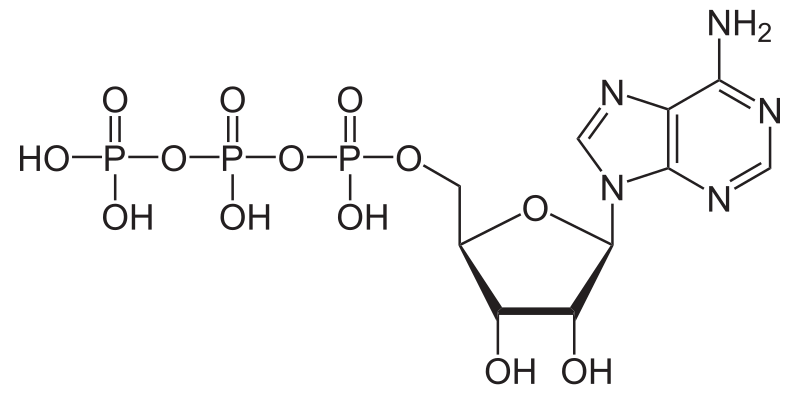
adenosine triphosphate
the energy-carrying molecule in living cells

methanol
Methanol (also called methyl alcohol, wood alcohol, and wood spirit, amongst other names) is an organic chemical compound and the simplest aliphatic alcohol, with the chemical formula (a methyl group linked to a hydroxyl group, often abbreviated as MeOH). It is a light, volatile, colorless and flammable liquid with a distinctive alcoholic odor similar to that of ethanol (potable alcohol), but is more acutely toxic than the latter.
Methanol acquired the name wood alcohol because it was once produced through destructive distillation of wood. Today, methanol is mainly produced industrially by hyd

ethane
Ethane ( , ) is a naturally occurring organic chemical compound with chemical formula . At standard temperature and pressure, ethane is a colorless, odorless gas. Like many hydrocarbons, ethane is isolated on an industrial scale from natural gas and as a petrochemical by-product of petroleum refining. Its chief use is as feedstock for ethylene production. The ethyl group is formally, although rarely practically, derived from ethane.

ibuprofen
Ibuprofen is a nonsteroidal anti-inflammatory drug (NSAID) that is used to relieve pain, fever, and inflammation. This includes painful menstrual periods, migraines, and rheumatoid arthritis. It can be taken orally (by mouth) or intravenously. It typically begins working within an hour.

β-lactose
Lactose is a disaccharide composed of galactose and glucose and has the molecular formula C12H22O11. Lactose makes up around 2–8% of milk (by mass). The name comes from (gen. ), the Latin word for milk, plus the suffix -ose used to name sugars. The compound is a white, water-soluble, non-hygroscopic solid with a mildly sweet taste. It is used in the food industry.

calcium carbonate
chemical compound

sodium chloride
chemical compound

citric acid
weak organic acid

nitroglycerin
Nitroglycerin (NG) (alternative spelling nitroglycerine), also known as trinitroglycerol (TNG), nitro, glyceryl trinitrate (GTN), or 1,2,3-trinitroxypropane, is a dense, colorless or pale yellow, oily, explosive liquid most commonly produced by nitrating glycerol with white fuming nitric acid under conditions appropriate to the formation of the nitric acid ester. Chemically, the substance is a nitrate ester rather than a nitro compound, but the traditional name is retained. Discovered in 1846 by Ascanio Sobrero, nitroglycerin has been used as an active ingredient in the manufacture of explosiv

silicon dioxide
chemical compound

ethylene
Ethylene (IUPAC name: ethene) is a hydrocarbon which has the formula or . It is a colourless, flammable gas with a faint "sweet and musky" odour when pure. It is the simplest alkene (a hydrocarbon with carbon–carbon double bonds).

riboflavin
Riboflavin, also known as vitamin B2, is a vitamin found in food and sold as a dietary supplement. It is essential to the formation of two major coenzymes, flavin mononucleotide and flavin adenine dinucleotide. These coenzymes are involved in energy metabolism, cellular respiration, and antibody production, as well as normal growth and development. The coenzymes are also required for the metabolism of niacin, vitamin B6, and folate. Riboflavin is prescribed to treat corneal thinning, and taken orally, may reduce the incidence of migraine headaches in adults.

potassium nitrate
chemical compound

glycine
thumb|Glycine ball and stick model spinning
Glycine (symbol Gly or G; ) is an organic compound with the formula C2H5NO2, and is the simplest stable amino acid, distinguished by having a single hydrogen atom as its side chain. As one of the 20 proteinogenic amino acids, glycine is a fundamental building block of proteins in all life and is encoded by all codons starting with GG (GGU, GGC, GGA, and GGG). Because of its minimal side chain, it is the only common amino acid that is not chiral, meaning it is superimposable on its mirror image.

TNT
thumb|Trinitrotoluene spin view

glycerol
Glycerol () is a sugar alcohol with chemical formula . It has three carbon atoms and as many hydroxyl groups. It is a colorless, odorless, sweet-tasting, viscous liquid at Standard Ambient Temperature and Pressure (SATP). Because of its three hydroxyl groups, glycerol is miscible with water and is hygroscopic in nature.

oxytocin
Oxytocin is a peptide hormone and neuropeptide normally produced in the hypothalamus and released by the posterior pituitary. Present in animals since early stages of evolution, in humans it plays roles in behavior that include social bonding, love, reproduction, childbirth, and the period after childbirth. Oxytocin is released into the bloodstream as a hormone in response to sexual activity and during childbirth. It is also available in pharmaceutical form. In either form, oxytocin stimulates uterine contractions to speed up the process of childbirth.

sulfur dioxide
chemical compound

adenine
Adenine (symbol A, or Ade) is a purine nucleotide base that is found in DNA, RNA, and ATP. Usually a white crystalline subtance. The shape of adenine is complementary and pairs to either thymine in DNA or uracil in RNA. In cells adenine, as an independent molecule, is rare. It is almost always covalently bound to become a part of a larger biomolecule.

camphor
Camphor () is a waxy, colorless solid with a strong aroma. It is classified as a terpenoid and a cyclic ketone. It is found in the wood of the camphor laurel (Cinnamomum camphora), a large evergreen tree found in East Asia; and in the kapur tree (Dryobalanops sp.), a tall timber tree from South East Asia. It also occurs in some other related trees in the laurel family, notably Ocotea usambarensis. Rosemary leaves (Rosmarinus officinalis) contain 0.05 to 0.5% camphor, while camphorweed (Heterotheca) contains some 5%. A major source of camphor in Asia is camphor basil (the parent of African blue

acetylene
Acetylene (systematic name: ethyne) is a chemical compound with the formula and structure . It is a hydrocarbon and the simplest alkyne. This colorless gas is widely used as a fuel and a chemical building block. It is unstable in its pure form and thus is usually handled as a solution. Pure acetylene is odorless, but commercial grades usually have a marked odor due to impurities such as divinyl sulfide and phosphine.

sodium carbonate
chemical compound

folic acid
Folate, also known as vitamin B9 and folacin, is one of the B vitamins. Manufactured folic acid, which is converted into folate by the body, is used as a dietary supplement and in food fortification as it is more stable during processing and storage. Folate is required for the body to make DNA and RNA and metabolise amino acids necessary for cell division and maturation of blood cells. As the human body cannot make folate, it is required in the diet, making it an essential nutrient. It occurs naturally in many foods. The recommended adult daily intake of folate in the U.S. is 400 micrograms fr

hydrogen sulfide
chemical compound

propane
thumb|A 20 lb () steel propane cylinder. This cylinder is fitted with an overfill prevention device (OPD) valve, as evidenced by the trilobular handwheel.
Propane () is a three-carbon chain alkane with the molecular formula . It is a gas at standard temperature and pressure, but becomes liquid when compressed for transportation and storage. A by-product of natural gas processing and petroleum refining, it is often a constituent of liquefied petroleum gas (LPG), which is commonly used as a fuel in domestic and industrial applications and in low-emissions public transportation; other constituent

acetone
Acetone (2-propanone or dimethyl ketone) is an organic compound with the formula . It is the simplest and smallest ketone (). It is a colorless, highly volatile, and flammable liquid with a characteristic pungent odor.
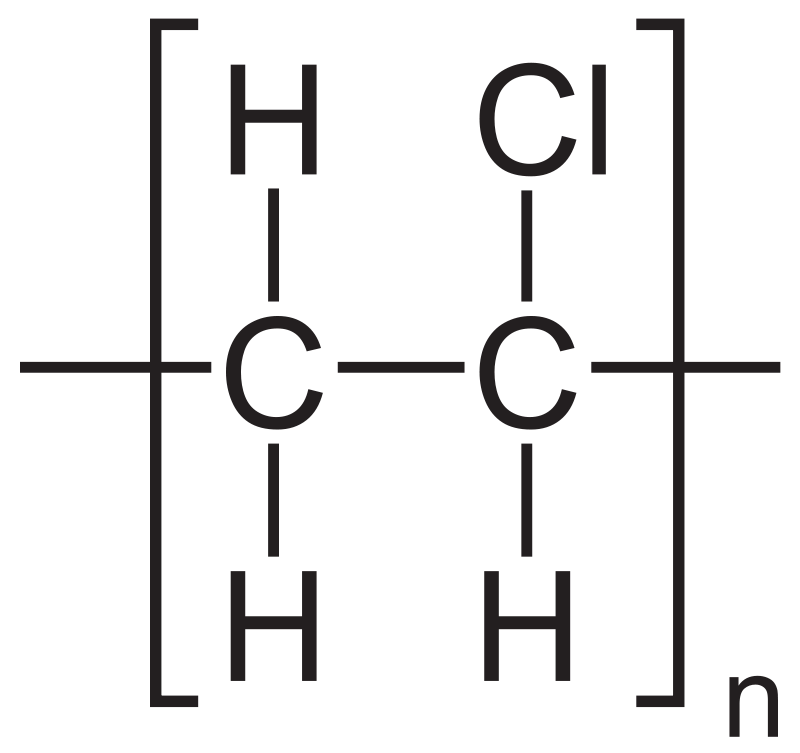
polyvinyl chloride
synthetic plastic polymer - A thermoplastic resin produced by the polymerization of vinyl chloride gas.

L-alanine
thumb|Spin view of ball-stick model
Alanine (symbol Ala or A), or α-alanine, is an α-amino acid that is used in the biosynthesis of proteins. It contains an amine group and a carboxylic acid group, both attached to the central carbon atom which also carries a methyl group side chain. Consequently it is classified as a non-polar, aliphatic α-amino acid. Under biological conditions, it exists in its zwitterionic form with its amine group protonated (as ) and its carboxyl group deprotonated (as ). It is non-essential to humans as it can be synthesized metabolically and does not need to be present