Category
page 1Glycine receptor agonists

caesium
Caesium (IUPAC spelling; also spelled cesium in American English) is a chemical element; it has symbol Cs and atomic number 55. It is a soft, silvery-golden alkali metal with a melting point of , which makes it one of only five elemental metals that are liquid at or near room temperature. Caesium has physical and chemical properties similar to those of rubidium and potassium. It is pyrophoric and reacts with water even at . It is the least electronegative stable element, with a value of 0.79 on the Pauling scale. It has only one stable isotope, caesium-133. Caesium is mined mostly from polluci

xenon
Xenon is a chemical element; it has symbol Xe and atomic number 54. It is a dense, colorless, odorless noble gas found in Earth's atmosphere in trace amounts. Although generally unreactive, it can undergo a few chemical reactions such as the formation of xenon hexafluoroplatinate, the first noble gas compound to be synthesized.

glycine
thumb|Glycine ball and stick model spinning
Glycine (symbol Gly or G; ) is an organic compound with the formula C2H5NO2, and is the simplest stable amino acid, distinguished by having a single hydrogen atom as its side chain. As one of the 20 proteinogenic amino acids, glycine is a fundamental building block of proteins in all life and is encoded by all codons starting with GG (GGU, GGC, GGA, and GGG). Because of its minimal side chain, it is the only common amino acid that is not chiral, meaning it is superimposable on its mirror image.

L-alanine
thumb|Spin view of ball-stick model
Alanine (symbol Ala or A), or α-alanine, is an α-amino acid that is used in the biosynthesis of proteins. It contains an amine group and a carboxylic acid group, both attached to the central carbon atom which also carries a methyl group side chain. Consequently it is classified as a non-polar, aliphatic α-amino acid. Under biological conditions, it exists in its zwitterionic form with its amine group protonated (as ) and its carboxyl group deprotonated (as ). It is non-essential to humans as it can be synthesized metabolically and does not need to be present

chloroform
Chloroform, or trichloromethane (often abbreviated as TCM), is an organochloride with the formula and a common solvent. It is a volatile, colorless, sweet-smelling, dense liquid produced on a large scale as a precursor to refrigerants and polytetrafluoroethylene (PTFE). Chloroform was once used as an inhalational anesthetic between the 19th century and the first half of the 20th century. It is miscible with many solvents but it is only very slightly soluble in water (only 8 g/L at 20°C).

atropine
Atropine is a tropane alkaloid and anticholinergic medication used to treat certain types of nerve agent and pesticide poisonings as well as some types of slow heart rate, and to decrease saliva production during surgery. It is typically given intravenously or by injection into a muscle. Eye drops are also available which are used to treat uveitis and early amblyopia. The intravenous solution usually begins working within a minute and lasts half an hour to an hour. Large doses may be required to treat some poisonings.
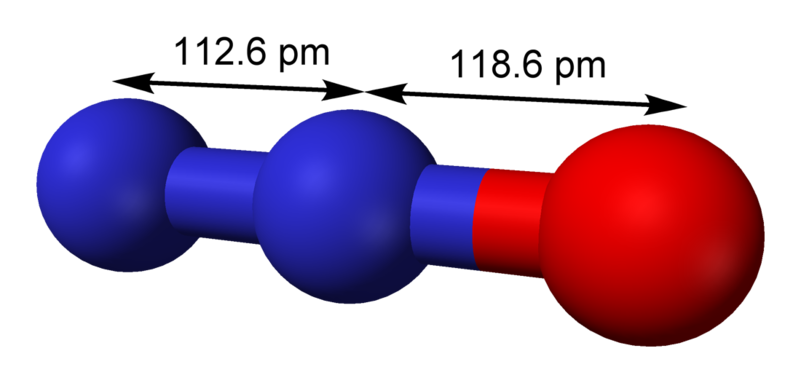
nitrous oxide
chemical compound

DL-glutamic acid
amino acid and neurotransmitter

toluene
Toluene (), also known as toluol (), is a substituted aromatic hydrocarbon with the chemical formula , often abbreviated as , where Ph stands for the phenyl group. It is a colorless, water-insoluble liquid with the odor associated with paint thinners. It is a mono-substituted benzene derivative, consisting of a methyl group (CH3) attached to a phenyl group by a single bond. As such, its systematic IUPAC name is methylbenzene. Toluene is predominantly used as an industrial feedstock and a solvent.

diethyl ether
chemical compound

DL-proline
thumb|Proline ball and stick model spinning
Proline (symbol Pro or P) is an organic acid classed as a proteinogenic amino acid (used in the biosynthesis of proteins), although it does not contain the amino group but is rather a secondary amine. The secondary amine nitrogen is in the protonated form (NH2+) under biological conditions, while the carboxyl group is in the deprotonated −COO− form. The "side chain" from the α carbon connects to the nitrogen forming a pyrrolidine loop, classifying it as a aliphatic amino acid. It is non-essential in humans, meaning the body can synthesize it from the

L-threonine
Threonine (symbol Thr or T) is an amino acid that is used in the biosynthesis of proteins. It contains an α-amino group (which is in the protonated −NH form when dissolved in water), a carboxyl group (which is in the deprotonated −COO− form when dissolved in water), and a side chain containing a hydroxyl group, making it a polar, uncharged amino acid. It is essential in humans, meaning the body cannot synthesize it: it must be obtained from the diet. Threonine is synthesized from aspartate in bacteria such as E. coli. It is encoded by all the codons starting AC (ACU, ACC, ACA, and ACG).

L-serine
thumb|Serine ball and stick model spinning
Serine

barbiturates
thumb|class=skin-invert-image|Barbituric acid, the [[parent structure of all barbiturates]]

γ-aminobutyric acid
GABA (gamma-aminobutyric acid, γ-aminobutyric acid) is the chief inhibitory neurotransmitter in the developmentally mature mammalian central nervous system. Its principal role is reducing neuronal excitability throughout the nervous system.

taurine
Taurine (; IUPAC: 2-aminoethanesulfonic acid) is a naturally occurring organic compound with the chemical formula in its non-zwitterionic form and in its zwitterionic form, and is a non-proteinogenic amino sulfonic acid widely distributed in mammalian tissues and organs. Structurally, by containing a sulfonic acid group instead of a carboxylic acid group, it is not involved in protein synthesis but is still usually referred to as an amino acid. As non-proteinogenic amino sulfonic acid, it is not encoded by the genetic code and is distinguished from the protein-building α-amino acids.

propofol
Propofol is the active component of an intravenous anesthetic formulation used for induction and maintenance of general anesthesia. The formulation was approved under the brand name Diprivan. Numerous generic versions have since been released. Intravenous administration is used to induce unconsciousness, after which anesthesia may be maintained using a combination of medications. It is manufactured as part of a sterile injectable emulsion formulation using soybean oil and lecithin, giving it a white milky coloration.

ivermectin
Ivermectin is an antiparasitic medication. After its discovery in 1975, its first uses were in veterinary medicine to prevent and treat heartworm and acariasis. Approved for human use in 1987, it is used to treat infestations including head lice, scabies, river blindness (onchocerciasis), strongyloidiasis, trichuriasis, ascariasis and lymphatic filariasis. It works through many mechanisms to kill the targeted parasites, and can be taken by mouth, or applied to the skin for external infestations. It belongs to the avermectin family of medications.

tetrahydrocannabinol
Tetrahydrocannabinol (THC) is a cannabinoid found in cannabis. It is the principal psychoactive constituent of Cannabis and one of at least 113 total cannabinoids identified on the plant. Although the chemical formula for THC (C21H30O2) describes multiple isomers, the term THC usually refers to the delta-9-THC isomer with chemical name '(−)-trans-Δ9-tetrahydrocannabinol'. It is a colorless oil.

halothane
Halothane (bromochlorotrifluoroethane), sold under the brand name Fluothane among others, is a halocarbon with the chemical formula . It is used as a general anaesthetic given by inhalation. It can be used to induce or maintain anaesthesia. Its use in developed countries has been mostly replaced by newer anesthetic agents such as sevoflurane. One of its benefits is that it does not increase the production of saliva, which can be particularly useful in those who are difficult to intubate.

tamoxifen
Tamoxifen, sold under the brand name Nolvadex among others, is a selective estrogen receptor modulator used to prevent breast cancer in women and men. It is also being studied for other types of cancer. It has been used for Albright syndrome. Tamoxifen is typically taken daily by mouth for five years for breast cancer.

(RS)-pentobarbital
Pentobarbital (US) or pentobarbitone (British and Australian) is a short-acting barbiturate typically used as a sedative, a preanesthetic, and to control convulsions in emergencies. It can also be used for short-term treatment of insomnia but has been largely replaced by the benzodiazepine family of drugs.
benzylpenicillin
Benzylpenicillin, also known as penicillin G (PenG) or BENPEN, is an antibiotic used to treat a number of bacterial infections. This includes pneumonia, strep throat, syphilis, necrotizing enterocolitis, diphtheria, gas gangrene, leptospirosis, cellulitis, and tetanus. It is not a first-line agent for pneumococcal meningitis. Due to benzylpenicillin's limited bioavailability for oral medications, it is generally taken as an injection in the form of a sodium, potassium, benzathine, or procaine salt. Benzylpenicillin is given by injection into a vein or muscle. Two long-acting forms benzathine b

trichloroethene
Trichloroethylene (TCE, IUPAC name: trichloroethene) is an organochloride with the formula C2HCl3, commonly used as an industrial degreaser. It is a clear, colourless, non-flammable, volatile liquid with a sweet chloroform-like pleasant mild smell and burning sweet taste. Trichloroethylene has been sold under a variety of trade names. Under the trade names Trimar and Trilene, it was used as a volatile anesthetic and as an inhaled obstetrical analgesic. Industrial abbreviations include trichlor, Trike, Tricky and tri. It should not be confused with the similar 1,1,1-trichloroethane, which was c
sodium thiopental
group of stereiosimers
isoflurane
Isoflurane, sold under the brand name Forane among others, is a halogenated ether used as a general anesthetic. It can be used to start or maintain anesthesia; however, other medications are often used to start anesthesia, due to airway irritation with isoflurane. Isoflurane is a inhalational anesthetic given via inhalation.
chloral hydrate
chemical compound
anandamide
Anandamide (ANA), also referred to as '''N-arachidonoylethanolamine (AEA'), is a fatty acid neurotransmitter belonging to the fatty acid derivative group known as N-acylethanolamines (NAE). Anandamide takes its name from the Sanskrit word ananda'' (आनन्द), meaning "joy, bliss, delight," plus amide. Anandamide, the first discovered endocannabinoid, engages with the body's endocannabinoid system by binding to the same cannabinoid receptors that THC found in cannabis acts on. Anandamide can be found within tissues in a wide range of animals. It has also been found in plants, such as the cacao tre
sevoflurane
Sevoflurane, sold under the brand name Sevorane, among others, and informally known as sevo, is a sweet-smelling, nonflammable, highly fluorinated methyl isopropyl ether used as an inhalational anaesthetic for induction and maintenance of general anesthesia. After desflurane, it is the volatile anesthetic with the fastest onset. While its offset may be faster than agents other than desflurane in a few circumstances, its offset is more often similar to that of the much older agent isoflurane. While sevoflurane is only half as soluble as isoflurane in blood, the tissue blood partition coefficien

trichloroethane
1,1,1-Trichloroethane, also known as methyl chloroform and chlorothene, is a chloroalkane with the chemical formula . It is an isomer of 1,1,2-trichloroethane. A colourless and sweet-smelling liquid, it was once produced industrially in large quantities for use as a solvent. It is regulated by the Montreal Protocol as an ozone-depleting substance, and as such, use has declined since 1996. Trichloroethane should not be confused with the similar-sounding trichloroethene which is also commonly used as a solvent.
tert-butyl alcohol
chemical compound

β-alanine
β-Alanine ('''beta-alanine) is a naturally occurring beta amino acid. Beta amino acids are amino acids in which the amino group is attached to the β-carbon atom (i.e. the carbon atom two carbon atoms away from the carboxylate group) instead of the more usual α-carbon atom for alanine (α-alanine). The IUPAC name for β-alanine is 3-aminopropanoic acid'''. Unlike its counterpart α-alanine, β-alanine has no stereocenter.

etomidate
Etomidate, sold under the brand name Amidate, is a short-acting intravenous anaesthetic agent used for the induction of general anaesthesia and sedation for short procedures such as reduction of dislocated joints, tracheal intubation, cardioversion and electroconvulsive therapy. It was developed at Janssen Pharmaceutica in 1964 and was introduced as an intravenous agent in 1972 in Europe and in 1983 in the United States.
-Desfluran%20Structural%20Formula%20V1.svg)
desflurane
Desflurane (1,2,2,2-tetrafluoroethyl difluoromethyl ether), under the brand name Suprane, is a highly fluorinated methyl ethyl ether used for induction and maintenance of general anesthesia. Desflurane was developed in the 1980s and approved by the FDA in 1992 as a faster acting and clearing inhalant anesthetic compared to previously used inhalant anesthetics. Like halothane, enflurane, and isoflurane, it is a racemic mixture of (R) and (S) optical isomers (enantiomers). It has the most rapid onset and offset of the volatile anesthetic drugs used for general anesthesia due to its low solubilit

pregnenolone
Pregnenolone (P5), or pregn-5-en-3β-ol-20-one, is an endogenous steroid and precursor/metabolic intermediate in the biosynthesis of most of the steroid hormones, including the progestogens, androgens, estrogens, glucocorticoids, and mineralocorticoids. In addition, pregnenolone is biologically active in its own right, acting as a neurosteroid.

sarcosine
Sarcosine, also known as '''N-methylglycine, or monomethylglycine', is a non-proteinogenic amino acid with the formula CH3N(H)CH2CO2H. It is the N''-methyl derivative of glycine, with a secondary amine in place of the primary amine, and occurs naturally in muscles and other body tissues as an intermediate in the metabolism of choline to glycine. It was first isolated and named by the German chemist Justus von Liebig in 1847.

methoxyflurane
Methoxyflurane, sold under the brand name Penthrox (the "green whistle") among others, is an inhaled medication primarily used to reduce pain following an injury. It may also be used to reduce pain associated with minor medical procedures. Onset of pain relief is rapid and a standard dose typically lasts for up to 30 minutes. Use is only recommended with direct medical supervision.
enflurane
Enflurane (2-chloro-1,1,2-trifluoroethyl difluoromethyl ether) is a halogenated ether. Developed by Ross Terrell in 1963, it was first used clinically in 1966. It was increasingly used for inhalational anesthesia during the 1970s and 1980s but is no longer in common use.
picolinic acid
chemical compound
tropisetron
Tropisetron is a serotonin 5-HT3 receptor antagonist used mainly as an antiemetic to treat nausea and vomiting following chemotherapy, although it has been used experimentally as an analgesic in cases of fibromyalgia.
allopregnanolone
Allopregnanolone is a naturally occurring neurosteroid which is made in the body from the hormone progesterone. As a medication, allopregnanolone was referred to as brexanolone, sold under the brand name Zulresso, and was used to treat postpartum depression. It was given by injection into a vein.

chlorobutanol
Chlorobutanol (trichloro-2-methyl-2-propanol) is an organic compound with the formula . It is a specifically a chlorohydrin. Chlorobutanol acts as a preservative, sedative, hypnotic, and weak local anesthetic similar in nature to chloral hydrate; it also has antibacterial and antifungal properties. Chlorobutanol is typically used at a concentration of 0.5% where it lends long term stability to multi-ingredient formulations. However, it retains antimicrobial activity at 0.05% in water. Chlorobutanol has been used in the anesthesia and euthanasia of aquatic invertebrates and various fishes. It
2,2,2-trifluoroethanol
2,2,2-Trifluoroethanol is the synthetic organic compound with the formula CF3CH2OH. Also known as TFEA or trifluoroethyl alcohol, this colourless, water-miscible liquid has a smell reminiscent of ethanol. Due to the electronegativity of the trifluoromethyl group, this alcohol exhibits a stronger acidic character compared to ethanol.
clomethiazole
Clomethiazole (also called chlormethiazole) is a sedative and hypnotic originally developed by Hoffmann-La Roche in the 1930s. The drug is typically used in treating and preventing symptoms of acute alcohol withdrawal, anxiety and as a sedative-hypnotic.
nicardipine
Nicardipine (Cardene) is a medication used to treat angina and hypertension, especially for hemorrhagic stroke patients. It belongs to the dihydropyridine class of calcium channel blockers (CCBs). It is also used for Raynaud's phenomenon. It is available in by mouth and intravenous formulations. It has been used in percutaneous coronary intervention.
2,2,2-trichloroethanol
2,2,2-Trichloroethanol is the chemical compound with formula . Its molecule can be described as that of ethanol, with the three hydrogen atoms at position 2 (the methyl group) replaced by chlorine atoms. It is a clear flammable liquid at room temperature, colorless when pure but often with a light yellow color.
hypotaurine
Hypotaurine is a sulfinic acid that is an intermediate in the biosynthesis of taurine. Like taurine, it also acts as an endogenous neurotransmitter via action on the glycine receptors. It is an osmolyte with antioxidant properties.
(RS)-thiocolchicoside
Thiocolchicoside (Muscoril, Myoril, Neoflax) is a semi-synthetic derivative of colchicine, used as muscle relaxant with anti-inflammatory and analgesic effects. Its mechanism of action is unknown, but it is believed to act via antagonism of nicotinic acetylcholine receptors (nAchRs). However, it also appears to be a competitive antagonist of GABAA and glycine receptors. As such, it has powerful convulsant activity and should not be used in seizure-prone individuals.
triclofos
Triclofos (brand names Triclos, Pedicloryl) is a sedative drug used rarely for treating insomnia.
alfaxalone
Alfaxalone, also known as alphaxalone or alphaxolone and sold under the brand name Alfaxan and Faxone, is a neuroactive steroid and general anesthetic which is used currently in veterinary practice as an induction agent for anesthesia and as an injectable anesthetic. The most common side effect seen in current veterinary practice is respiratory depression when Alfaxan is administered concurrently with other sedative and anesthetic drugs; when premedications are not given, veterinary patients also become agitated and hypersensitive when waking up.
alkylbenzene sulfonates
class of chemical compounds
Zatosetron
Zatosetron (LY-277,359) is a drug which acts as an antagonist at the 5HT3 receptor It is orally active and has a long duration of action, producing antinauseant effects but without stimulating the rate of gastrointestinal transport. It is also an effective anxiolytic in both animal studies and human trials, although with some side effects at higher doses.
Bemesetron
Bemesetron (MDL-72222) is a drug which acts as an antagonist at the 5HT3 receptor. It has antiemetic effects comparable to metoclopramide, however it is not used clinically, instead its main application is in scientific research studying the involvement of the 5HT3 receptor in the actions of drugs of abuse.
ORG 20599
ORG-20599 is a synthetic neuroactive steroid, with sedative effects resulting from its action as a GABAA receptor positive allosteric modulator and, at higher concentrations, agonist. It was developed for use as an anaesthetic agent but was never marketed for this purpose, although it is still used in scientific research.
Quisqualamine
Quisqualamine is the α-decarboxylated analogue of the glutamate receptor agonist and neurotoxin quisqualic acid and an analogue of the neurotransmitter γ-aminobutyric acid (GABA).
minaxolone
Minaxolone (CCI-12923) is a neuroactive steroid which was developed as a general anesthetic but was withdrawn before registration due to toxicity seen with long-term administration in rats, and hence was never marketed. It is a positive allosteric modulator of the GABAA receptor, as well as, less potently, a positive allosteric modulator of the glycine receptor.