Category
page 1NMDA receptor antagonists

xenon
Xenon is a chemical element; it has symbol Xe and atomic number 54. It is a dense, colorless, odorless noble gas found in Earth's atmosphere in trace amounts. Although generally unreactive, it can undergo a few chemical reactions such as the formation of xenon hexafluoroplatinate, the first noble gas compound to be synthesized.

(RS)-ketamine
Ketamine is a cyclohexanone-derived general anesthetic and NMDA receptor antagonist with analgesic and hallucinogenic properties, used medically for anesthesia, depression, and pain management. Ketamine exists as its two enantiomers, S- (esketamine) and R- (arketamine), and has antidepressant action likely involving other mechanisms in addition to NMDA antagonism.
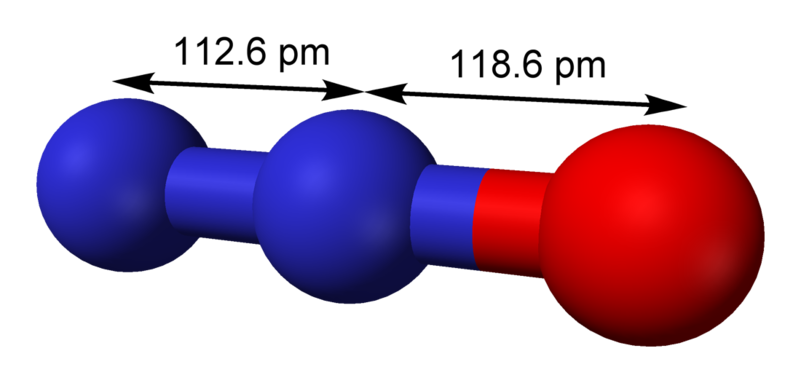
nitrous oxide
chemical compound

toluene
Toluene (), also known as toluol (), is a substituted aromatic hydrocarbon with the chemical formula , often abbreviated as , where Ph stands for the phenyl group. It is a colorless, water-insoluble liquid with the odor associated with paint thinners. It is a mono-substituted benzene derivative, consisting of a methyl group (CH3) attached to a phenyl group by a single bond. As such, its systematic IUPAC name is methylbenzene. Toluene is predominantly used as an industrial feedstock and a solvent.

diethyl ether
chemical compound

nitric oxide
chemical compound
%20marketed%20by%20Amneal%20Pharmaceuticals%20(rotated).jpg)
tramadol
Tramadol, sold under the brand name Tramal among others, is an opioid pain medication and a serotonin–norepinephrine reuptake inhibitor (SNRI) used to treat moderate to severe pain. When taken by mouth in an immediate-release formulation, the onset of pain relief usually begins within an hour. It is also available by injection. It is available in combination with paracetamol (acetaminophen).

cyclopropane
Cyclopropane is the cycloalkane with the molecular formula (CH2)3, consisting of three methylene groups (CH2) linked to each other to form a triangular ring. The small size of the ring creates substantial ring strain in the structure. Cyclopropane itself is mainly of theoretical interest, but many cyclopropane derivatives are of commercial or biological significance.
.jpg)
phencyclidine

haloperidol
Haloperidol, sold under the brand name Haldol among others, is a typical antipsychotic medication. Haloperidol is used in the treatment of schizophrenia, tics in Tourette syndrome, mania in bipolar disorder, delirium, agitation, acute psychosis, and hallucinations from alcohol withdrawal. It may be used by mouth or injection into a muscle or a vein. Haloperidol typically works within 30 to 60 minutes. A long-acting formulation may be used as an injection every four weeks for people with schizophrenia or related illnesses, who either forget or refuse to take the medication by mouth.

furosemide
Furosemide, sold under the brand name Lasix among others, is a loop diuretic medication used to treat edema due to heart failure, liver scarring, or kidney disease. Furosemide may also be used for the treatment of high blood pressure. It can be taken intravenously or orally. When given intravenously, furosemide typically takes effect within five minutes; when taken orally, it typically metabolizes within an hour.

halothane
Halothane (bromochlorotrifluoroethane), sold under the brand name Fluothane among others, is a halocarbon with the chemical formula . It is used as a general anaesthetic given by inhalation. It can be used to induce or maintain anaesthesia. Its use in developed countries has been mostly replaced by newer anesthetic agents such as sevoflurane. One of its benefits is that it does not increase the production of saliva, which can be particularly useful in those who are difficult to intubate.

dextromethorphan
Dextromethorphan is a cough suppressant used in many cough and cold medicines. In 2022, the US Food and Drug Administration (FDA) approved the combination dextromethorphan/bupropion to serve as a rapid-acting antidepressant in people with major depressive disorder.

pethidine
Pethidine, also known as meperidine and sold under the brand name Demerol among others, is a fully synthetic opioid pain medication of the phenylpiperidine class. Synthesized in 1938 as a potential anticholinergic agent by the German chemist Otto Eisleb, its analgesic properties were first recognized by Otto Schaumann while working for IG Farben, in Germany. Pethidine is the prototype of a large family of analgesics including the pethidine 4-phenylpiperidines (e.g., piminodine, anileridine), the prodines (e.g., alphaprodine, MPPP), bemidones (e.g., ketobemidone), and others more distant, inclu

trichloroethene
Trichloroethylene (TCE, IUPAC name: trichloroethene) is an organochloride with the formula C2HCl3, commonly used as an industrial degreaser. It is a clear, colourless, non-flammable, volatile liquid with a sweet chloroform-like pleasant mild smell and burning sweet taste. Trichloroethylene has been sold under a variety of trade names. Under the trade names Trimar and Trilene, it was used as a volatile anesthetic and as an inhaled obstetrical analgesic. Industrial abbreviations include trichlor, Trike, Tricky and tri. It should not be confused with the similar 1,1,1-trichloroethane, which was c
.jpg)
(±)-promethazine
isoflurane
Isoflurane, sold under the brand name Forane among others, is a halogenated ether used as a general anesthetic. It can be used to start or maintain anesthesia; however, other medications are often used to start anesthesia, due to airway irritation with isoflurane. Isoflurane is a inhalational anesthetic given via inhalation.

amantadine
Amantadine, sold under the brand name Gocovri among others, is a medication used to treat dyskinesia associated with parkinsonism and influenza caused by type A influenzavirus, though its use for the latter is no longer recommended because of widespread drug resistance. It is also used for a variety of other conditions. The drug is taken by mouth.
memantine
Memantine, sold under the brand name Namenda among others, is a medication used to slow the progression of moderate-to-severe Alzheimer's disease. It is taken by mouth.

atomoxetine
Atomoxetine, sold under the brand name Strattera, is a selective norepinephrine reuptake inhibitor (sNRI) medication used to treat attention deficit hyperactivity disorder (ADHD) and, to a lesser extent, cognitive disengagement syndrome (CDS). It may be used alone or along with psychostimulant medication. It enhances the executive functions of self-motivation, sustained attention, inhibition, working memory, reaction time, and emotional self-regulation. Use of atomoxetine is only recommended for those who are at least six years old. It is taken orally. The effectiveness of atomoxetine is compa
sevoflurane
Sevoflurane, sold under the brand name Sevorane, among others, and informally known as sevo, is a sweet-smelling, nonflammable, highly fluorinated methyl isopropyl ether used as an inhalational anaesthetic for induction and maintenance of general anesthesia. After desflurane, it is the volatile anesthetic with the fastest onset. While its offset may be faster than agents other than desflurane in a few circumstances, its offset is more often similar to that of the much older agent isoflurane. While sevoflurane is only half as soluble as isoflurane in blood, the tissue blood partition coefficien

ibogaine
Ibogaine is a psychoactive indole alkaloid derived from plants such as Tabernanthe iboga, characterized by hallucinogenic and oneirogenic effects. Traditionally used by Central African foragers, it has undergone controversial research for the treatment of substance use disorders. Ibogaine exhibits complex pharmacology by interacting with multiple neurotransmitter systems, notably affecting opioid, serotonin, sigma, and NMDA receptors, while its metabolite noribogaine primarily acts as a serotonin reuptake inhibitor and κ-opioid receptor agonist.

putrescine
Putrescine is an organic compound with the formula (CH2)4(NH2)2. It is a colorless solid that melts near room temperature. It is classified as a diamine. Together with cadaverine, it is largely responsible for the foul odor of putrefying flesh, but also contributes to other unpleasant odors.

meprobamate
Meprobamate—marketed as Miltown by Wallace Laboratories and Equanil by Wyeth, among others—is a carbamate derivative used as an anxiolytic drug. It was the best-selling minor tranquilizer for a time, but has largely been replaced by the benzodiazepines due to their wider therapeutic index (lower risk of toxicity at therapeutically prescribed doses) and lower incidence of serious side effects.

methoxyflurane
Methoxyflurane, sold under the brand name Penthrox (the "green whistle") among others, is an inhaled medication primarily used to reduce pain following an injury. It may also be used to reduce pain associated with minor medical procedures. Onset of pain relief is rapid and a standard dose typically lasts for up to 30 minutes. Use is only recommended with direct medical supervision.
NMDA receptor
glutamate receptor and ion channel protein found in nerve cells

minocycline
Minocycline, sold under the brand name Minocin among others, is a tetracycline antibiotic medication used to treat a number of bacterial infections such as some occurring in certain forms of pneumonia. It is generally (but not always) less preferred than the tetracycline doxycycline. Minocycline is also used for the treatment of acne and rheumatoid arthritis. It is taken by mouth or applied to the skin.
enflurane
Enflurane (2-chloro-1,1,2-trifluoroethyl difluoromethyl ether) is a halogenated ether. Developed by Ross Terrell in 1963, it was first used clinically in 1966. It was increasingly used for inhalational anesthesia during the 1970s and 1980s but is no longer in common use.
apigenin
Apigenin (4′,5,7-trihydroxyflavone), found in many plants, is a flavone compound that is the aglycone of several naturally occurring glycosides. It is a yellow crystalline solid that has been used to dye wool.
milnacipran
Milnacipran (trade names Ixel, Savella, Dalcipran, Toledomin) is a serotonin–norepinephrine reuptake inhibitor (SNRI) used in the clinical treatment of fibromyalgia, major depressive disorder, and neuropathic pain.
In the US, it is solely approved for the treatment of fibromyalgia, even though it is also approved for the treatment of major depressive disorder (but not fibromyalgia) in other countries (e.g. France).

dextropropoxyphene
Dextropropoxyphene is an opioid analgesic patented in 1955 and manufactured by Eli Lilly and Company. It is an optical isomer of levopropoxyphene. It is intended to treat mild pain and also has antitussive (cough suppressant) and local anesthetic effects. The drug has been taken off the market in Europe and the United States due to concerns of fatal overdoses and heart arrhythmias. It is still available in Australia, albeit with restrictions after an application by its manufacturer to review its proposed banning. Its onset of analgesia (pain relief) is said to be 20–30 minutes and peak effects

carisoprodol

bumetanide
Bumetanide, sold under the brand name Bumex among others, is a medication used to treat swelling and high blood pressure. This includes swelling as a result of heart failure, liver failure, or kidney problems. It may work for swelling when other medications have not. For high blood pressure it is not a preferred treatment. It is taken by mouth, or by injection into a vein or muscle. Effects generally begin within an hour and last for about six hours.
pentamidine
Pentamidine is an antimicrobial medication used to treat African trypanosomiasis, leishmaniasis, Balamuthia infections, babesiosis, and to prevent and treat pneumocystis pneumonia (PCP) in people with poor immune function. In African trypanosomiasis it is used for early disease before central nervous system involvement, as a second line option to suramin. It is an option for both visceral leishmaniasis and cutaneous leishmaniasis. Pentamidine can be given by injection into a vein or muscle or by inhalation.

esketamine

L-morphan
Levorphanol (brand name Levo-Dromoran) is an opioid medication used to treat moderate to severe pain. It is the levorotatory enantiomer of the compound racemorphan. Its dextrorotatory counterpart is dextrorphan.

L-kynurenine
-Kynurenine is a metabolite of the amino acid -tryptophan used in the production of niacin.

crocetin
Crocetin is a natural apocarotenoid dicarboxylic acid, a diterpenoid, and a branched-chain dicarboxylic acid. It was the first plant carotenoid to be recognized as early as 1818 while the history of saffron cultivation reaches back more than 3,000 years. The major active ingredient of saffron is the yellow pigment crocin 2 (three other derivatives with different glycosylations are known) containing a gentiobiose (disaccharide) group at each end of the molecule. It is found in the crocus flower together with its glycoside, crocin, and Gardenia jasminoides fruits. It is also known as crocetic ac
2,2,2-trichloroethanol
2,2,2-Trichloroethanol is the chemical compound with formula . Its molecule can be described as that of ethanol, with the three hydrogen atoms at position 2 (the methyl group) replaced by chlorine atoms. It is a clear flammable liquid at room temperature, colorless when pure but often with a light yellow color.
-Orphenadrin%20Structural%20Formula%20V1.svg)
orphenadrine
Orphenadrine is an anticholinergic drug of the ethanolamine antihistamine class; it is closely related to diphenhydramine. It is a muscle relaxant that is used to treat muscle pain and to help with motor control in Parkinson's disease, but has largely been superseded by newer drugs. It is considered a dirty drug due to its multiple mechanisms of action in different pathways. It was discovered and developed in the 1940s.
huperzine A
chemical compound
kynurenic acid
chemical compound

diethylenetriamine
Diethylenetriamine (abbreviated dien or DETA) and also known as 2,2’-Iminodi(ethylamine)) is an organic compound with the formula HN(CH2CH2NH2)2. This colourless hygroscopic liquid is soluble in water and polar organic solvents, but not simple hydrocarbons. Diethylenetriamine is structural analogue of diethylene glycol. Its chemical properties resemble those for ethylene diamine, and it has similar uses. It is a weak base and its aqueous solution is alkaline. DETA is a byproduct of the production of ethylenediamine from ethylene dichloride.

agmatine
Agmatine, also known as 4-aminobutyl-guanidine, was discovered in 1910 by Albrecht Kossel. It is a chemical substance which is naturally created from the amino acid arginine. Agmatine has been shown to exert modulatory action at multiple molecular targets, notably: neurotransmitter systems, ion channels, nitric oxide (NO) synthesis, and polyamine metabolism and this provides bases for further research into potential pharmacological applications.
niflumic acid
chemical compound
felbamate
Felbamate (marketed under the brand name Felbatol by MedPointe) is an anticonvulsant used in the treatment of epilepsy. It is used to treat partial seizures (with and without generalization) in adults and partial and generalized seizures associated with Lennox–Gastaut syndrome in children. However, an increased risk of potentially fatal aplastic anemia and/or liver failure limit the drug's usage to severe refractory epilepsy.
1,3-propanediamine
1,3-Diaminopropane, also known as , is a simple diamine with the formula H2N(CH2)3NH2. A colourless liquid with a fishy odor, it is soluble in water and many polar organic solvents. It is isomeric with 1,2-diaminopropane. Both are building blocks in the synthesis of heterocycles, such as those used in textile finishing, and coordination complexes. It is prepared by the amination of acrylonitrile followed by hydrogenation of the resulting aminopropionitrile.

methoxetamine
Methoxetamine (MXE) is a dissociative hallucinogen that has been sold as a designer drug. It differs from many dissociatives such as ketamine and phencyclidine (PCP) that were developed as pharmaceutical drugs for use as general anesthetics in that it was designed specifically to increase the antidepressant effects of ketamine.
ketobemidone
Ketobemidone, sold under the brand name Ketogan (a mixture of ketobemidone and Spasmolytic A29) among others, is a powerful synthetic opioid painkiller. Its effectiveness against pain is in the same range as morphine, and it also has some NMDA-antagonist properties imparted, in part, by its metabolite norketobemidone. This may make it useful for some types of pain that do not respond well to other opioids. It is marketed in Denmark, Iceland, Norway. Until 2024 it was available in, but is now withdrawn in Sweden. It is used for severe pain.
inhalational anaesthetic
volatile or gaseous anesthetic compound delivered by inhalation
flufenamic acid
chemical compound
dextrorphan
Dextrorphan (DXO) is a psychoactive drug of the morphinan class which acts as an antitussive or cough suppressant and in high doses a dissociative hallucinogen. It is the dextrorotatory enantiomer of racemorphan; the levorotatory enantiomer is levorphanol. Dextrorphan is produced by O-demethylation of dextromethorphan by CYP2D6. Dextrorphan is an NMDA antagonist and contributes to the psychoactive effects of dextromethorphan.

levomilnacipran
Levomilnacipran, sold under the brand name Fetzima, is an antidepressant, used for the treatment of major depressive disorder in adults. It is the levorotatory enantiomer of milnacipran, and has similar effects and pharmacology, acting as a serotonin–norepinephrine reuptake inhibitor.
budipine
Budipine (brand name Parkinsan) is an antiparkinson agent marketed for the treatment of Parkinson's disease.
tiletamine
Tiletamine is a dissociative anesthetic and pharmacologically classified as an NMDA receptor antagonist. It is an arylcyclohexylamine chemically related to ketamine. Tiletamine hydrochloride exists as odorless white crystals.
ifenprodil
Ifenprodil, sold under the brand names Cerocral, Dilvax, and Vadilex, is a cerebral vasodilator that has been marketed in some countries, including in Japan, Hong Kong, and France. It is currently under development for treatment of a variety of additional indications.
AP5
AP5 (also known as APV, '(2R)-amino-5-phosphonovaleric acid, or (2R)-amino-5-phosphonopentanoate') is a chemical compound used as a biochemical tool to study various cellular processes. It is a selective NMDA receptor antagonist that competitively inhibits the ligand (glutamate) binding site of NMDA receptors. AP5 blocks NMDA receptors in micromolar concentrations (~50 μM).
levomethorphan
Levomethorphan (LVM) (INN, BAN) is an opioid analgesic of the morphinan family that has never been marketed. It is the L-stereoisomer of racemethorphan (methorphan). The effects of the two isomers of racemethorphan are quite different, with dextromethorphan (DXM) being an antitussive at low doses and a hallucinogen at much higher doses. Levomethorphan is about five times stronger than morphine.
eticyclidine
PCE (Eticyclidine, CI-400) is a dissociative anesthetic drug with hallucinogenic effects. It is similar in effects to phencyclidine but is slightly more potent. PCE was developed by Parke-Davis in the 1970s and evaluated for anesthetic potential under the code name CI-400, but research into PCE was not continued after the development of ketamine, a similar drug with more favourable properties. Due to its similarity in effects to PCP, PCE was placed into the Schedule 1 list of illegal drugs in the 1970s, although it was only briefly abused in the 1970s and 1980s and is now little known.
NMDA receptor antagonist
class of anesthetics that work to antagonize, or inhibit the action of, the N-Methyl-D-aspartate receptor (NMDAR)